Late beginner pianists
If you're comfortable with basic chords, simple rhythms, and playing with both hands, you're ready to get started. No prior jazz experience is required.
3 months
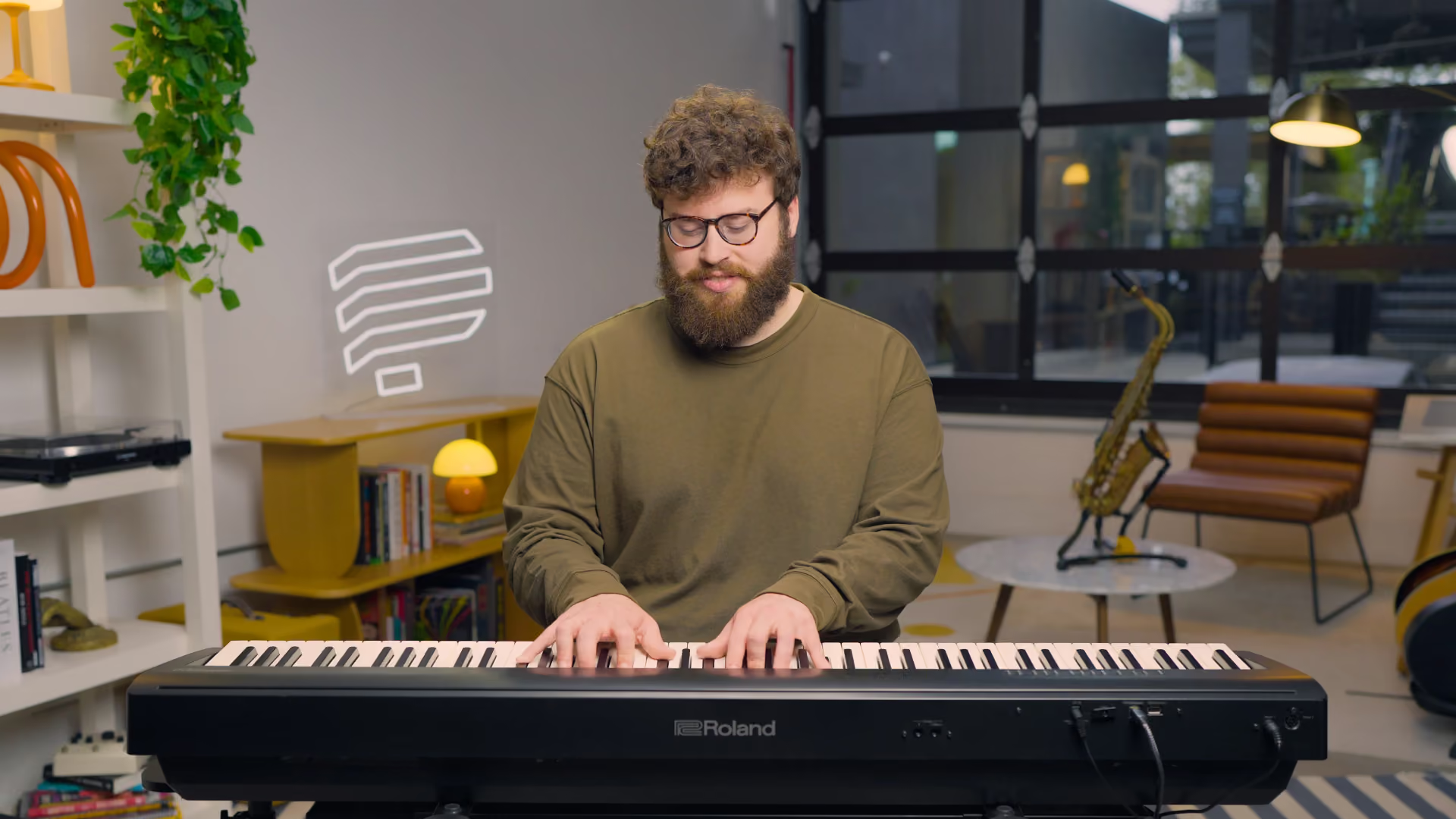
Rob Araujo will guide you through six grades of instruction with daily practice plans and assessments.
Play jazz confidently
By the end of this class, you'll be able to improvise your own solos, support other musicians with comping, and learn jazz standards with ease.
Take the next step
Once you've built your jazz foundation, take your skills to the next level with genre-specific pathways.
What you'll learn
This class introduces the language of jazz through real songs and practical techniques. From day one, you'll comp, solo, and play with a professional jazz band while learning the concepts behind jazz's signature sound.
- Learn to think like a jazz musician
- Solo over chord changes with ease
- Decode the language of jazz piano
- Level up your playing with practical theory

Curriculum
Stay focused with this step-by-step learning program designed by our expert team of music educators.
Grade 1. Jazz Fundamentals
To kick off the class, you'll build the necessary core skills pro jazz cats rely on every day. You'll develop your swing feel, learn how to comp using authentic jazz voicings, and take your first improvised solos.

Day 1. What’s the time?
Jazz starts with great feel. In this opening day, you’ll learn how to hear the swing pulse and place simple phrases inside the band’s time.
Day 2. Major ii-V-I
Now, you’ll meet the progression at the center of countless jazz standards. You’ll learn how its harmonic pull creates movement and resolution.
Day 3. Jazz voicing formula
In this lesson, you’ll discover a practical formula for building authentic jazz chords. You’ll also learn how smooth voice leading makes each change feel connected.
Day 4. Soloing
You’re ready to approach your first jazz solo with a clear framework. You’ll use the blues scale to remove the guesswork from creating great phrases that feel deliberate.
Day 5. Comping rhythms
Now, you’ll learn how jazz pianists support a soloist without overcrowding the music. You’ll build a small rhythmic vocabulary that immediately makes your comping feel like authentic jazz.
Day 6. I-vi-ii-V turnaround
In Day 6, you’ll add one of jazz’s most common looping progressions to your vocabulary. This progression will help you keep the music moving back toward the top of the form.
Day 7. Playing the blues
Finally, you’ll bring everything you learned in this grade together over a complete jazz blues. You’ll learn how familiar harmonic ideas connect across a full song form.
Performance pieces
Choose a song to learn that takes what you worked on in Grade 1 and puts it in a musical context. Here, you'll get to jam with a live-recorded band of professional L.A. musicians as your backing track.
Personalized feedback
Submit a video of yourself playing a performance piece from this grade for custom video feedback on your playing from our team of pro pianists.
Final quiz
Make sure you're ready to move on to Grade 2.
Grade 2. Jazz Rhythm
With the fundamentals covered, you'll explore the different rhythmic feels that make jazz unique. From swing and ballads to soul jazz and bossa nova, this grade covers how to change the way you approach both comping and soloing based on the rhythm of a song.
Day 1. Swingin’ on the blues
Kick off Grade 2 by deepening your swing feel through stronger phrasing. You’ll learn how intentional rhythmic placement can transform a simple blues idea.
Day 2. Cool jazz
In this lesson, you’ll step into the spacious sound of modal jazz. Channel cats like Miles Davis, Bill Evans, and Chet Baker by using open voicings and long harmonic stretches to create a more relaxed approach.
Day 3. Ballad feel
Now, you’ll learn how to make slow playing feel expressive by exploring a ballad feel. You’ll use the extra space to shape your chords and melodies with greater intention.
Day 4. Grooving on F
You’ll dive into the pocket of soul jazz through a one-chord vamp. Explore how to drive an entire performance using a repeating motif.
Day 5. Bossa nova comping
In Day 5, you’ll travel to Rio de Janeiro to discover the rhythmic foundation of bossa nova. You’ll apply its signature pulse to a minor jazz progression.
Day 6. ii-V-I in Db
In this lesson, you’ll take a familiar progression into a new key. Rob will help you build the flexibility to recognize the same harmonic idea anywhere on the keyboard.
Day 7. Turning motifs into standards
Close out the grade by demystifying jazz a bit more. You’ll learn how short progressions can combine to form a complete jazz tune.
Performance pieces
Choose a song to learn that takes what you worked on in Grade 2 and puts it in a musical context. Here, you'll get to jam with a live-recorded band of pro L.A. musicians as your backing track.
Personalized feedback
Submit a video of yourself playing a performance piece from this grade for custom video feedback on your playing from our team of pro pianists.
Final quiz
Make sure you're ready to move on to Grade 3.
Grade 3. Jazz Harmony
Next, you'll learn what gives jazz chords their depth and movement. This grade will expand your harmonic vocabulary while helping you develop a more professional approach to comping.
Day 1. The (minor) blues
You’ll start off Grade 3 by playing a familiar song form in a moodier setting. You’ll learn how minor harmony changes the mood while keeping the blues structure easy to recognize.
Day 2. Minor ii-V-i
Now, you’ll learn the minor-key version of jazz’s most important progression. You’ll use new chord qualities to create a stronger sense of tension before resolving home.
Day 3. Turnarounds
In this lesson, you’ll uncover a technique jazz musicians use to keep a progression moving. You’ll add stronger harmonic pull to a familiar turnaround and explore how it changes in a minor setting.
Day 4. Color tones
You’ll now learn how a few carefully chosen notes can transform a basic chord. You’ll also explore the extensions that give jazz harmony its signature color.
Day 5. Two-hand comping
In Day 5, you’ll spread your chords across the keyboard for a fuller sound. You’ll learn how each hand can take on a clear harmonic role without making the voicing feel crowded.
Day 6. Diminished and augmented chords
Now, you’ll add two new voicings to your harmonic vocabulary. You’ll use them to create tension and smoother movement inside a jazz waltz.
Day 7. Pedal points
Finally, you’ll learn how a stationary bass note can make moving chords feel even more dramatic. You’ll use pedal points to create contrast and build anticipation in an arrangement.
Performance pieces
Choose a song to learn that takes what you worked on in Grade 3 and puts it in a musical context. Here, you'll get to jam with a live-recorded band of pro L.A. musicians as your backing track.
Personalized feedback
Submit a video of yourself playing a performance piece from this grade for custom video feedback on your playing from our team of pro pianists.
Grades 4-6
In the final grades, you’ll turn your foundation into real jazz musicianship. You’ll learn how to create convincing solos and develop a reliable process for learning standards before studying the approaches of legendary jazz pianists.
Grade 4. Intro to Improvisation
After that, you’ll move beyond playing scales to start building solos that flow with the song. You'll learn practical improvisation concepts that help your solos connect with the harmony while becoming more expressive and conversational.
Day 1. The blues (licks)
To start your soloing journey, you’ll learn how to use major and minor blues vocabulary over progressions that aren’t traditional blues forms. This lesson will help you bring a bluesy sound into a wider range of jazz settings.
Day 2. Chord tones
Now, you’ll build melodic lines from the notes inside each chord and learn how arpeggios can guide your solos. By targeting the 3rd and 7th of each chord, you’ll make your ideas follow the harmony more clearly.
Day 3. Passing tones
In this lesson, you’ll connect strong chord tones with chromatic passing notes and enclosures. These techniques will add tension and movement without pulling your lines away from the progression.
Day 4. Trading fours
In Day 4, you’ll practice alternating four-bar solos with Rob over a familiar blues form. This lesson will strengthen your phrasing and help you treat improvisation like a conversation.
Day 5. Comping conversationally
Next, you’ll learn how to listen to a soloist and respond without filling every open space. Rob will show you how thoughtful rhythms can make your accompaniment feel more connected to the music.
Day 6. Comping with your improv
Take on both roles now. You’ll coordinate left-hand comping with right-hand improvisation over a two-chord vamp. The goal is to keep your accompaniment supportive while giving your solo room to develop.
Day 7. Oh When the Saints Go Marching In
To close out the grade, you’ll learn the melody to this classic tune and use its phrases as the foundation for improvisation. This approach will help your solo fit seamlessly into the song instead of feeling separate from it.
Performance pieces
Choose a song to learn that takes what you worked on in Grade 4 and puts it in a musical context. Here, you'll get to jam with a live-recorded band of pro L.A. musicians as your backing track.
Personalized feedback
Submit a video of yourself playing a performance piece from this grade for custom video feedback on your playing from our team of pro pianists.
Final quiz
Make sure you're ready to move on to Grade 5.
Grade 5. How to Learn Jazz Standards
In this grade, you’ll build a repeatable process for learning jazz standards. You’ll learn how to break complete tunes into smaller musical ideas so new songs feel easier to understand and remember.
Day 1. Freddy’s Blues
To start, you’ll learn a jazz blues tune with an unexpected chord at the end of the form. This lesson will show you how just one harmonic change can give a familiar progression its own identity.
Day 2. Now What
Now, you’ll return to modal jazz and apply your comping and soloing skills across a complete AABA form. Rob will help you use space and short motifs to build ideas over long stretches of harmony.
Day 3. Autumn Trees
In this lesson, you’ll map out the form and learn the melody of your first complete 32-bar standard, based on one of the most popular standards ever. This lesson will help you recognize how longer tunes are built from smaller ideas that you already understand.
Day 4. Autumn Trees (continued)
Now, you’ll add the harmony and start improvising through the changes. You’ll bring the tune together by connecting the melody to its underlying chord progressions.
Day 5. Last Train Out
You’ll learn a brisk swing tune that moves through familiar progressions at a faster tempo. This lesson will help you stay relaxed while keeping track of the form.
Day 6. Quiet Blue
In Day 6, you’ll learn to comp through a slow jazz ballad with an unusual 10-bar form. Rob will show you how altered dominant chords and smooth voice leading shape the tune’s sound.
Day 7. Quiet Blue (continued)
To cap off the grade, you’ll learn the melody for Quiet Blue and place it over the spacious accompaniment from the previous lesson. By giving each phrase room to breathe, you’ll bring the ballad together as a complete performance.
Performance pieces
Choose a song to learn that takes what you worked on in Grade 5 and puts it in a musical context. Here, you'll get to jam with a live-recorded band of pro L.A. musicians as your backing track.
Personalized feedback
Submit a video of yourself playing a performance piece from this grade for custom video feedback on your playing from our team of pro pianists.
Final quiz
Make sure you're ready to move on to Grade 6.
Grade 6. Jazz Piano Styles
In this final grade, you’ll study the approaches of some of jazz piano’s most influential players. You’ll apply their signature ideas to the concepts you’ve learned throughout the pathway and use them to shape your own playing.
Day 1. Oscar Peterson
Let’s start your tour through the greats by exploring Oscar Peterson’s deep blues vocabulary with ornamented licks and full two-hand comping. You’ll also harmonize lines in 6ths to create a bigger sound.
Day 2. Red Garland
Now, you’ll study the bold two-hand chord style Red Garland used behind Miles Davis. Rob will show you how anticipations and bluesy fills can support a soloist without crowding the music.
Day 3. Wynton Kelly
You’ll learn how Wynton Kelly created a buoyant swing feel with short offbeat chords and melodic answers. You’ll also use accents and ghost notes to make simple comping patterns groove.
Day 4. McCoy Tyner
In this lesson, you’ll explore how McCoy Tyner used a powerful modal approach through pedal points and quartal harmony to support John Coltrane. Pentatonic ideas will help you build strong solos over spacious chord progressions.
Day 5. Bill Evans
Now, you’ll study Bill Evans’ ballad playing through smooth voice leading and chord-tone arpeggios. You’ll then place harmony underneath the melody to create a rich solo piano arrangement.
Day 6. Herbie Hancock (modal jazz)
You’ll explore Herbie Hancock’s floating modal sound through suspended chord voicings. Rob will show you how a repeating rhythm and simple top notes can bring these open harmonies to life.
Day 7. Herbie Hancock (soul jazz)
In your last day of the class, you’ll shift into Herbie Hancock’s funkier side with the soul-jazz groove of Watermelon Man. This final lesson will bring together rhythmic comping and blues vocabulary in a complete performance.
Performance pieces
Choose a song to learn that takes what you worked on in Grade 6 and puts it in a musical context. Here, you'll get to jam with a live-recorded band of pro L.A. musicians as your backing track.
Personalized feedback
Submit a video of yourself playing a performance piece from this grade for custom video feedback on your playing from our team of pro pianists.
Final quiz
Make sure you're ready to move on to new challenges.

REAL students
Don’t take our word for it, take theirs

Your Instructor
Rob Araujo
Rob is an LA-based pianist, producer, and the Piano Education Lead at Pickup. Through his lessons, you'll master the harmonic vocabulary and techniques behind modern jazz and R&B piano.
Limitless learning.
All-inclusive access to every instrument and course.







FULL REFUND, NO QUESTIONS ASKED
Improve your playing or get your money back
We’re so confident that we can improve your playing that we’re underwriting your membership with a 60-day satisfaction guarantee.
Frequently asked questions

The most structured approach to learning music