Late Beginner Learning Pathway
Take the next step on your piano journey.


Qualified beginners
If you're comfortable with basic chords, simple songs, and playing with both hands, you're ready to go.
3 months
Dion Todman will guide you through 6 grades of instruction with daily practice plans and assessments.
See the bigger picture
This class will teach you how how melody, harmony, and rhythm fit together so you can become a more confident and capable pianist.
Take the next step
Once you've built your beginner foundation, you’re ready to continue your journey with the Intermediate pathway.
What you'll learn
Go beyond the fundamentals as you strengthen your technique, expand your musical vocabulary, and develop a deeper understanding of how the piano works.
- Expand your chord vocabulary
- Strengthen two-hand coordination
- Bring your melodies to life
- Understand how chords and scales work together


Curriculum
Stay focused with this step-by-step learning program designed by our expert team of music educators.
Grade 1. Back to Basics
Kick off the class by locking in the fundamentals with a more detailed approach. This grade is all about strengthening your core piano foundation so you can build better control and musical instincts for the rest of the pathway.

Day 1. Back to basics
You can never drill the fundamentals too much. Hone your chording technique using the most common progression in American music.
Day 2. Feel the beat
Without rhythm, music just isn’t musical. Learn how to follow a song’s pulse and structure by applying different rhythms to a classic rock-inspired progression.
Day 3. Notes and rests
Take your next step into rhythm notation – the fun way. You’ll practice reading written rhythms with a song inspired by Elvis Presley.
Day 4. Inversions review
You’ll learn how to make your chord progressions more efficient by reviewing chord inversions. Focus on seeing chords as shapes rather than individual notes.
Day 5. Reading the treble clef
In this lesson, you’ll start reading melodies on the treble clef. You’ll learn how notation helps you play longer melodies without relying only on memory.
Day 6. Adding rhythmic arpeggiation
You’ll learn another way to bring chord progressions to life. Dion will help you break chords into flowing, rhythmic patterns while keeping both hands steady.
Day 7. Rhythm tree & treble clef workout
The first workout of the grade strengthens your reading skills. The goal is to recognize common patterns more quickly and spend less time decoding.
Performance pieces
Choose a song to learn that takes what you worked on in Grade 1 and puts it in a musical context. Here, you'll get to jam with a live-recorded band of professional L.A. musicians as your backing track.
Personalized feedback
Submit a video of yourself playing a performance piece from this grade for custom video feedback on your playing from our team of pro pianists.
Final quiz
Make sure you're ready to move on to Grade 2.
Grade 2. It’s All Shapes
In this grade, you’ll start to learn the why behind the chord shapes you’ve been playing. You’ll learn how chords and scales are built while adding new voicings and more melodic movement to your playing.
Day 1. The chord formula
You’ll focus on the formula behind major and minor chords by boiling chords down to their most essential part: intervals. This will help you start forming your own chords.
Day 2. Adding 7ths to the formula
Now, you’ll start adding more color to your playing. You’ll hear how 7th-chord sounds can radically change the feel of a progression.
Day 3. New chord shape: Drop 2
This lesson opens up new ways to voice the chords you already know. More spacious shapes will help you create a smoother R&B-inspired sound.
Day 4. Your first scale: C major
You’ll take the biggest step in your piano journey today by learning the C major scale. This will become your foundation for melodies and improvising.
Day 5. Scale fingering
The C major scale turns into music today. You’ll apply the scale to a real song with a focus on fingering that helps your hand prepare for what comes next.
Day 6. Accompanying your melody
Don’t let your melodies feel lonely. Dion will guide you through supporting the melody with a bassline and chords while keeping both hands coordinated.
Day 7. Chord shapes workout
This focused workout will help you lock in your new chord shapes. The goal is to make them feel natural under your fingers.
Performance pieces
Choose a song to learn that takes what you worked on in Grade 2 and puts it in a musical context. Here, you'll get to jam with a live-recorded band of pro L.A. musicians as your backing track.
Personalized feedback
Submit a video of yourself playing a performance piece from this grade for custom video feedback on your playing from our team of pro pianists.
Final quiz
Make sure you're ready to move on to Grade 3.
Grade 3. Music Theory 101
Music theory doesn’t have to be intimidating or boring. In this grade, you’ll dive into the theory of the major scale to build up your vocabulary and learn what makes a melody catchy. You’ll apply everything to fun musical examples.
Day 1. Scales and functions
Major scales become the map for the chords inside any key. Using the idea of functions will help you understand progressions more clearly.
Day 2. 7th heaven
You’ll build rich-sounding 7th chords from scale functions and use rhythmic movement to make them feel even more musical.
Day 3. Scales within scales: A minor
The key of A minor gives you a new tonal mood without leaving the notes of C major. This connection will help you hear how closely related scales can feel completely different.
Day 4. New scale: G major
You’ll expand your key vocab with G major. The focus is on getting comfortable with its shape and the one note that makes it different from C major.
Day 5. Your first song in G major
Now, you’ll apply your new G-major knowledge by learning how to play Pink Floyd’s Wish You Were Here in the key of G. You’ll also learn about how important key signatures are.
Day 6. Movement
This lesson builds on yesterday’s song with chords that have more movement and rhythm. You’ll start to see how functions help you play songs in any key.
Day 7. G major workout
Start building more fluency with a G major scale workout. The goal is for you to feel super comfortable with the new scale.
Performance pieces
Choose a song to learn that takes what you worked on in Grade 3 and puts it in a musical context. Here, you'll get to jam with a live-recorded band of pro L.A. musicians as your backing track.
Personalized feedback
Submit a video of yourself playing a performance piece from this grade for custom video feedback on your playing from our team of pro pianists.
Final quiz
Make sure you're ready to move on to Grade 4.
Grades 4-6
In these last grades, you’ll move into more advanced harmony and fuller, two-handed arrangements. You’ll apply your skills across different styles so you can play with more confidence in a wider range of musical situations.
Grade 4. More Chord Colors
In this grade, you’ll bring more color and sophistication to your playing with dominant chords, secondary dominants, and a new key. You’ll explore how tension and resolution create movement within chord progressions.
Day 1. Dominant deep dive
Dominant chords bring tons of juicy tension and resolution into progressions. You’ll learn how to use this sound in a classic pop-inspired progression.
Day 2. Secondary dominants on my mind
Using Ray Charles’ Georgia on My Mind as an example, you’ll learn how you can use secondary dominants to resolve to chords other than the I chord. This is a great way to sustain tension and instantly sound more jazzy.
Day 3. Georgia on My Mind
Our Ray Charles-inspired progression gets even more harmonic movement today. Learn how to stack secondary dominants to add more tension and natural movement to your progressions.
Day 4. New scale: F major
Use your major scale formula to unpack another new key: F major. Learn more about sharps and flats and why they depend on musical context.
Day 5. Let’s Stay Together
Give your F major skills a musical home with a soulful progression. Dion helps you explore richer chord colors while keeping chord movement smooth.
Day 6. Keep it Together
Complete our soulful progression with more rhythmic movement between both hands. This will prepare you for the performance section, where you can submit this song for professional video feedback.
Day 7. F major workout
To wrap up, Jacob will run you through a workout focusing on the F major scale. This will help you build fluency with its shape and sound.
Performance pieces
Choose a song to learn that takes what you worked on in Grade 4 and puts it in a musical context. Here, you'll get to jam with a live-recorded band of pro L.A. musicians as your backing track.
Personalized feedback
Submit a video of yourself playing a performance piece from this grade for custom video feedback on your playing from our team of pro pianists.
Final quiz
Make sure you're ready to move on to Grade 5.
Grade 5. Two Hands, No Problem
Two-hand independence is one of the most important skills to level up your playing to intermediate and beyond. In this grade, you’ll focus on getting your hands working independently. This will help you learn more complicated and rhythmically dense arrangements.
Day 1. Hand independence
Each hand gets its own job today. You’ll start building more independent movement between your hands.
Day 2. Two-hand arpeggiation
Now, you’ll start building the muscle memory to arpeggiate chords using both hands. You’ll also work on opening up the keys by moving chords to new octaves around the keyboard.
Day 3. More two-handed fun
Bring together bass, melody, and syncopated rhythm with a funky two-handed groove. By the end of the day, you’ll sound more like a full band.
Day 4. Chord melodies and drop 2 review
Take your first step into the wonderful world of chord melodies by playing your melody note at the top of drop 2 voicings. This technique is vital for playing solo.
Day 5. Your first classical piece
Prepare to wow grandma at the next family reunion with your first classical melody – Pickup style. You’ll need all your new skills for this one.
Day 6. Your first classical piece (continued)
Complement your classical melody with some accompaniment. This will make the song feel like a full arrangement.
Day 7. Workout
This workout will help you build control between your hands as you work through major 7 and minor 7 chords using split voicings.
Performance pieces
Choose a song to learn that takes what you worked on in Grade 5 and puts it in a musical context. Here, you'll get to jam with a live-recorded band of pro L.A. musicians as your backing track.
Personalized feedback
Submit a video of yourself playing a performance piece from this grade for custom video feedback on your playing from our team of pro pianists.
Final quiz
Make sure you're ready to move on to Grade 6.
Grade 6. Styles
In this final grade, you’ll revisit the skills you’ve built through the lens of different genres. Become a more well-rounded player with richer harmonic color and genre-specific phrasing.
Day 1. Gospel and the pentatonic scale
You’ll learn the best scale for improvising and playing melodies using one of the most iconic gospel songs of all time.
Day 2. Gospel & chord movements
Now that you’ve gotten the pentatonic scale down and learned the melody to Amazing Grace, you’ll learn some really beautiful 7th-chord voicings to complement this classic gospel song.
Day 3. Rock
In this lesson, you’ll revisit Pink Floyd’s Wish You Were Here and add some rock stylings in the fashion of Elton John. You’ll spice up this rock progression by adding melodic movement within some chords and adding a syncopated rhythm in your left hand.
Day 4. Soul
Now, you’ll add some new life into the progression for Al Green’s Let’s Stay Together by adding the 9 to your chords.
Day 5. Jazz melodies
Learn how to use grace notes to make a melody sound more like a jazz vocal line. You’ll also get more familiar with the C major pentatonic scale.
Day 6. Jazz chords
You’ll finish Jazz Cat 101 by making the chords to Georgia on My Mind more colorful with fuller 7th and 9th chords. Whether you’re playing on your own or accompanying a singer and band, the techniques you work on today will help you adapt to any musical situation.
Day 7. The ultimate late beginner workout
Wrap up the pathway with one final workout to solidify all your new skills and knowledge.
Performance pieces
Choose a song to learn that takes what you worked on in Grade 6 and puts it in a musical context. Here, you'll get to jam with a live-recorded band of pro L.A. musicians as your backing track.
Personalized feedback
Submit a video of yourself playing a performance piece from this grade for custom video feedback on your playing from our team of pro pianists.
Final quiz
Make sure you're ready to move on to new challenges.

REAL students
Don’t take our word for it, take theirs

Your Instructor
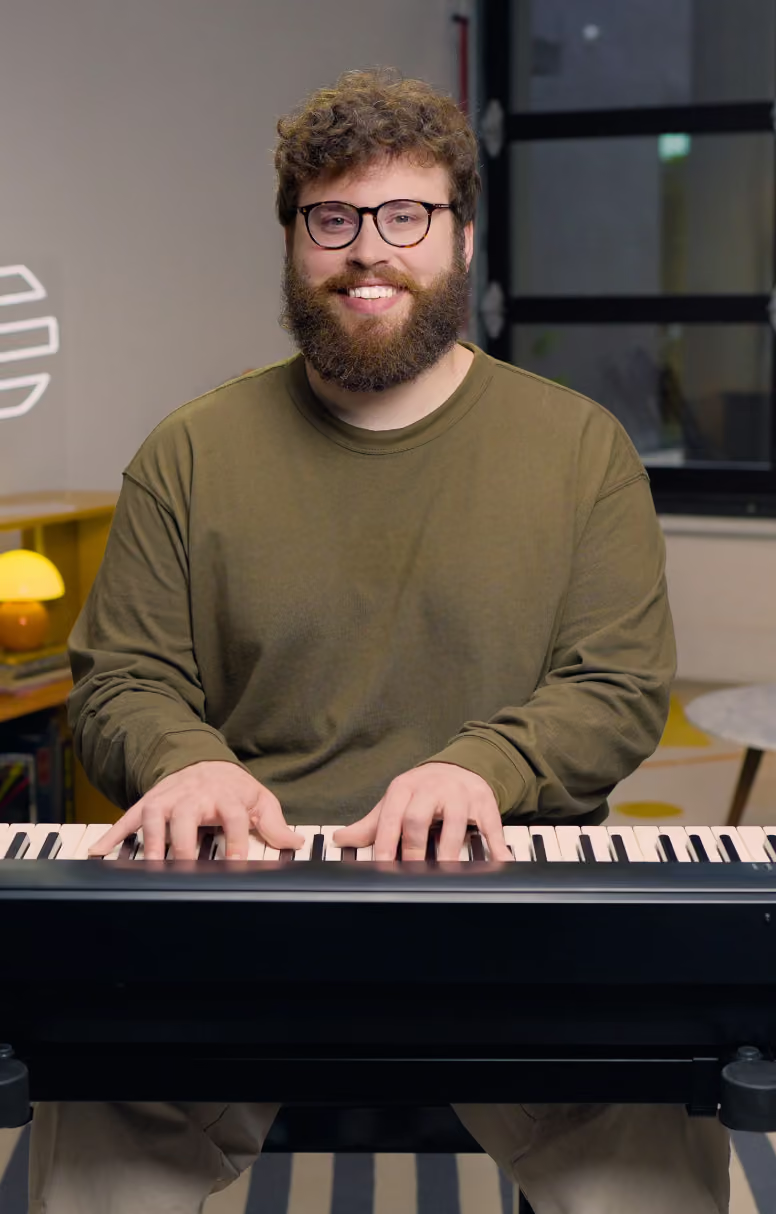
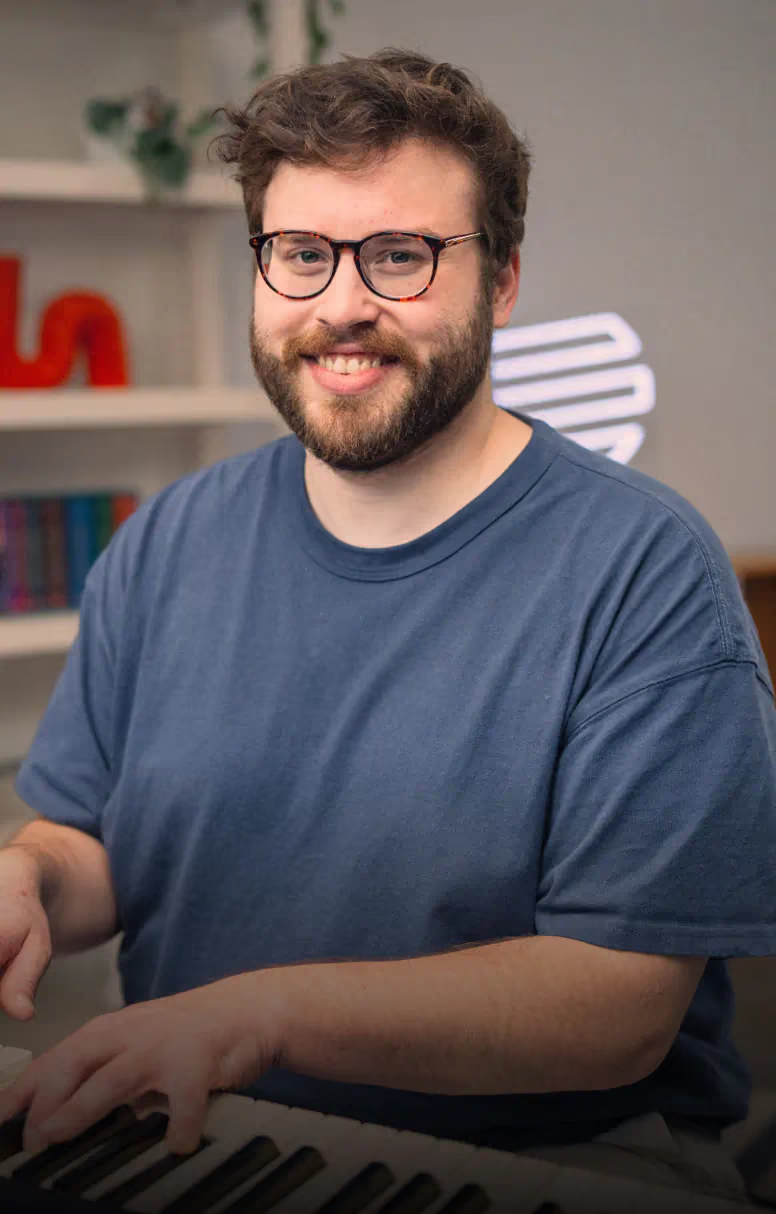
Dion Todman
Dion Todman is a pianist, composer, and educator who helps aspiring pianists build a strong musical foundation through clear, music-first instruction.
Limitless learning.
All-inclusive access to every instrument and course.





FULL REFUND, NO QUESTIONS ASKED
Improve your playing or get your money back
We’re so confident that we can improve your playing that we’re underwriting your membership with a 60-day satisfaction guarantee.
Frequently asked questions

The most structured approach to learning music