Late Intermediate Learning Pathway
Break out of the intermediate plateau.


Intermediate pianists
Comfortable with chords, scales, and basic theory? This class will help you build on those skills and take your playing further.
3 months
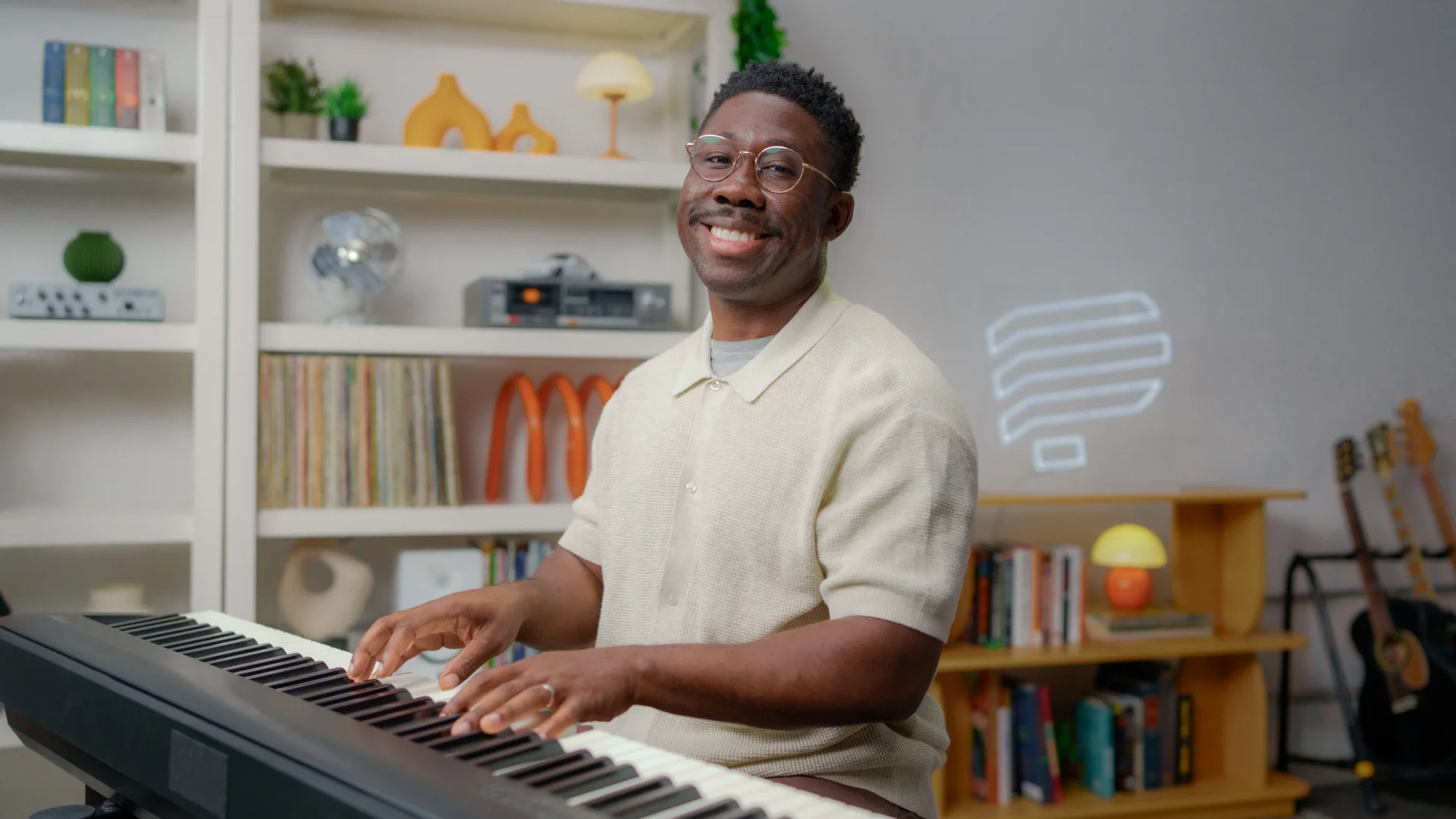
Dion Todman will guide you through six grades of instruction with daily practice plans and assessments.
Develop advanced skills
This class will help you tackle more complex music, play richer arrangements, and bring your own ideas to life.
Take the next step
Keep your momentum going with advanced classes and guided pathways to push your playing further.
What you'll learn
Join Dion Todman to develop the advanced techniques and musical instincts that set great pianists apart. Each day, you'll apply new concepts to real musical examples as you build toward more sophisticated harmonies, melodies, and arrangements.
- Build richer arrangements
- Improvise with confidence
- Develop your chordal vocabulary
- Explore classic and modern styles

Curriculum
Stay focused with this step-by-step learning program designed by our expert team of music educators.
Grade 1. Refining Fundamentals
Advanced playing starts with a deeper understanding of the fundamentals. To kick off the class, you'll explore how harmony works, learn to transpose chord progressions, develop greater independence between your hands, and expand your improvisational vocabulary.

Day 1. Chord functions and transposing
First, you’ll explore how chord functions help you recognize the relationships within a progression. You'll then use that knowledge to move the same progression into different keys without relearning every chord from scratch.
Day 2. Chord symbols demystified
Grab your reading glasses because now you’ll learn how to decode chord symbols by identifying their basic structure and color tones. This will help you approach lead sheets with more confidence and make more creative voicing choices.
Day 3. Adding rhythm to chord symbols
Now that you’ve reviewed chord symbols, it’s time to discover how you can give a completely different feel to the same chord progression with a new rhythm. You'll experiment with different comping patterns to give the chords different vibes.
Day 4. Basslines and the bass clef
Keep those reading glasses on because you’ll now strengthen your left hand by learning how to read the bass clef and create moving basslines. Then, you'll combine your bassline with right-hand chords to build a fuller groove.
Day 5. Two-hand coordination
Hope you’re ready to think like a drummer as you explore how different rhythms can interlock between your hands. You'll use rhythmic mnemonics to help you coordinate more complex patterns without losing the groove.
Day 6. Soloing with the blues scale
Now, you’ll learn how to use the blues scale over progressions that aren't the traditional blues. By experimenting with the blue note, you can add more expressive color to your improvisation.
Day 7. Play like the pros: crack the key
To end the grade, you’ll learn how professional pianists identify a song's key and explore its harmonic possibilities. Dion will help you develop a practice approach that prepares you to make creative choices without relying on memorized patterns.
Performance pieces
Choose a song to learn that takes what you worked on in Grade 1 and puts it in a musical context. Here, you'll get to jam with a live-recorded band of professional L.A. musicians as your backing track.
Personalized feedback
Submit a video of yourself playing a performance piece from this grade for custom video feedback on your playing from our team of pro pianists.
Final quiz
Make sure you're ready to move on to Grade 2.
Grade 2. Upgrade Your Chords
There's a lot more to playing chords than knowing which notes to hit. You'll explore how voicing and voice leading can transform familiar progressions, then discover how borrowing chords from outside the key opens up new harmonic possibilities.
Day 1. Fuller voicings
To start off a new grade, you’ll learn how to make chords sound fuller by doubling different chord tones. Dion will help you choose which notes to double without making your voicings sound muddy.
Day 2. Spacing and register
Now, you’ll explore how moving chords across the keyboard changes their sound and emotional character. You'll learn how to adjust the spacing between notes to make your voicings work in different registers.
Day 3. Voice leading
Next up, you'll learn to think of chord progressions as connected melodies rather than individual shapes. This approach will help you create smoother movement between chords and make your arrangements more melodic.
Day 4. Applying extensions
Dion will now show you how to introduce new colors to familiar chords using chord extensions. You'll experiment with different voicings to learn which extensions work best in different harmonic situations.
Day 5. Secondary dominants
Now, explore how secondary dominants create extra tension by temporarily pulling toward a new chord. You'll then apply them to a familiar progression to give the harmony a stronger sense of direction.
Day 6. Passing chords
Next, you’ll learn how to create smoother movement between two harmonies using passing chords. Dion will show you how to use chromatic voice leading to add more personality to familiar progressions.
Day 7. Play like the pros: sonic real estate
Finally, you’ll learn how professional pianists adjust their playing to fit the rest of the band. You'll practice making voicing and register choices that leave room for the other musicians.
Performance pieces
Choose a song to learn that takes what you worked on in Grade 2 and puts it in a musical context. Here, you'll get to jam with a live-recorded band of pro L.A. musicians as your backing track.
Personalized feedback
Submit a video of yourself playing a performance piece from this grade for custom video feedback on your playing from our team of pro pianists.
Final quiz
Make sure you're ready to move on to Grade 3.
Grade 3. Developing Your Rhythm
Great piano playing is about more than choosing the right notes. In this grade, you'll discover how rhythmic placement and emphasis can completely change the feel of a chord progression. You'll explore different grooves before refining your pocket and strengthening your internal sense of time.
Day 1. The cover tone
Kick off the new grade by learning how to use a repeating note over a changing chord progression to create a rhythmic groove. This technique will help you make your two hands sound like independent musical parts.
Day 2. Rhythmic accents
Next, you’ll start emphasizing different parts of the beat to transform the feel of a simple progression. You'll experiment with backbeat and upbeat accents to inject more rhythmic energy into your playing.
Day 3. Rhythmic pushes
After that, you'll learn how to anticipate chord changes by playing them just ahead of the beat. You'll practice placing these pushes precisely while keeping the underlying pulse steady.
Day 4. The shuffle
Continue your rhythm studies by diving into the triplet-based rhythm that defines the blues. You'll hone your timing to make swung 8th notes sound natural and relaxed.
Day 5. 16th-note funk comping
Ready to funk it up? You'll now explore the syncopated 16th-note rhythms that give funk its characteristic feel. By placing short chord stabs around the beat, you'll learn how to create tight, energetic grooves.
Day 6. Pocket
Now, you’ll develop more pocket than a pair of cargo pants. Discover how placing certain notes slightly behind the beat can completely transform the feel of a groove, and then experiment with subtle rhythmic placement to develop a more relaxed and personal sense of time.
Day 7. Play like the pros: develop your internal clock
To close out the grade, you'll learn some practical metronome exercises that challenge your ability to feel the pulse independently. These skills will help you maintain a steady groove even when the drums drop out.
Performance pieces
Choose a song to learn that takes what you worked on in Grade 3 and puts it in a musical context. Here, you'll get to jam with a live-recorded band of pro L.A. musicians as your backing track.
Personalized feedback
Submit a video of yourself playing a performance piece from this grade for custom video feedback on your playing from our team of pro pianists.
Final quiz
Make sure you're ready to move on to Grade 4.
Grades 4-6
In these final grades, you'll move beyond familiar intermediate techniques to explore more advanced musical concepts. You'll learn how to create richer arrangements and develop greater hand independence before putting your new skills to work across different musical styles.
Grade 4. Beyond Major and Minor
You’re now ready to discover how musicians add new colors to familiar progressions using harmony from outside the key. You'll explore the sounds of different modes and learn how to make creative chord substitutions in your own playing.
Day 1. Pentatonic chords
Start moving beyond basic major and minor sounds by pairing familiar pentatonic shapes with different bass notes. This approach will help you build more sophisticated harmony without getting bogged down in complicated theory.
Day 2. The chord with both 3rds
Now, you’ll combine major and minor 3rds to create the distinctive sound of the Hendrix chord. You'll put this crunchy harmony to work with bluesy riffs that bring out its character.
Day 3. The major IV in a minor key
Dion will now show you how the Dorian mode brings a brighter quality to minor harmony. Then, you'll use its distinctive major IV chord to create expressive new riffs.
Day 4. The raised 4th on the IV
Stay on the IV, but now you’ll explore how the raised 4th gives the Lydian mode its dreamy sound. You'll use simple chord shapes to bring this sophisticated color into your playing.
Day 5. The IV that goes minor
You’ll now make that IV minor and learn how borrowing a minor iv chord can bring an emotional twist to a major-key progression. Then, you'll create an even more distinctive chord by adding a major 7th to that voicing.
Day 6. The flat-side walk-up
Now, you’ll borrow chords from a parallel minor key to create more dramatic harmonic movement. You'll apply this idea to a cinematic walk-up progression that blends major and minor sounds.
Day 7. Play like the pros: your own substitutions
To cap off the grade, you'll learn how professional pianists use chord substitutions to put their own stamp on familiar progressions. You'll explore practical ways to add more adventurous harmony without losing the original musical idea.
Performance pieces
Choose a song to learn that takes what you worked on in Grade 4 and puts it in a musical context. Here, you'll get to jam with a live-recorded band of pro L.A. musicians as your backing track.
Personalized feedback
Submit a video of yourself playing a performance piece from this grade for custom video feedback on your playing from our team of pro pianists.
Final quiz
Make sure you're ready to move on to Grade 5.
Grade 5. Two Hands, Two Parts
Ready to break the chain between those hands? You'll now improve your hand independence to create more complex piano arrangements. You'll also learn how to make each hand work more independently while maintaining a balanced sound. By the end, you'll be able to create fuller arrangements that highlight the melody.
Day 1. Harmonizing a melody
Start off this melody-focused grade by adding supporting harmonies underneath simple melodies to make them sound fuller. You'll use these harmonies to build complete chord-melody arrangements while keeping the main melody clear.
Day 2. Piano drumming
Then, you’ll start approaching the piano like a drummer by assigning different rhythmic roles to different registers. You'll combine these parts to create the sound of an entire rhythm section using just your two hands.
Day 3. Two-hand arpeggiation
Now, you'll learn how to play flowing arpeggios across multiple octaves using both hands. By coordinating your hand movements more efficiently, you'll learn how to navigate the keyboard with greater speed and control.
Day 4. Contrary motion
Next up, create more interesting movement by sending your bassline and melody in opposite directions. You'll build on this technique by adding inner voices that fill out the harmony without getting in the way.
Day 5. Melody in octaves
Dion will help you improve your two-hand skills as you play the same melody in both hands, an octave apart. Matching the timing and articulation will strengthen your left-hand control while giving the melody a fuller sound.
Day 6. Bringing out the melody
Next, dial in your dynamics by making a melody stand out from the surrounding harmony without playing the entire chord louder. Careful control of your touch will help keep the accompaniment in the background while the melody sings.
Day 7. Play like the pros: when it won't come together
Lastly, you’ll explore how professional pianists break down difficult passages into manageable pieces. This practice strategy will help you approach challenging music more efficiently and build confidence as you work toward the full performance.
Performance pieces
Choose a song to learn that takes what you worked on in Grade 5 and puts it in a musical context. Here, you'll get to jam with a live-recorded band of pro L.A. musicians as your backing track.
Personalized feedback
Submit a video of yourself playing a performance piece from this grade for custom video feedback on your playing from our team of pro pianists.
Final quiz
Make sure you're ready to move on to Grade 6.
Grade 6. Styles
End the class on a high note by applying your skills across seven different musical styles. You'll study the techniques that make each genre distinctive and learn how to adapt your playing to different musical situations. Along the way, you'll discover how to pull ideas from your favorite recordings and make them your own.
Day 1. R&B
Start off your stylistic journey by shaping an R&B accompaniment around the singer rather than filling every gap with chords. Keep your left hand grooving while leaving enough space for the vocal melody to shine.
Day 2. Motown moves
Now, you’ll give a classic soul groove its bounce with crisp backbeat accents. You'll also add expressive double grace notes to this arrangement inspired by Sam Cooke.
Day 3. Bossa nova
Travel from Detroit to Rio de Janeiro and use the jazz standard Blue Bossa to navigate sophisticated ii-V-I progressions between different keys. You'll also work on the rhythmic feel that makes bossa nova comping sound relaxed and natural.
Day 4. Ethereal pop
Dion will show you how a progression can stay engaging even when the chords barely change. Use subtle melodic ideas and changing dynamics to create the floating feel of ethereal pop inspired by Fleetwood Mac's Dreams.
Day 5. Stevie Wonder vibes
Now, you’ll build a Stevie Wonder-inspired funk groove with a punchy bassline and syncopated chord stabs. Finish by adding a flashy two-finger glissando that sweeps across the black keys.
Day 6. Intro to classical
Next up, you'll explore classical piano through a simplified version of Minuet in G. Careful phrasing and dynamic control will help you make the melody sing without relying on a band or backing track.
Day 7. Minor blues
To finish the pathway, you'll explore the moody sound of the 12-bar minor blues. You'll learn how to comp through the form before stepping into the spotlight with your own blues solo.
Performance pieces
Choose a song to learn that takes what you worked on in Grade 6 and puts it in a musical context. Here, you'll get to jam with a live-recorded band of pro L.A. musicians as your backing track.
Personalized feedback
Submit a video of yourself playing a performance piece from this grade for custom video feedback on your playing from our team of pro pianists.
Final quiz
Make sure you're ready to move on to new challenges.

REAL students
Don’t take our word for it, take theirs

Your Instructor
Dion Todman
Dion Todman is a pianist, composer, and educator who helps aspiring pianists build a strong musical foundation through clear, music-first instruction.
Limitless learning.
All-inclusive access to every instrument and course.







FULL REFUND, NO QUESTIONS ASKED
Improve your playing or get your money back
We’re so confident that we can improve your playing that we’re underwriting your membership with a 60-day satisfaction guarantee.
Frequently asked questions

The most structured approach to learning music