


Blues Learning Pathway
Explore the foundation of modern groove.


Late beginner bassists
Start with the basics and build up to sophisticated blues basslines. If you have a basic beginner foundation, you're ready to take this class.
3 months
Dylan will guide you through 6 grades of step-by-step instruction with daily practice plans and assessments.
Master the blues
By the end of this pathway, you'll be able to confidently build basslines and improvise over any blues song.
Take the next step
Once you've mastered blues bass, keep progressing with more challenges and guided pathways.
What you'll learn
Discover the genre that continues to influence modern music. From basic 12-bar grooves to advanced modern styles, this class will help you internalize the sound and feel of the blues.
- Master the art of the 12-bar blues
- Develop your rhythm and time feel
- Study the style of blues bass icons
- Develop practical skills for the stage and studio

Curriculum
Stay focused with this step-by-step learning program designed by our expert team of music educators.
Your guided learning pathway
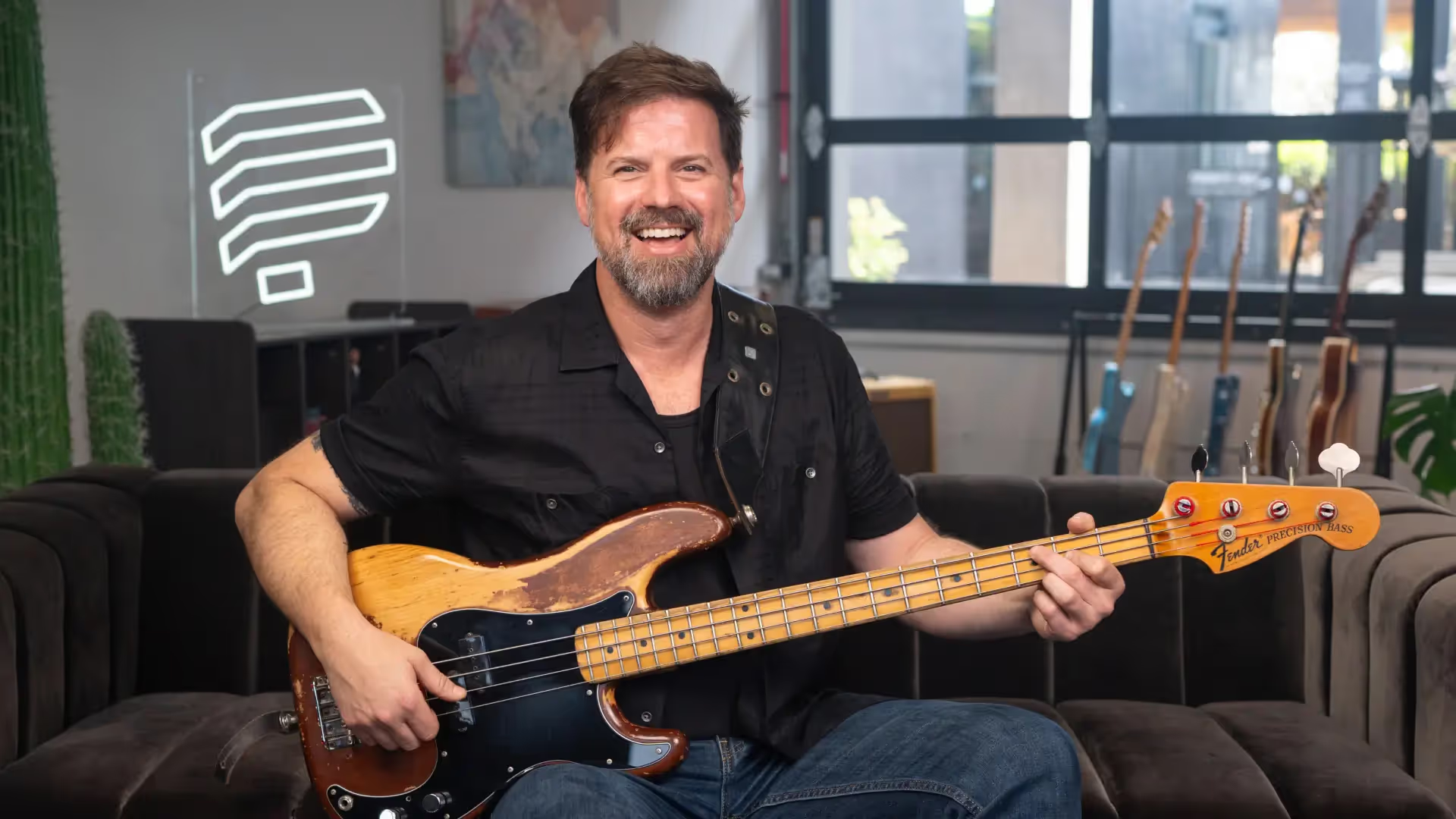
In this 3-month Learning Pathway, Dylan Wilson will guide you through mastering the art of blues and preparing to play with other musicians. This class goes far beyond the basic 12-bar blues. You'll explore regional blues feels, learn modern walking concepts, and tackle practical theory to expand your fretboard awareness.
Play the Blues
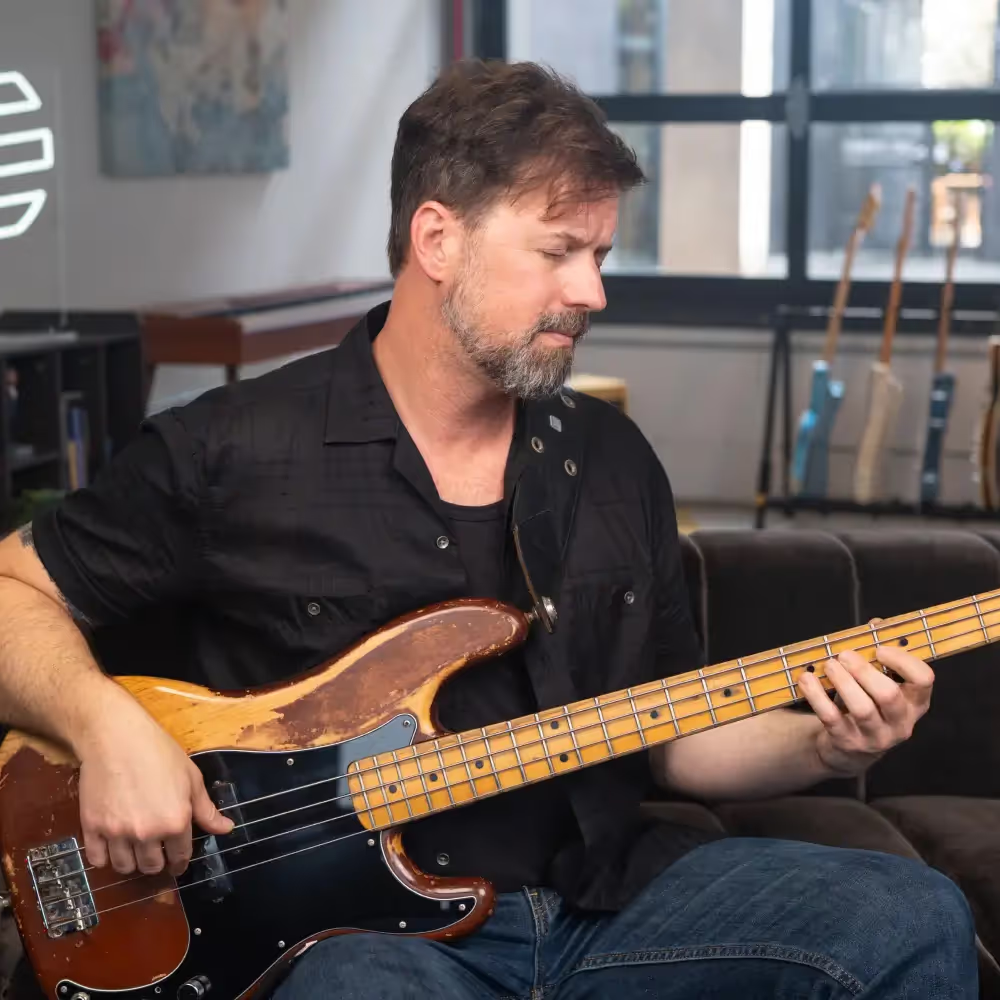
In Grade 1, you’ll go back to where it all started. Rock, funk, jazz, pop, even metal: it all comes from the blues.
Across seven expertly paced lessons, you’ll learn to play with a shuffle feel and navigate the 12-bar blues in any key, major or minor.
Along the way, you’ll develop techniques to expand on the blues, including using alternate chord progressions and must-know intros and endings.
Building Your Basslines
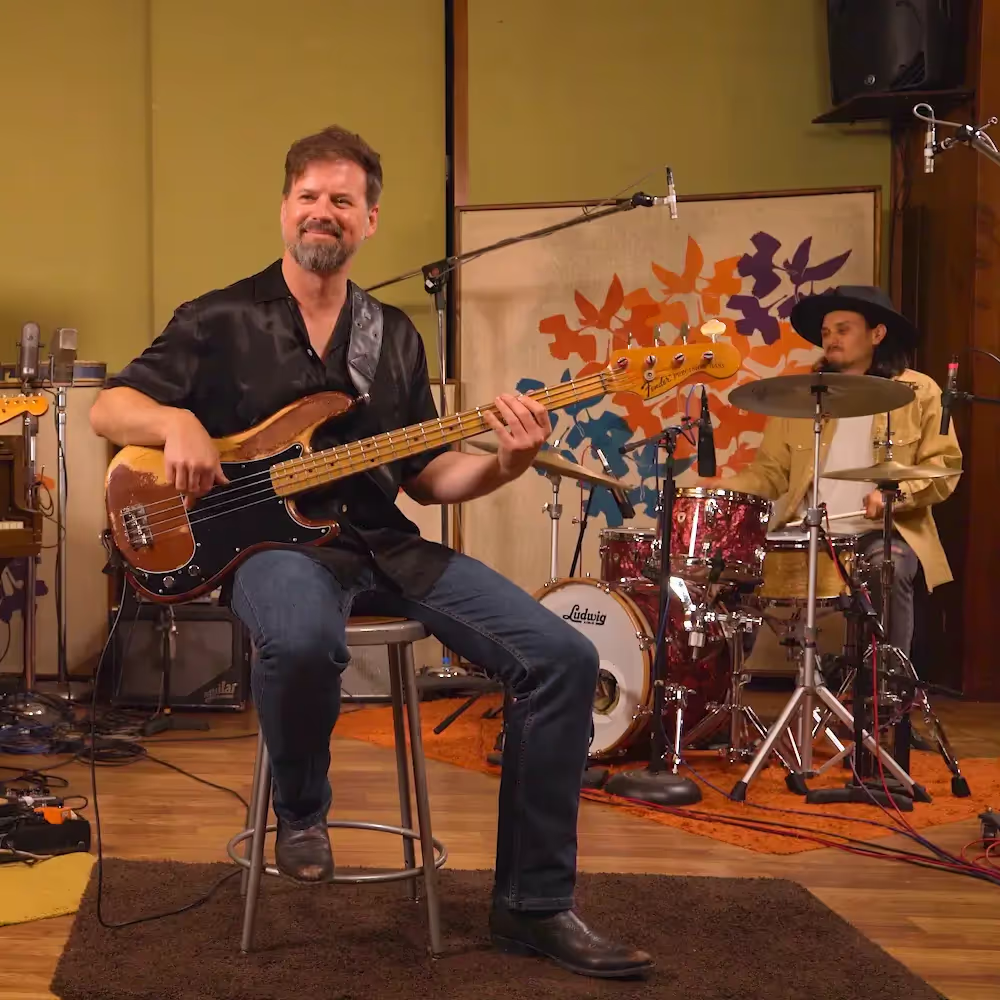
In Grade 2, you'll expand on your blues foundation with scales and moves to start crafting your own basslines right away.
From walkups and triads to box variations and the walking blues cliché, you’ll leave this grade with a handful of go-to basslines to use for the rest of your bass journey.
Styles and Feels
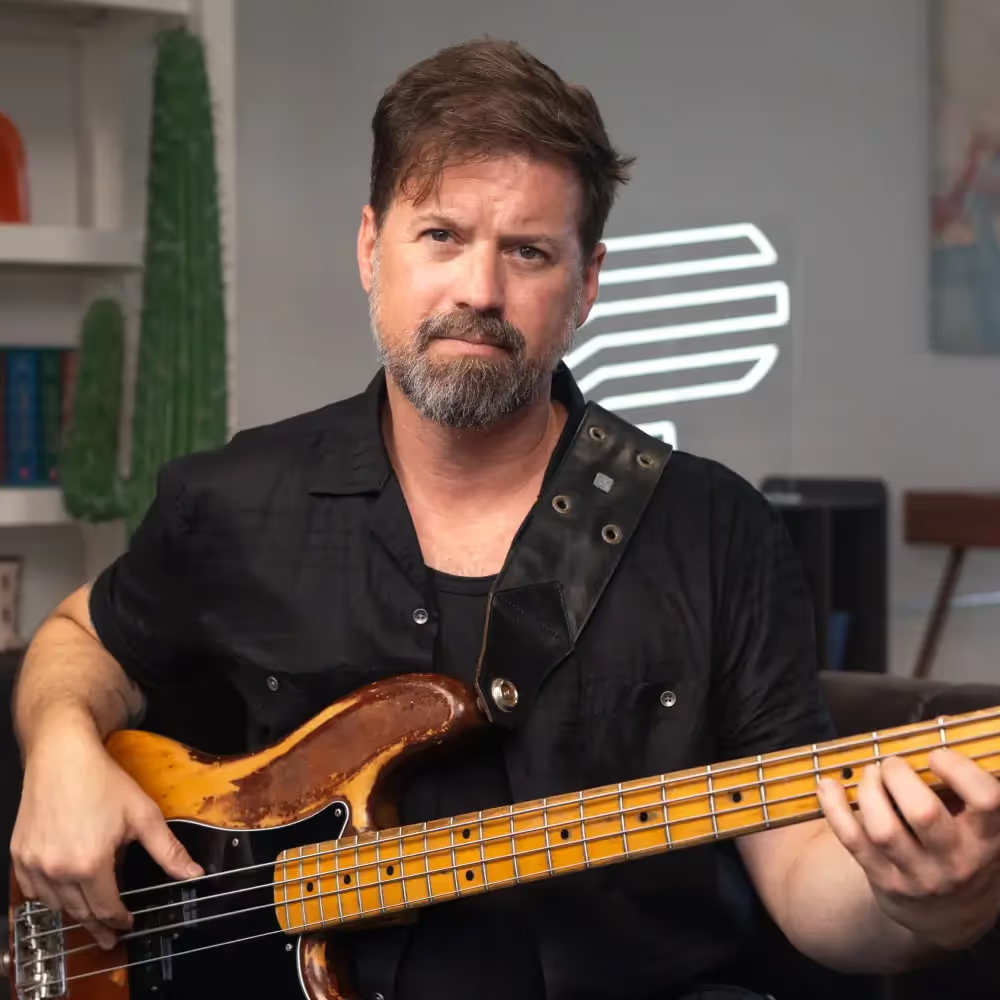
In Grade 3, we’ll start incorporating new feels from around the world into our basslines, as well as bluesifying genres like country and jazz.
You’ll learn how to play Latin blues, jazz blues, and straight-8th Texas blues rock. By the end of this grade, you’ll have a deeper understanding of just how influential the blues is across genres and cultures.
Grade 4. Study the Greats
Now that you’ve internalized the blues form and feel in many styles, it’s time to dip into blues history and learn from the all-time great bassists. Whether it’s Tommy Shannon’s laid-back Texas shuffle or Jack Bruce’s in-your-face bass riffs, you’ll leave with a trove of bass techniques that will expand your vocabulary and help you find your own voice on the bass.
Grade 5. Chord Substitutions and Moves
In Grade 5, you’ll add pro-level sophistication to your bass playing with colorful chord substitutions, tension-filled pedal tones, and jazzy progressions. You’ll find ways to shape the blues to fit your style and voice, all while improving your pocket and ear.
Grade 6. Blues Gig Toolkit
This is the grade that separates beginners from advanced players. The blues is all about playing with others and feeding off each other’s energy, so we’re giving you a toolkit of essential techniques for your first (or next) gig. You’ll learn techniques and concepts like ghost notes, call and response, and the 3:2 system. You’ll leave this class with the tools to become every band’s favorite bassist to jam with.
Grade 1. Play the Blues
The blues is all about feeling. More than likely, you’ve heard a 12-bar blues before. But in Grade 1, you’ll dive deep into the form and signature rhythm to start internalizing the blues feel. Once you have the basic form down, you’ll explore techniques to spice up the blues and improve your pocket.

Day 1. 12-bar blues form
Learn the three chords that revolutionized music forever while working through basic rhythms like whole and quarter notes. This will be the foundation for every lesson in this class.
Day 2. Box blues
Learn to play the blues in any key using the simple blues box.
Day 3. Straight vs. shuffle
With the blues form down, you’ll now learn how to play the rhythm that gives the blues its signature feel: the shuffle.
Day 4. The quick change, turnaround, and ii-V
Dylan will show you how to expand the 12-bar blues and sound like a pro by changing up just a few chords.
Day 5. Minor blues
You’ll give the blues some melancholic vibes by switching all the chords to minor and throwing in the bVI chord.
Day 6. Must-know intros and endings
Learn how to start and end blues songs to craft the perfect musical conversation.
Day 7. Workout
Put everything together in a musical workout and reinforce what you’ve learned.
Performance pieces
Choose a song to learn that takes what you worked on in Grade 1 and puts it in a musical context. Here, you'll get to jam with a live-recorded band of professional L.A. musicians as your backing track.
Personalized feedback
Submit a video of yourself playing a performance piece from this grade for custom video feedback on your playing from our team of pro bassists.
Final quiz
Make sure you're ready to move on to Grade 2.
Grade 2. Building Your Basslines
Now that you’ve learned the form and rhythm of the blues, it’s time for you to learn how to create your own basslines. Using scales, triads, and simple moves, you’ll be able to outline chords and add momentum to songs.
Day 1. Classic Box Variations
Prepare for your first blues jam session with essential basslines you can pull out whenever and wherever to navigate the 12-bar blues with confidence.
Day 2. Three must-know scales
Meet three essential scales for creating melodic blues basslines: the Mixolydian scale, the minor scale, and the pentatonic scale.
Day 3. Triads
You’ll learn how to outline chord changes like a pro using just three notes.
Day 4. Approaching the root
Learn how walkups and walkdowns let you add movement and tension while connecting chords more smoothly.
Day 5. Walkups and walkdowns
Keep building momentum with chromatic and scale-tone walkups.
Day 6. Walking blues cliché
Keep the momentum going with a tried-and-true walking bassline that’s been used by hundreds of artists in rock, blues, and pop.
Day 7. 5th to root
Hold down the groove with just two notes using half-step sidesteps and a tritone substitution.
Performance pieces
Choose a song to learn that takes what you worked on in Grade 2 and puts it in a musical context. Here, you'll get to jam with a live-recorded band of pro L.A. musicians as your backing track.
Personalized feedback
Submit a video of yourself playing a performance piece from this grade for custom video feedback on your playing from our team of pro bassists.
Final quiz
Make sure you're ready to move on to Grade 3.
Grade 3. Styles and Feels
From country and jazz to Latin grooves and heartfelt waltzes, the blues is everywhere. In this grade, you’ll explore how blues basslines can work in various styles and feels.
Day 1. One-chord vamps
Learn how to use riffs and fills to keep one chord sounding like a million bucks.
Day 2. Country blues
Explore the shared roots between the blues and country using a rhythm called the two feel.
Day 3. 3/4 blues
You’ll learn how to play jazzy 7th-chord arpeggios in 3/4 time (aka a waltz).
Day 4. 12/8 blues
Now, we’ll keep experimenting with time signatures by applying a 12/8 feel to our Chicago bassline.
Day 5. Texas/straight 8ths
Let’s sprinkle some rock on our blues with a driving straight-8th groove inspired by the Texas bluesman Albert King.
Day 6. Intro to jazz blues
You’ve gotten a taste of jazz blues, but now you’ll learn the jazziest of all chord progressions: the ii-V-I.
Day 7. Latin blues styles
Join artists like Howlin’ Wolf, Albert King, and Carlos Santana by incorporating Latin American rhythms like the rhumba and boogaloo into the blues.
Performance pieces
Choose a song to learn that takes what you worked on in Grade 3 and puts it in a musical context. Here, you'll get to jam with a live-recorded band of pro L.A. musicians as your backing track.
Personalized feedback
Submit a video of yourself playing a performance piece from this grade for custom video feedback on your playing from our team of pro bassists.
Final quiz
Make sure you're ready to move on to Grade 4.
Grades 4-6
Now, we’ll leave behind the beginner phase and get closer to blues mastery. Start by studying the signature techniques of the great blues bassists. Then, you’ll upgrade your 12-bar blues with chord stops, pedal tones, and advanced jazz-blues turnarounds. Finally, Dylan will get you ready for the stage with advanced techniques like improvisation, call and response, and the 3:2 system.
Grade 4. Study the Greats
In this grade, you’ll explore the styles of genre-defining bass legends. Each day, you'll dive into the signature techniques behind a low-end icon to expand your vocabulary and craft your own voice.
Day 1. Willie Dixon (Chicago blues)
Learn how Willie Dixon used simple yet punchy bass riffs to hold down the rhythm for blues legends like Muddy Waters and Chuck Berry.
Day 2. Tommy Shannon (power trio)
Tommy Shannon will show us how to control the dynamics of our basslines to match the energy of a guitarist like Stevie Ray Vaughan.
Day 3. Ray Brown (jazz blues)
We’ll study how Ray Brown used walking basslines, chromaticism, and approach notes to support artists like Oscar Peterson and the rock band Steely Dan.
Day 4. Donald “Duck” Dunn (soul/blues)
Donald “Duck” Dunn was inspired heavily by R&B and gospel, and he’ll show us how to translate the blues into radio-friendly soul hits using simple but catchy ostinato patterns.
Day 5. Jack Bruce (blues rock)
Following in Jack Bruce’s footsteps, we’ll crank the volume and share center stage with lead guitarist Eric Clapton.
Day 6. Noel Redding
Learn how Noel Redding approached bass playing with a guitarist’s mindset, often using riffs and even chords to support Jimi Hendrix.
Day 7. Jerry Jemmott
Learn how to make the blues groove even harder with Jerry Jemmott, who had a deep pocket and propelled the blues toward danceable genres like funk and fusion.
Performance pieces
Choose a song to learn that takes what you worked on in Grade 4 and puts it in a musical context. Here, you'll get to jam with a live-recorded band of pro L.A. musicians as your backing track.
Personalized feedback
Submit a video of yourself playing a performance piece from this grade for custom video feedback on your playing from our team of pro bassists.
Final quiz
Make sure you're ready to move on to Grade 5.
Grade 5. Chord Substitutions and Moves
By now, you have the traditional 12-bar blues form in your veins. In this grade, you’ll expand on the form with colorful chord substitutions, tension-building pedal tones, and even jazzy ii-V progressions.
Day 1. Stops
Build tension and emphasize the groove with chord stops.
Day 2. #IV, I/V, and the VI chord
Zoom in on three types of chord substitutions to make the 12-bar blues feel fresh again.
Day 3. Pedal tones
Change the sound and feel of every chord simply by staying on one note through a progression.
Day 4. Minor-chord walkup
Learn how the Allman Brothers Band put a unique spin on a classic blues using a minor-chord progression to connect the I chord to the ii-V.
Day 5. ii-V opportunities
Focus in on the different places where you can inject ii-V progressions to build tension and add some jazzy sophistication to the blues.
Day 6. Jazz blues (advanced)
Take on a full jazz blues walking bassline using the advanced techniques we’ve explored throughout this class.
Day 7. Workout
Break a sweat with our musical spin on Simon Says: Dylan Says, Blues Edition.
Performance pieces
Choose a song to learn that takes what you worked on in Grade 5 and puts it in a musical context. Here, you'll get to jam with a live-recorded band of pro L.A. musicians as your backing track.
Personalized feedback
Submit a video of yourself playing a performance piece from this grade for custom video feedback on your playing from our team of pro bassists.
Final quiz
Make sure you're ready to move on to Grade 6.
Grade 6. Blues Gig Toolkit
In this final grade, Dylan will prepare you for your first (or next) blues gig with a toolkit of pro-level techniques that will help you play with confidence and great feel in a band setting.
Day 1. Ghost notes
Tighten your pocket by thinking like a drummer and playing muted percussive notes.
Day 2. The 3:2 system
Learn the cheat code for professional-sounding solos and riffs.
Day 3. The minor 3:2 system
Flip the 3:2 system for expert basslines in minor keys.
Day 4. Improvising
Learn how to take a solo without losing the groove.
Day 5. Call and response
Improve your musical communication skills with the king of all jam session techniques.
Day 6. Dominant 7th chords
Add harmonic flavor with tasteful bass chords, including two- and three-note chords.
Day 7. Workout
For your final workout of the pathway, you’ll run through seven basslines that you learned throughout the class.
Performance pieces
Choose a song to learn that takes what you worked on in Grade 6 and puts it in a musical context. Here, you'll get to jam with a live-recorded band of pro L.A. musicians as your backing track.
Personalized feedback
Submit a video of yourself playing a performance piece from this grade for custom video feedback on your playing from our team of pro bassists.
Final quiz
Make sure you're ready to move on to new challenges.


FULL REFUND, NO QUESTIONS ASKED
If you don’t get better, we’ll give you your money back
We’re so confident that Pickup Music can help you make progress that we’re underwriting your membership with a 60-day satisfaction guarantee.
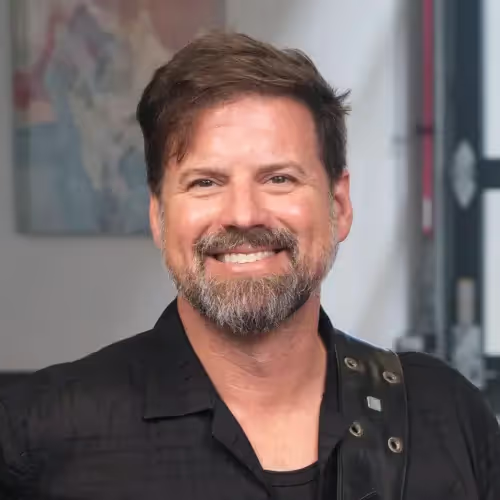
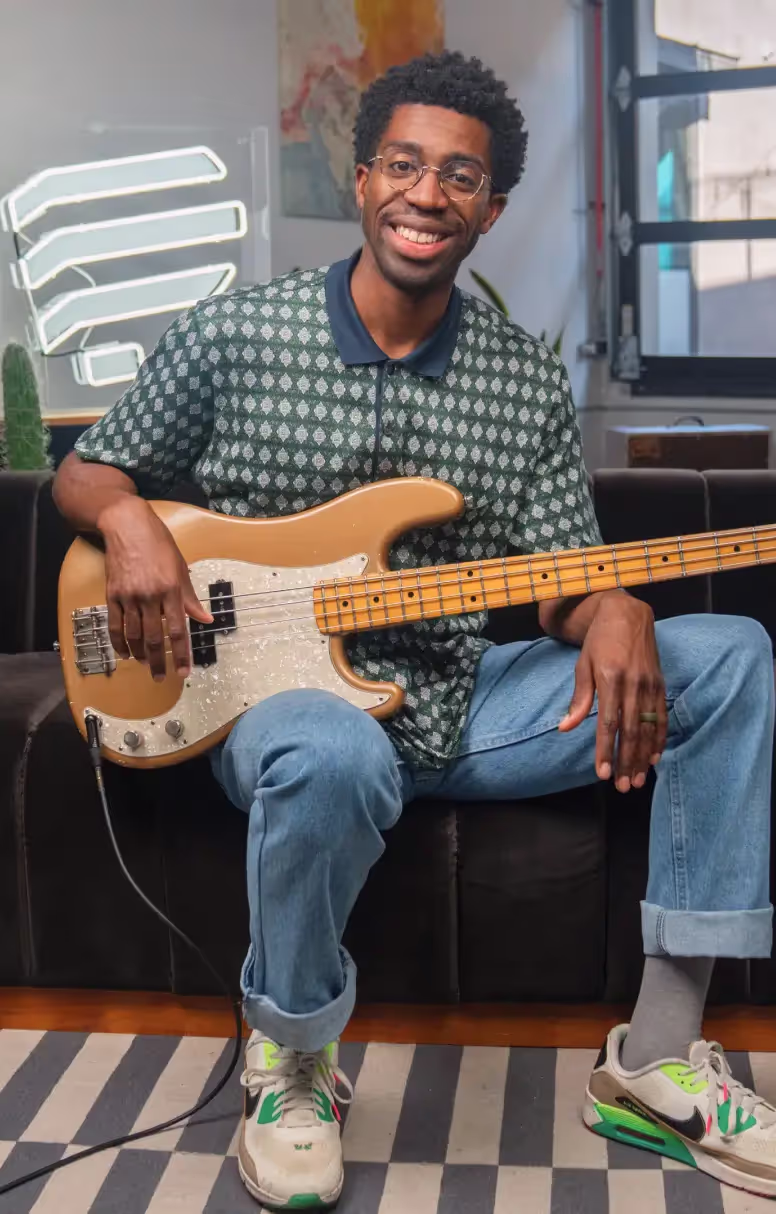
Your Instructor
Master the art of blues with a world-touring bassist who brings real performance experience to every lesson.
Explore LessonsWhat’s in every Pickup Music membership?
Try free for 14 days
1,000+ Lessons

All skill levels

Interactive TAB

Track your progress

Daily practice plans

Live lessons every week
Limitless learning.
All-inclusive access to every course.


Frequently Asked Questions
Got a different question? Message us in the chat pop-up.
⚡️ Getting started
Is Pickup Music right for me?

Are you a bass player who feels like you haven’t made progress in a few months… years… or even decades?
You’re probably stuck in what’s called the ‘intermediate plateau’. This is very common and can be very frustrating.
What’s the cause? Well, it’s pretty easy to learn the basics on bass.
But what then? Triads? Modes? Arpeggios? The phrygian scale?!
Without a clear plan and learning system you fall back to playing the same old lines over and over again. Or you bounce around free lessons online but nothing seems to stick. It’s a recipe for a lot of practice without much progress.
That’s where Pickup Music can help. We specialize in taking players stuck in a bass rut and turning them into advanced bassists.
We do this through Learning Pathways that take you on a step-by-step journey towards fretboard mastery. We give you a highly structured system that shows you exactly what to work on each week to make serious progress.
These Learning Pathways take the guesswork out of your practice routine. You are guided through a proven grade-by-grade system with daily lessons, play-along practice exercises and interactive workouts.
But it’s not all about theory. We apply everything you learn to real music. That’s why every grade of our Learning Pathways build up to performing a song with a live backing band. This simulates what it’s like to play a real gig, with real musicians. It’s the absolute best way to learn.
You also get 1:1 video feedback on your playing from our expert instructors and can attend weekly live lessons. This personal feedback makes Pickup Music the closest thing to taking in-person lessons, but at a fraction of the cost.
So does this method actually work? Will you see results in your playing?
The most common thing we hear from new members is that they’ve made more progress with Pickup Music in a few months than in years of teaching themselves. As one member recently told us, “I'm finally seeing progress for the first time in many years”.
Want to hear about other members’ experiences with us? Read our independent Trustpilot reviews.
Is Pickup Music worth the money?
Private bass lessons will cost you at least $50 per lesson or $2,600 a year.
Going to a music academy will cost you about $40,000 a year.
A Pickup Music membership will cost you just $180 for the whole year.
That works out to 50 cents a day!
But it’s not just about the money. It’s about not wasting your precious time. It’s about making actual progress on this beautiful instrument.
By following our proven Learning Pathway system, you can stop wasting your time and effort trying to guess what you should practice next. Our guided programs eliminate the guesswork so you know exactly what you need to focus on each day and week to make lasting progress with bass.
What makes Pickup Music better than other bass lesson sites?
Most online bass lesson sites are very good at teaching one-off styles and techniques. Or they get super famous bassists to record one-hour video lessons talking at length about their particular style and career.
The problem is that these approaches don't stick. They don’t help you to actually get better as a bassist. You can waste a lot of time bouncing around these types of unconnected, one-off lessons. It’s a recipe for a lot of practice without much progress.
Pickup Music takes a different approach. We give you a highly structured system that shows you exactly what to work on each week to make serious progress. We take you beyond the basics through a step-by-step journey towards fretboard mastery.
By following a Pickup Music Learning Pathway, you are getting the most guided way to learn bass. Over 6 grades, you are taken through daily lessons and practice exercises that carefully explain what’s going on behind the music.
Each grade then builds up to song performances that apply everything you’ve learned with a live backing band. These challenges - where we simulate what it’s like to play a real gig, with real musicians - is the absolute best way to learn.
The Learning Pathway method takes the guesswork out of your practice routine. Most bassists start to see a rapid acceleration in their progress in a matter of weeks.
You can also get 1:1 video feedback on your playing and weekly live lessons. This personal feedback makes Pickup Music the closest thing to taking in-person lessons, but at a fraction of the cost.
Want to hear about other members’ experiences with us? Read our independent Trustpilot reviews.
What exactly do I get from a Pickup Music membership?
When you become a Pickup Music member you get unlimited access to our huge library of lessons across both guitar and bass.
You get to enjoy amazing features that create a premium learning experience:
- day-by-day lessons
- 1:1 video feedback on your playing
- weekly live lessons
- progress tracking
- interactive TAB
- multiple HD camera angles
- play-along practice exercises
- downloadable course notes and diagrams
- quizzes to test your understanding
- jam tracks with the Pickup Music Live Band
- exclusive members-only forum, contests and giveaways.
How do the Learning Pathways work?
Learning Pathways are kind of our special sauce here at Pickup Music. They take all the guesswork out of what to practice.
You get day-by-day lessons, play along practice exercises with your instructor, interactive jams with the Pickup Music live band and you can submit videos of your playing for feedback from the Pickup Music team.
We designed this system so that you will know exactly what to practice every time you pick up the bass. This means that even if you only have time to practice with us once a week, you will still make great progress by following a Learning Pathways.
How often do I need to practice to see results?
Ideally you would practice about three times a week for 30 minutes at a time. But we know that life gets in the way sometimes! So here’s the good news: deliberate practice matters so much more than how often you practice.
After working with thousands of bassists, we’ve found that the most important thing is to know exactly what you’re going to practice before you pick up the bass. Even if you can only use Pickup Music a few times a month, you will still make really good progress if you stick to the step-by-step structure of our Learning Pathways.
Can I take the lessons at my own pace?
Everything on Pickup Music is designed to be taken at your own pace. There are no deadlines, so you can work at your own speed. You can stay on a topic until you really understand it before you move on.
While we divide our Learning Pathways into ‘days’ - this is a suggestion only. Some learners might take a few days in one sitting, while others will spend a few sessions on a single day. You can go at the pace that feels most comfortable to you.
How does the 1:1 video feedback work?
We want our members to get the closest thing possible to in-person lessons but at a fraction of the cost. That's why you can now get individual video feedback on your bass playing from our team of expert instructors.
Here's how it works:
- Choose a performance piece to learn at the end of each grade of a Learning Pathway.
- Upload a video of yourself playing the performance piece.
- An expert instructor from our team will review your playing and send you back a detailed video on what you're doing well and what you need to work on.
- Repeat for each grade of the Learning Pathway.
I'm brand new to bass. Is Pickup Music the right choice for me?
Absolutely! We make learning the bass fun and simple – the way it should be.
Too many people get frustrated with bass because they develop bad habits and poor technique. Avoid these costly and time-consuming mistakes by taking Pickup Music's structured and step-by-step approach to learning bass.
You'll start with Pickup Music's introductory program Beginner Learning Pathway. Over a few weeks, we break down everything from simple chords and melodies to rhythm and lead playing. By the end of the program, you'll be able to play any simple pop or rock song (and even write your own).
Most importantly, we make sure you don't get stuck in the beginner's plateau - a common pitfall for bassists who are just starting out. You'll keep making progress through Pickup Music's guided Learning Pathways. These programs are designed to quickly take you from a beginner player to an intermediate one who feels comfortable across the whole fretboard.
Is Pickup Music good for intermediate and advanced bassists?
Pickup Music is the best platform available for intermediate and advanced bassists. Our courses take you beyond the basics to advanced concepts like triads, arpeggios, modes and improvisation.
The biggest trap for intermediate players is bouncing around from lesson to lesson without a plan or structure to get to that next level. We are known for taking intermediate and advanced players who have hit a ceiling and busting through until they reach the next level.
Am I too old for bass lessons?
Many of Pickup Music’s members are in their 60s and 70s and have seen amazing success with our programs. Our platform is designed to be user-friendly for all ages and skill levels. And our supportive community is made up of bass learners of all ages, cheering each other on.
Do I get access to the guitar lessons as well?
Yes. You get unlimited access to all of our guitar and bass lessons under the one membership.
💳 Pricing and plans
How does the 14-day free trial work?
When you first sign up to a Pickup Music membership, you enter your credit card but it will not be charged for 14 days. That means that if you decide to cancel within 14 days of signing up, you won't pay anything.
And we send you a reminder before your trial is about to end so you don’t forget about it.
If you decide to cancel after that, you won't be charged at your next billing cycle. That means: if you’re a monthly member, you won’t be charged for the next month. If you’re an annual member, you won’t be charged for the next year.
How does the 60-day money back guarantee work?
In addition to the 14-day free trial, we offer a 60-day money back guarantee. If you’re not satisfied with your progress in the first 60 days of your membership, we will give you your money back - no questions asked.
Please note: The 60-day money-back guarantee does not apply to app purchases made via Apple.
Is it easy to cancel?
Canceling is easy. It’s just one click of a button on your account page.
You won't be charged anything if you cancel during your 14-day free trial. We also send you a reminder before your trial ends so you don’t accidentally forget about it.
If you cancel after your 14-day trial, you won't be billed again at your next billing cycle. Your membership will remain active until it expires on the day it was originally set to renew.
What’s the difference between the annual and monthly plan?
The only difference is the price. The monthly membership is $29.99 charged monthly and the annual membership is $179.99 charged once a year.
That means that if you select the annual plan you will pay 50% less and save $180 over a year compared to the monthly plan.
We'll also send you reminders before we bill you each year so that you don't accidentally forget about it.
We give such a big discount for annual members because it aligns with our long-term vision to inspire and support lifelong bass learning.
Can I buy lessons individually?
We don’t sell lessons individually. But the good news is you get access to every single lesson on Pickup Music through the one membership. If you’re only interested in one lesson, you could purchase a monthly membership and cancel when you’ve finished it – we have a hunch you’ll want to stick around though :)
How do I restart my membership?
It’s easy to rejoin Pickup Music and we’d be thrilled to have you back! We even saved all of your lessons for you while you were gone on your My Classes page.
To restart your membership, log in with the email address you used to sign up the first time around and then select the plan of your choice.


