


Beginner bassists
This class is designed for beginner and late beginner players. You'll start with funk fundamentals and work up to more advanced techniques.
3 months
Nick will guide you through 6 grades of step-by-step instruction with daily practice plans and assessments.
Play in the pocket
This class will help you build groove-driven basslines using essential funk techniques from classic and modern styles.
Take the next step
Once you've mastered funk bass, keep progressing with advanced challenges and guided pathways.
What you'll learn
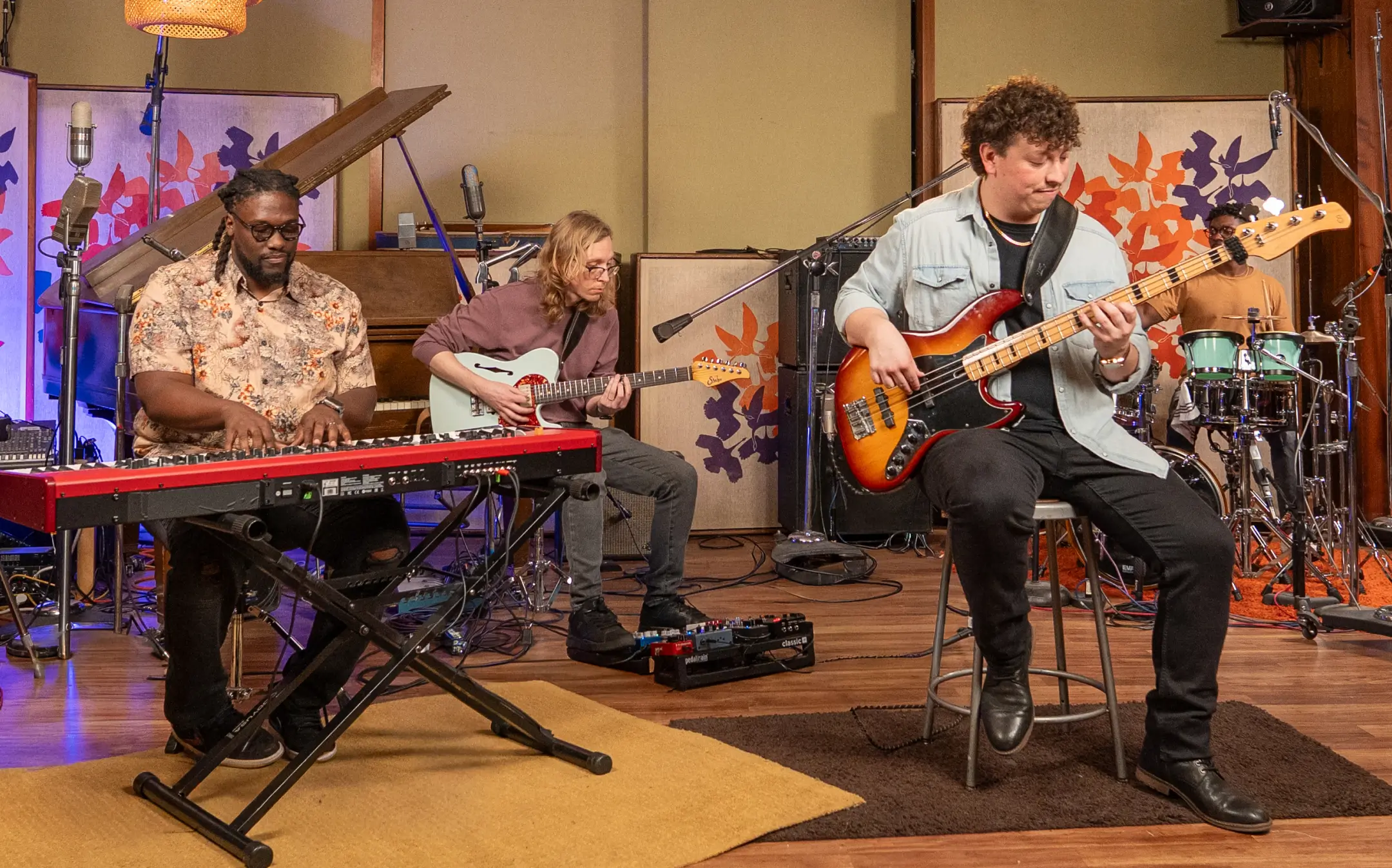
In this class, Nick Cisneros breaks down the core techniques behind unshakable funk basslines. Each day, you’ll dig into guided exercises and jams that sharpen your rhythm and help you sit deep in the pocket of a groove.
- Improve your pocket and time feel
- Learn how to play slap bass
- Compose your own funky basslines
- Lock in with the drums

Curriculum
Stay focused with this step-by-step learning program designed by our expert team of music educators.
Your guided learning pathway
In this 3-month Learning Pathway, Nick Cisneros will guide you through mastering the art of funk bass and preparing to play with other musicians. From the minor pentatonic and slap to driving 16th notes and disco octaves, you’ll learn everything you need to lock in tight funk grooves.
The DNA of Funk
To kick off the class, you’ll develop the foundational techniques that every great funk bassist uses to build a groove.
You’ll learn about the most important beat in funk, review subdivisions, and develop essential skills like muting, ghost notes, and legato playing.
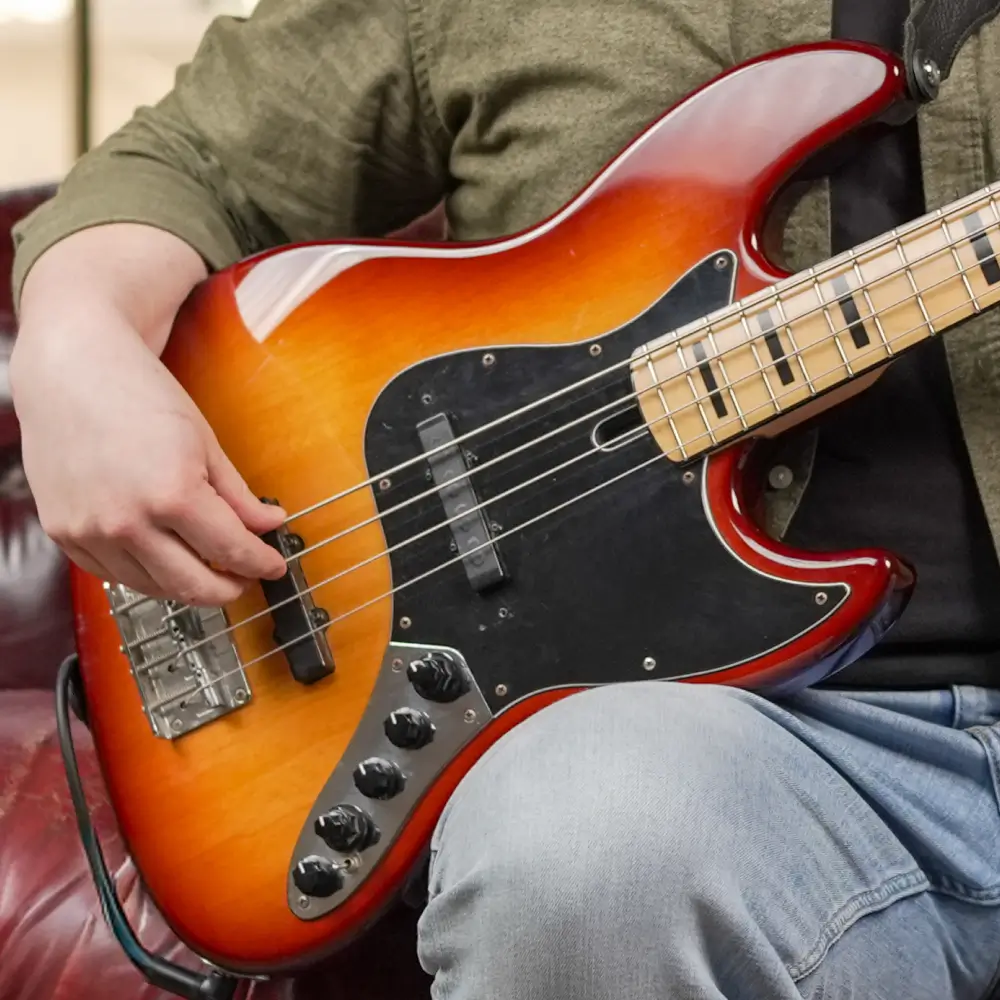
Learn Your Funk-isms
Next, you’ll start adding personality to your playing with must-know funk techniques that'll help you lock into the groove.
You’ll work on concepts like anticipation and constant 16th notes. Plus, Nick will show you how to add expand your vocabulary with the blue note, chromaticism, and octaves.
The Roots of Funk
In Grade 3, you’ll study the icons who defined funk and explore the techniques behind their sound.
From James Brown and The Meters to Rick James and Prince, you’ll discover how funk legends built unforgettable grooves and apply those ideas to your own playing.
Grade 4. Getting Slap Happy
This is what you’ve been waiting for. In Grade 4, you’ll take center stage by diving into slap bass. Once you get the hang of basic slap-and-pop technique, Nick will show you how to spice things up with embellishments.
Grade 5. Modern Funk
In Grade 5, you’ll return to your funk history studies to learn about the modern masters who are pushing the genre forward. You'll learn how bassists like Flea, Joe Dart, and Thundercat are injecting new soul into funk and combining it with other genres and styles.
Grade 6. Where the Funk Comes Together
To wrap up the class, you’ll combine your funk-isms to create more advanced and nuanced basslines. You’ll learn to switch between fingerstyle and slap, apply major 10th double stops, and improve your dynamic control. You’ll also learn about the connections between funk and Brazilian music. This is where you become a well-rounded funk bassist ready for the studio and stage.
Grade 1. The DNA of Funk
Build the fundamentals that every great funk bassist has used to bring the groove. In this opening grade, you’ll focus on the one and work on subdividing the beat to complement the drummer. You’ll also build more groove control with techniques like ghost notes, legato, and pentatonics.

Day 1. Funk starts on the one
You'll learn how you can get as wild as you want with your other notes as long as you always return to the most important beat of all: the one.
Day 2. The space between the beats
Learn to recognize and count 8th and 16th-note subdivisions so you can lock into funk rhythms between the beats.
Day 3. Less motion, more groove
Learn how to conserve energy while making your basslines smoother using hammer-ons and pull-offs.
Day 4. The notes we don’t play
Strengthen your muting and ghost-note control to emphasize the punchiness of your basslines.
Day 5. The power of three
Learn how to outline the harmony with major and minor triads while staying locked into the groove.
Day 6. That funky scale
Start building basslines and improvising with the minor pentatonic scale. By the end of today, you’ll understand why this scale shows up everywhere.
Day 7. Subdivision workout
Strap on your headband and strengthen your internal time with a counting-heavy workout that brings all the essential rhythmic concepts together.
Performance pieces
Choose a song to learn that takes what you worked on in Grade 1 and puts it in a musical context. Here, you'll get to jam with a live-recorded band of professional L.A. musicians as your backing track.
Personalized feedback
Submit a video of yourself playing a performance piece from this grade for custom video feedback on your playing from our team of pro bassists.
Final quiz
Make sure you're ready to move on to Grade 2.
Grade 2. Learn Your Funk-isms
With your fundamentals in the bag, it’s time to start adding more flavor to your basslines with the essential funk techniques every bassist should know. From constant 16th notes and the blue note to octaves and double stops, these techniques will add some serious flair to your lines.
Day 1. Anticipation
Add funky syncopation by anticipating the one and learning how funk lives in the offbeats.
Day 2. Rocco 16ths
Drive the beat with constant 16th notes inspired by Tower of Power’s Rocco Prestia. You’ll also hone your alternate-plucking skills today.
Day 3. The blue note effect
Create tension and release by using the flat 5 as a passing tone.
Day 4. Down the funk slide
Add funky excitement to your basslines with ascending, descending, and multi-string bass slides.
Day 5. Chromatic walkups
Use non-diatonic notes to build momentum and smoothly connect your target notes.
Day 6. Octaves
Unlock one of the funkiest techniques in bass by learning how to groove with octaves.
Day 7. Double stops
Add harmonic crunch to your basslines with dominant-7th double stops. You’ll make this technique even funkier with slides and a trill.
Performance pieces
Choose a song to learn that takes what you worked on in Grade 2 and puts it in a musical context. Here, you'll get to jam with a live-recorded band of pro L.A. musicians as your backing track.
Personalized feedback
Submit a video of yourself playing a performance piece from this grade for custom video feedback on your playing from our team of pro bassists.
Final quiz
Make sure you're ready to move on to Grade 3.
Grade 3. The Roots of Funk
Step into the Magic Funk Bus to go back in time and study from the greats. Learn the techniques behind funk icons like James Brown, Sly and the Family Stone, and Prince and expand your funk toolkit.
Day 1. James Brown
Return your focus to the one and learn how the bass worked with the drums to drive James Brown’s grooves.
Day 2. The Meters
Use simple pentatonic lines and rhythmic variation to capture the New Orleans funk of The Meters.
Day 3. The Time
Study The Time to learn how you can establish the groove and carry an entire song with just short, repetitive basslines.
Day 4. Rick James
Join the entire band to play unison lines and octaves. Let Rick James show you how to make your bass sound bigger and more melodic.
Day 5. Sly and the Family Stone
Channel Larry Graham with an 8th-note bounce that becomes the heartbeat of the band.
Day 6. Tower of Power
Build on Rocco-style 16ths with ghost notes, muting, and octaves.
Day 7. Prince
Study how Prince combined simple yet precise basslines with careful feel and intention to create some of the most beloved funk songs of all time.
Performance pieces
Choose a song to learn that takes what you worked on in Grade 3 and puts it in a musical context. Here, you'll get to jam with a live-recorded band of pro L.A. musicians as your backing track.
Personalized feedback
Submit a video of yourself playing a performance piece from this grade for custom video feedback on your playing from our team of pro bassists.
Final quiz
Make sure you're ready to move on to Grade 4.
Grades 4-6
These final grades are where your funk playing really opens up. You’ll dive into slap bass and explore the modern techniques behind today’s funk icons. You close out the class by combining your funk-isms into more advanced musical ideas that prepare you for the stage and studio.
Grade 4. Getting Slap Happy
Let’s be real: This is probably why you’re taking this class. It’s probably why you started learning bass in the first place. In this grade, you’ll start thinking more like a drummer as you hone your slapping and popping skills. You’ll build solid slap fundamentals and combine them with articulation techniques to increase the funk factor.
Day 1. Thump funk
Learn how to mimic a kick drum with your thumb. Nick will break down how to build a clean thump technique step by step.
Day 2. Single pops
Complement the thumb with bright, snare-like pops on the higher strings. Work on your hand positioning using just the right amount of pop to make those strings nice and snappy.
Day 3. Applying ghost notes
Now that you have your slap mechanics dialed in, you’ll add subtle percussion to your slap technique with ghosted thumps and pops.
Day 4. Slapping the pentatonic
Become an unstoppable funk force by combining one of the funkiest of all techniques with one of the most important scales.
Day 5. Slap bass hammer-ons
Add speed and personality to your slap lines with hammer-ons. Nick will guide you through using hammer-ons with both thumps and pops.
Day 6. Slap groupings
Tackle your first slap lick with double thumps, octaves, and grouped rhythms. After today, you’ll have a practical lick you can use throughout your bass career.
Day 7. Hand combination
Use both hands together to create a movable slap lick with open strings, hammer-ons, and pops.
Performance pieces
Choose a song to learn that takes what you worked on in Grade 4 and puts it in a musical context. Here, you'll get to jam with a live-recorded band of pro L.A. musicians as your backing track.
Personalized feedback
Submit a video of yourself playing a performance piece from this grade for custom video feedback on your playing from our team of pro bassists.
Final quiz
Make sure you're ready to move on to Grade 5.
Grade 5. Modern Funk
In this grade, you’ll study the modern bassists who are redefining funk. From Flea and Joe Dart to Anderson .Paak and Thundercat, you’ll learn how today’s players adapt classic funk concepts to modern grooves and styles.
Day 1. Red Hot Chili Peppers
Add some punk to your funk with Flea’s patented heavy attack style. You’ll combine this with funk-isms like chromaticism and funk slides to create some funk-rock lines.
Day 2. Jamiroquai
Bring disco into the modern era with 16th-note plucking and disco-octave grooves inspired by Jamiroquai.
Day 3. Bruno Mars
Deck yourself out in 24K gold with Bruno Mars. Learn how simple yet tight basslines can support pop-funk grooves with feel and consistency.
Day 4. Lettuce
Dive deeper into the relationship between drums and bass using precise placement, short lines, and deep pocket.
Day 5. Vulfpeck
Does it get any cooler than Joe Dart? You’ll focus on simplicity and precision while building a bassline that includes quarter, 8th, and 16th notes.
Day 6. Anderson .Paak
Ok, it gets cooler. Sit deeper in the pocket with Anderson .Paak-inspired basslines that lock into the rhythm section.
Day 7. Thundercat
Expand the role of the bass with funk’s most innovative bassist. Learn how funk can move beyond single-note lines as long as the groove remains strong.
Performance pieces
Choose a song to learn that takes what you worked on in Grade 5 and puts it in a musical context. Here, you'll get to jam with a live-recorded band of pro L.A. musicians as your backing track.
Personalized feedback
Submit a video of yourself playing a performance piece from this grade for custom video feedback on your playing from our team of pro bassists.
Final quiz
Make sure you're ready to move on to Grade 6.
Grade 6. Where the Funk Comes Together
In this final grade, you’ll bring everything you’ve worked on together into a more advanced approach to funk bass. You’ll focus on playing with greater intention and personality. This is where your basslines begin to sound more natural and uniquely your own.
Day 1. Combining fingerstyle and slap
Develop the ability to move more freely between plucking and slapping so you can better adapt to each musical situation.
Day 2. The funk chord
Build a stronger sense of harmony without losing your groove using major-10th double stops.
Day 3. Advanced ghosting
Use layers of ghost notes and articulations to make simple basslines even funkier. You’ll combine ghost notes with other funk-isms like hammer-ons and chromaticism.
Day 4. Dynamics in funk
Learn to control your intensity so your playing has more contrast and emotional impact. This is where your touch starts to define your sound.
Day 5. Disco doubles
Bring back octaves, but go full disco mode by doubling the top octave. This is an essential skill for playing disco.
Day 6. Pentatonic groupings
Rethink pentatonics with an often-overlooked technique. Grouping pentatonic notes is a fantastic way to add movement to your lines while using only a handful of notes.
Day 7. The Brazilian funk connection
Expand your rhythmic awareness by experiencing groove from a different perspective. Study how Brazilians incorporated funk into their music.
Performance pieces
Choose a song to learn that takes what you worked on in Grade 6 and puts it in a musical context. Here, you'll get to jam with a live-recorded band of pro L.A. musicians as your backing track.
Personalized feedback
Submit a video of yourself playing a performance piece from this grade for custom video feedback on your playing from our team of pro bassists.
Final quiz
Make sure you're ready to move on to new challenges.


FULL REFUND, NO QUESTIONS ASKED
If you don’t get better, we’ll give you your money back
We’re so confident that Pickup Music can help you make progress that we’re underwriting your membership with a 60-day satisfaction guarantee.

What’s in every Pickup Music membership?
Try free for 14 days
1,000+ Lessons

All skill levels

Interactive TAB

Track your progress

Daily practice plans

Live lessons every week
Limitless learning.
All-inclusive access to every course.

Frequently Asked Questions
Got a different question? Message us in the chat pop-up.
⚡️ Getting started
Is Pickup Music right for me?

Are you a bass player who feels like you haven’t made progress in a few months… years… or even decades?
You’re probably stuck in what’s called the ‘intermediate plateau’. This is very common and can be very frustrating.
What’s the cause? Well, it’s pretty easy to learn the basics on bass.
But what then? Triads? Modes? Arpeggios? The phrygian scale?!
Without a clear plan and learning system you fall back to playing the same old lines over and over again. Or you bounce around free lessons online but nothing seems to stick. It’s a recipe for a lot of practice without much progress.
That’s where Pickup Music can help. We specialize in taking players stuck in a bass rut and turning them into advanced bassists.
We do this through Learning Pathways that take you on a step-by-step journey towards fretboard mastery. We give you a highly structured system that shows you exactly what to work on each week to make serious progress.
These Learning Pathways take the guesswork out of your practice routine. You are guided through a proven grade-by-grade system with daily lessons, play-along practice exercises and interactive workouts.
But it’s not all about theory. We apply everything you learn to real music. That’s why every grade of our Learning Pathways build up to performing a song with a live backing band. This simulates what it’s like to play a real gig, with real musicians. It’s the absolute best way to learn.
You also get 1:1 video feedback on your playing from our expert instructors and can attend weekly live lessons. This personal feedback makes Pickup Music the closest thing to taking in-person lessons, but at a fraction of the cost.
So does this method actually work? Will you see results in your playing?
The most common thing we hear from new members is that they’ve made more progress with Pickup Music in a few months than in years of teaching themselves. As one member recently told us, “I'm finally seeing progress for the first time in many years”.
Want to hear about other members’ experiences with us? Read our independent Trustpilot reviews.
Is Pickup Music worth the money?
Private bass lessons will cost you at least $50 per lesson or $2,600 a year.
Going to a music academy will cost you about $40,000 a year.
A Pickup Music membership will cost you just $180 for the whole year.
That works out to 50 cents a day!
But it’s not just about the money. It’s about not wasting your precious time. It’s about making actual progress on this beautiful instrument.
By following our proven Learning Pathway system, you can stop wasting your time and effort trying to guess what you should practice next. Our guided programs eliminate the guesswork so you know exactly what you need to focus on each day and week to make lasting progress with bass.
What makes Pickup Music better than other bass lesson sites?
Most online bass lesson sites are very good at teaching one-off styles and techniques. Or they get super famous bassists to record one-hour video lessons talking at length about their particular style and career.
The problem is that these approaches don't stick. They don’t help you to actually get better as a bassist. You can waste a lot of time bouncing around these types of unconnected, one-off lessons. It’s a recipe for a lot of practice without much progress.
Pickup Music takes a different approach. We give you a highly structured system that shows you exactly what to work on each week to make serious progress. We take you beyond the basics through a step-by-step journey towards fretboard mastery.
By following a Pickup Music Learning Pathway, you are getting the most guided way to learn bass. Over 6 grades, you are taken through daily lessons and practice exercises that carefully explain what’s going on behind the music.
Each grade then builds up to song performances that apply everything you’ve learned with a live backing band. These challenges - where we simulate what it’s like to play a real gig, with real musicians - is the absolute best way to learn.
The Learning Pathway method takes the guesswork out of your practice routine. Most bassists start to see a rapid acceleration in their progress in a matter of weeks.
You can also get 1:1 video feedback on your playing and weekly live lessons. This personal feedback makes Pickup Music the closest thing to taking in-person lessons, but at a fraction of the cost.
Want to hear about other members’ experiences with us? Read our independent Trustpilot reviews.
What exactly do I get from a Pickup Music membership?
When you become a Pickup Music member you get unlimited access to our huge library of lessons across both guitar and bass.
You get to enjoy amazing features that create a premium learning experience:
- day-by-day lessons
- 1:1 video feedback on your playing
- weekly live lessons
- progress tracking
- interactive TAB
- multiple HD camera angles
- play-along practice exercises
- downloadable course notes and diagrams
- quizzes to test your understanding
- jam tracks with the Pickup Music Live Band
- exclusive members-only forum, contests and giveaways.
How do the Learning Pathways work?
Learning Pathways are kind of our special sauce here at Pickup Music. They take all the guesswork out of what to practice.
You get day-by-day lessons, play along practice exercises with your instructor, interactive jams with the Pickup Music live band and you can submit videos of your playing for feedback from the Pickup Music team.
We designed this system so that you will know exactly what to practice every time you pick up the bass. This means that even if you only have time to practice with us once a week, you will still make great progress by following a Learning Pathways.
How often do I need to practice to see results?
Ideally you would practice about three times a week for 30 minutes at a time. But we know that life gets in the way sometimes! So here’s the good news: deliberate practice matters so much more than how often you practice.
After working with thousands of bassists, we’ve found that the most important thing is to know exactly what you’re going to practice before you pick up the bass. Even if you can only use Pickup Music a few times a month, you will still make really good progress if you stick to the step-by-step structure of our Learning Pathways.
Can I take the lessons at my own pace?
Everything on Pickup Music is designed to be taken at your own pace. There are no deadlines, so you can work at your own speed. You can stay on a topic until you really understand it before you move on.
While we divide our Learning Pathways into ‘days’ - this is a suggestion only. Some learners might take a few days in one sitting, while others will spend a few sessions on a single day. You can go at the pace that feels most comfortable to you.
How does the 1:1 video feedback work?
We want our members to get the closest thing possible to in-person lessons but at a fraction of the cost. That's why you can now get individual video feedback on your bass playing from our team of expert instructors.
Here's how it works:
- Choose a performance piece to learn at the end of each grade of a Learning Pathway.
- Upload a video of yourself playing the performance piece.
- An expert instructor from our team will review your playing and send you back a detailed video on what you're doing well and what you need to work on.
- Repeat for each grade of the Learning Pathway.
I'm brand new to bass. Is Pickup Music the right choice for me?
Absolutely! We make learning the bass fun and simple – the way it should be.
Too many people get frustrated with bass because they develop bad habits and poor technique. Avoid these costly and time-consuming mistakes by taking Pickup Music's structured and step-by-step approach to learning bass.
You'll start with Pickup Music's introductory program Beginner Learning Pathway. Over a few weeks, we break down everything from simple chords and melodies to rhythm and lead playing. By the end of the program, you'll be able to play any simple pop or rock song (and even write your own).
Most importantly, we make sure you don't get stuck in the beginner's plateau - a common pitfall for bassists who are just starting out. You'll keep making progress through Pickup Music's guided Learning Pathways. These programs are designed to quickly take you from a beginner player to an intermediate one who feels comfortable across the whole fretboard.
Is Pickup Music good for intermediate and advanced bassists?
Pickup Music is the best platform available for intermediate and advanced bassists. Our courses take you beyond the basics to advanced concepts like triads, arpeggios, modes and improvisation.
The biggest trap for intermediate players is bouncing around from lesson to lesson without a plan or structure to get to that next level. We are known for taking intermediate and advanced players who have hit a ceiling and busting through until they reach the next level.
Am I too old for bass lessons?
Many of Pickup Music’s members are in their 60s and 70s and have seen amazing success with our programs. Our platform is designed to be user-friendly for all ages and skill levels. And our supportive community is made up of bass learners of all ages, cheering each other on.
Do I get access to the guitar lessons as well?
Yes. You get unlimited access to all of our guitar and bass lessons under the one membership.
💳 Pricing and plans
How does the 14-day free trial work?
When you first sign up to a Pickup Music membership, you enter your credit card but it will not be charged for 14 days. That means that if you decide to cancel within 14 days of signing up, you won't pay anything.
And we send you a reminder before your trial is about to end so you don’t forget about it.
If you decide to cancel after that, you won't be charged at your next billing cycle. That means: if you’re a monthly member, you won’t be charged for the next month. If you’re an annual member, you won’t be charged for the next year.
How does the 60-day money back guarantee work?
In addition to the 14-day free trial, we offer a 60-day money back guarantee. If you’re not satisfied with your progress in the first 60 days of your membership, we will give you your money back - no questions asked.
Please note: The 60-day money-back guarantee does not apply to app purchases made via Apple.
Is it easy to cancel?
Canceling is easy. It’s just one click of a button on your account page.
You won't be charged anything if you cancel during your 14-day free trial. We also send you a reminder before your trial ends so you don’t accidentally forget about it.
If you cancel after your 14-day trial, you won't be billed again at your next billing cycle. Your membership will remain active until it expires on the day it was originally set to renew.
What’s the difference between the annual and monthly plan?
The only difference is the price. The monthly membership is $29.99 charged monthly and the annual membership is $179.99 charged once a year.
That means that if you select the annual plan you will pay 50% less and save $180 over a year compared to the monthly plan.
We'll also send you reminders before we bill you each year so that you don't accidentally forget about it.
We give such a big discount for annual members because it aligns with our long-term vision to inspire and support lifelong bass learning.
Can I buy lessons individually?
We don’t sell lessons individually. But the good news is you get access to every single lesson on Pickup Music through the one membership. If you’re only interested in one lesson, you could purchase a monthly membership and cancel when you’ve finished it – we have a hunch you’ll want to stick around though :)
How do I restart my membership?
It’s easy to rejoin Pickup Music and we’d be thrilled to have you back! We even saved all of your lessons for you while you were gone on your My Classes page.
To restart your membership, log in with the email address you used to sign up the first time around and then select the plan of your choice.


