Late beginners
Are you comfortable with the minor pentatonic scale and your basic bar, power, and open chords? If so, you’re ready to rock out.
3 months
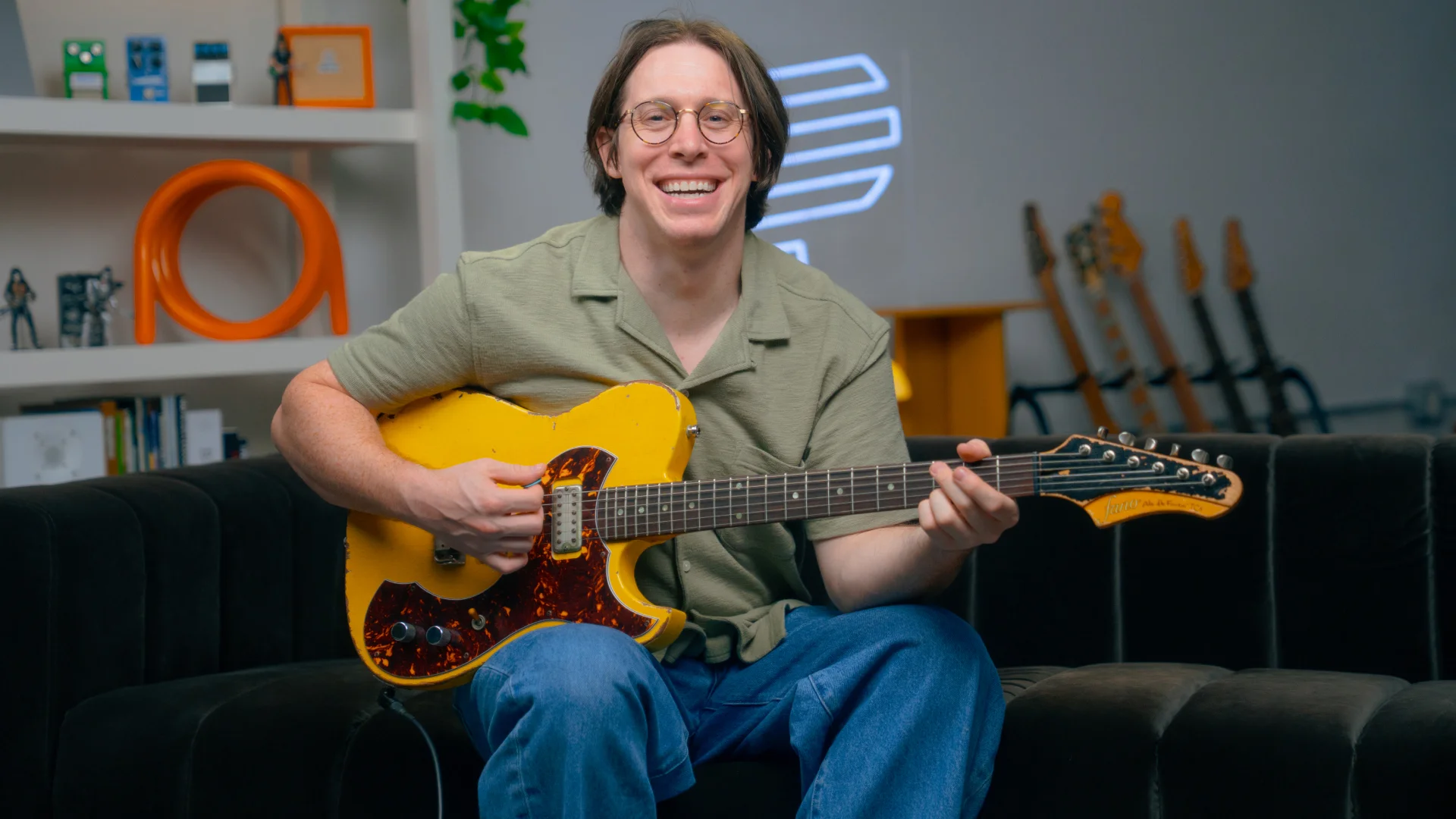
Spencer Askin will guide you through six grades of instruction with daily practice plans and assessments.
Well-rounded rocker
This class will help you build the skills and concepts to confidently play rock rhythm and lead across a variety of styles.
Take the next step
Once you've mastered the concepts in this class, keep progressing with intermediate challenges and guided pathways.
What you'll learn
In this guided Learning Pathway, you’ll develop a pro-level rock guitar toolkit while exploring the techniques, guitarists, and subgenres that have shaped rock through the decades.
- Play rock riffs with great rhythm
- Make your lead playing more expressive
- Learn to shred like rock legends
- Find your sound across iconic rock styles

Curriculum
Stay focused with this step-by-step learning program designed by our expert team of music educators.
Grade 1. Rock 101
To kick off the class, Spencer introduces you to the foundational rhythm and lead techniques of rock. These essential techniques and concepts will set you up for the rest of the class.

Day 1. What is rock?
Build a rock-solid foundation with the essential tools of the genre. You’ll put power chords and riffs together to start sounding like a rock guitarist.
Day 2. Alternate picking
Now, you’ll learn how alternate picking can make faster playing feel more efficient. You’ll practice keeping your pick strokes smooth so you can play with less tension.
Day 3. Downstrokes and palm muting
Spencer will show you how to use downstrokes to give your rhythm playing more power. Then control your dynamics and how much your chords ring out with palm muting.
Day 4. The minor pentatonic scale
Get the most essential rock scale under your fingers. Spencer will show you how to make musical phrases out of the minor pentatonic scale that go way beyond simple scale exercises.
Day 5. Blues in rock
Next, you’ll explore the blues vocabulary at the heart of rock guitar. You’ll use the blues scale and 12-bar form to understand where countless rock ideas come from.
Day 6. Open chords in rock
Now, you’ll learn how to use open chords to create an even bigger rock sound. You’ll also practice controlling their sustain so your rhythm parts stay tight.
Day 7. Intro to rock solos
You’re now ready to take your first steps into rock soloing with expressive licks. You’ll focus on bending intonation so your notes always sound in tune.
Performance pieces
Choose a song to learn that takes what you worked on in Grade 1 and puts it in a musical context. Here, you'll get to jam with a live-recorded band of professional L.A. musicians as your backing track.
Personalized feedback
Submit a video of yourself playing a performance piece from this grade for custom video feedback on your playing from our team of pro guitarists.
Final quiz
Make sure you're ready to move on to Grade 2.
Grade 2. Rock Rhythm
Next, you’ll focus on becoming a stronger rhythm guitarist to become the pulse of the band. These lessons will teach you how to transform familiar chords and riffs using careful rhythmic control.
Day 1. Mutes
Turn your guitar into a percussive rhythm powerhouse with mutes. Using a Nirvana-inspired track, you’ll play mutes between chords to give simple riffs more punch.
Day 2. Accents
Next, you'll learn how accents can completely change the feel of a rhythm part. Practice controlling your dynamics to make common chord progressions sound unique to your guitar voice.
Day 3. Anticipations
Spencer will show you how to use anticipations to make your chord changes feel like they’re pulling the song forward. You’ll practice hitting a chord right before the downbeat without losing your groove.
Day 4. Swing feel
Discover how a swing feel can breathe new life into a rock progression. You’ll compare it with straight 8th notes so you can clearly hear and feel the difference.
Day 5. 16th notes
Now, you’ll unlock faster rhythm parts by dividing the beat into 16th notes. You’ll focus on an efficient picking motion that keeps the groove consistent.
Day 6. Syncopations
Shift your attention toward the offbeats with syncopation. You’ll learn how targeting the offbeats can help you step outside of common rhythmic patterns.
Day 7. Chord arpeggiation and 6/8 time
Finally, you’ll explore the flowing feel of 6/8 time with familiar chord shapes. You’ll then arpeggiate those chords to create rhythm parts with more movement and texture.
Performance pieces
Choose a song to learn that takes what you worked on in Grade 2 and puts it in a musical context. Here, you'll get to jam with a live-recorded band of pro L.A. musicians as your backing track.
Personalized feedback
Submit a video of yourself playing a performance piece from this grade for custom video feedback on your playing from our team of pro guitarists.
Final quiz
Make sure you're ready to move on to Grade 3.
Grade 3. Lead
This is the grade you’ve been waiting for. You’ll build a more expressive and distinctive approach to lead guitar by developing your phrasing and learning how to move more freely around the fretboard.
Day 1. Hammer-ons and pull-offs
Start your lead journey off by learning how hammer-ons and pull-offs let you play more notes with less picking. These legato techniques will help your lead lines sound smoother at higher speeds.
Day 2. Advanced bends
Next, you’ll take more control over the pitch of your bends by training your ear so you can land on notes with better intonation.
Day 3. Vibrato
Vibrato is one of the most important tools for defining your voice. Start developing your vibrato by experimenting with its speed and width to change the character of sustained notes.
Day 4. Slides in solos
Now, you’ll use slides to connect notes smoothly across the fretboard. You’ll practice landing accurately so your phrases flow without awkward jumps.
Day 5. Your first rock solo
You’re ready to bring your new lead skills together in a complete rock solo. You’ll focus on phrasing so each musical idea has space to breathe.
Day 6. 3:2 and the major pentatonic
Spencer will help you break out of familiar scale boxes with the 3:2 system. You’ll use this diagonal pattern to cover more ground over the fretboard with a single pentatonic position.
Day 7. Shred
You’re ready to start melting some faces. You’ll build speed using legato to play faster without forcing your picking hand to do all the work.
Performance pieces
Choose a song to learn that takes what you worked on in Grade 3 and puts it in a musical context. Here, you'll get to jam with a live-recorded band of pro L.A. musicians as your backing track.
Personalized feedback
Submit a video of yourself playing a performance piece from this grade for custom video feedback on your playing from our team of pro guitarists.
Final quiz
Make sure you're ready to move on to Grade 4.
Grades 4-6
To finish the class, you’ll expand your stylistic range by studying the sounds and techniques that have shaped rock across different eras. You’ll learn how to start making more deliberate decisions about your own tone, phrasing, and rhythm to suit different styles.
Grade 4. Subgenres
With Spencer as your style guide, you’ll explore what gives different rock subgenres their distinct sounds. You’ll see how changing your feel or tone can transform familiar guitar vocabulary to achieve different vibes.
Day 1. Grunge
Start the grade by exploring the raw guitar sound that put Seattle rock on the map. You’ll learn how even simple parts can become revolutionary when you prioritize attitude over perfection.
Day 2. Funk rock
Next, you’ll combine the rhythmic pocket of funk with the energy of rock. You’ll use tight 16th-note playing to create crisp guitar parts inspired by the Red Hot Chili Peppers.
Day 3. Punk rock
Spencer will show you how to strip rock guitar down to its most direct form with punk. You’ll use aggressive downstrokes to make simple power chords drive the song.
Day 4. Hair metal
Now, you’ll channel the larger-than-life sound of ’80s hair metal guitar. You’ll combine driving riffs with flashy lead techniques for a stadium-sized approach to rock.
Day 5. Garage rock
Next, explore how two guitar parts can work together without overcrowding a song. You’ll use smaller chord shapes to create the interlocking sound of garage rock bands like the Strokes.
Day 6. Blues rock
Bring the blues back in a louder rock setting. You’ll use blues phrasing and harmony to give your guitar parts more swagger.
Day 7. Metal
Cap off the grade by exploring the heavy sound of metal. You’ll use the tritone to add metal’s characteristic dark edge to your riffs.
Performance pieces
Choose a song to learn that takes what you worked on in Grade 4 and puts it in a musical context. Here, you'll get to jam with a live-recorded band of pro L.A. musicians as your backing track.
Personalized feedback
Submit a video of yourself playing a performance piece from this grade for custom video feedback on your playing from our team of pro guitarists.
Final quiz
Make sure you're ready to move on to Grade 5.
Grade 5. Study the Greats
Take a tour through rock icon history by studying how influential guitarists developed their signature sounds. Borrow from their rhythm and lead approaches to expand your own guitar voice.
Day 1. Slash
Start your rock history journey by bringing a raw, bluesy feel into rock with Slash-inspired guitar parts. You’ll practice phrasing behind the beat to capture some of his signature swagger.
Day 2. Tony Iommi/Randy Rhoads/Zakk Wylde
Now, you’ll explore how Ozzy’s guitar sound evolved across different eras. You’ll practice the heavy riffing and aggressive lead techniques inspired by his guitarists.
Day 3. Jimmy Page
Next, you’ll learn about Jimmy Page’s approach to riffs and lead playing. You’ll use rhythmic phrasing to make simple pentatonic ideas feel bigger.
Day 4. Angus Young
Learn why Angus Young proves that great rock guitar doesn’t need to be complicated. You’ll use simple blues-based ideas with enough conviction to make every distorted note count.
Day 5. David Gilmour
Now, you’ll slow things down and focus on David Gilmour’s spacious lead style. You’ll practice huge bends while leaving room for each note to breathe.
Day 6. EVH
You’ll now step into Eddie Van Halen’s high-energy approach to lead guitar. You’ll explore two-handed tapping to play lines that would be impossible with conventional fretting.
Day 7. Hendrix
Finish the grade by blurring the line between rhythm and lead with Jimi Hendrix. You’ll use chord embellishments and double stops to make your guitar parts feel more fluid.
Performance pieces
Choose a song to learn that takes what you worked on in Grade 5 and puts it in a musical context. Here, you'll get to jam with a live-recorded band of pro L.A. musicians as your backing track.
Personalized feedback
Submit a video of yourself playing a performance piece from this grade for custom video feedback on your playing from our team of pro guitarists.
Final quiz
Make sure you're ready to move on to Grade 6.
Grade 6. Present-Day Rock
Close out the grade by learning how today’s guitarists keep rock evolving. Experiment with modern sounds and unconventional approaches that stretch the boundaries of the genre.
Day 1. Modern psychedelic rock
Step into the modern world by using repetition to create the hypnotic foundation of modern psychedelic rock. You’ll add effects to turn a simple riff into something much more atmospheric.
Day 2. Emo
Get all emo by combining heavy rhythm guitar with melodic lines for an emotional rock sound. You’ll also explore drop D tuning to make simple guitar parts feel much bigger.
Day 3. Indie rock
Next, you’ll dive into the stripped-back approach that gives indie rock its personality. You’ll focus on memorable melodies rather than technical perfection.
Day 4. Beach goth
Hit the beach (goth-style) by mixing surf-inspired guitar with a darker musical mood. You’ll use simple melodic ideas to capture the laid-back sound of beach goth.
Day 5. Lo-fi guitar
Now, you’ll learn how imperfect tones can become part of your musical identity. Spencer will show you how to experiment with effects that recreate the unstable character of vintage recordings.
Day 6. Prog rock
Warm up those fingers because you’re about to push your technique with the more complex side of modern rock. You’ll learn a technical lick while keeping every note clear.
Day 7. Shoegaze
End the class by using pedals to turn the guitar into a wall of atmospheric sound. You’ll focus on texture so the effects become part of the musical performance.
Performance pieces
Choose a song to learn that takes what you worked on in Grade 6 and puts it in a musical context. Here, you'll get to jam with a live-recorded band of pro L.A. musicians as your backing track.
Personalized feedback
Submit a video of yourself playing a performance piece from this grade for custom video feedback on your playing from our team of pro guitarists.
Final quiz
Make sure you're ready to move on to new challenges.

REAL students
Don’t take our word for it, take theirs
What guitarists love about this course
.jpg)
Your Instructor
Spencer Askin
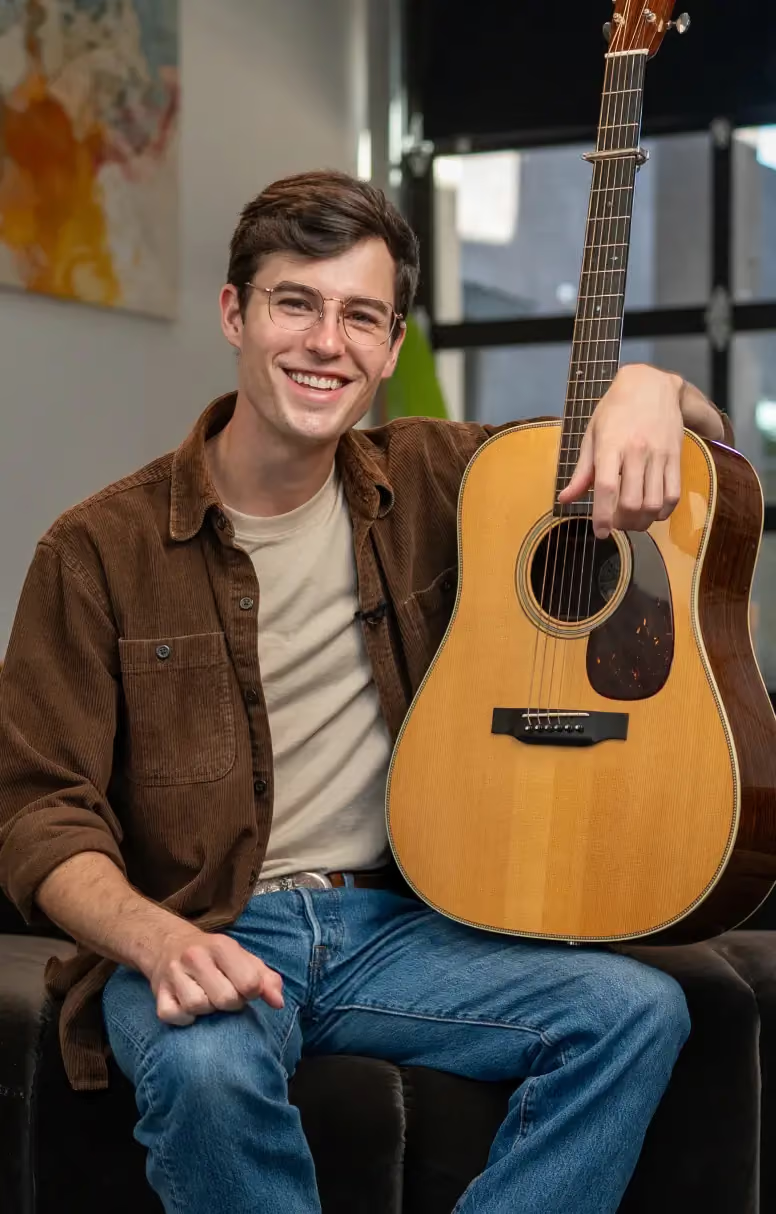
Spencer is a professional educator and session guitarist who’ll help you strengthen your rock playing, break out of pentatonic boxes, and move around the fretboard with confidence.
Explore LessonsLimitless learning.
All-inclusive access to every instrument and course.





FULL REFUND, NO QUESTIONS ASKED
Improve your playing or get your money back
We’re so confident that we can improve your playing that we’re underwriting your membership with a 60-day satisfaction guarantee.
Frequently asked questions

The most structured approach to learning music