Everyone!
This class for musicians of all levels and ages. No theory knowledge or singing experience required.
4-6 weeks
Michael will guide you through 4 modules of step-by-step instruction with daily practice assignments.
Connect your ear
to your instrument
Learn to identify the basic theory behind a song with only your ears.
Take the next step
Once you've mastered this course, keep learning with advanced Master Classes and guided practice plans.
What you'll learn
Join Michael as he walks you through exercises and tools to quickly develop your ear and improve your musical hearing.
- Bridge the gap between what you hear and play
- Identify the theory behind a song with only your ears
- Analyze chords, intervals, & bass movements in music

.avif)
Curriculum
Stay focused with this step-by-step learning program designed by our expert team of music educators.
Part I. Scale Degrees
Learn to sing and recognize all scale degrees in the major scale over a drone.

You’ll learn three foundational exercises that will help you develop the ability to accurately recognize and identify notes from the major scale.
Michael also shares tips that professional vocalists use to ground themselves without a physical instrument. You’ll learn how to describe, recognize, and sing scale degrees without using your instrument as a reference.
Part II. Diatonic Triads
Familiarize yourself with the building blocks of music.
Triads form the basis of chord progressions, songs, and even melodies. As a musician, you should be able to recognize what different triads sound like, know their qualities, and understand how they fit together.
Triads can either be major, minor, or diminished. It’s important for you to be able to hear and recognize each of these three qualities.
Part III. Intervals
Developing the ability to recognize intervals is a cornerstone of ear training.
All melodies consist of a variety of intervals that ascend and descend. As a musician, it’s extremely helpful to be able to name and identify these intervals. We’ll provide you with a handy list of popular songs you can use to familiarize yourself with each interval.
Part IV. Putting It All together
This last module of the class is all about improvising and forming a plan for continued practice.
To warp up, we’ll recap everything you’ve learned so far and take things to the next level with improvisation.
Like all useful skills, it will take time for you to develop your ear. In a traditional collegiate music program, these skills would take you a few semesters to get the hang of, so there’s no rush to master this right away. We'll leave you with only the most-essential exercises that Michael and his students have found most useful.

REAL students
Don’t take our word for it, take theirs
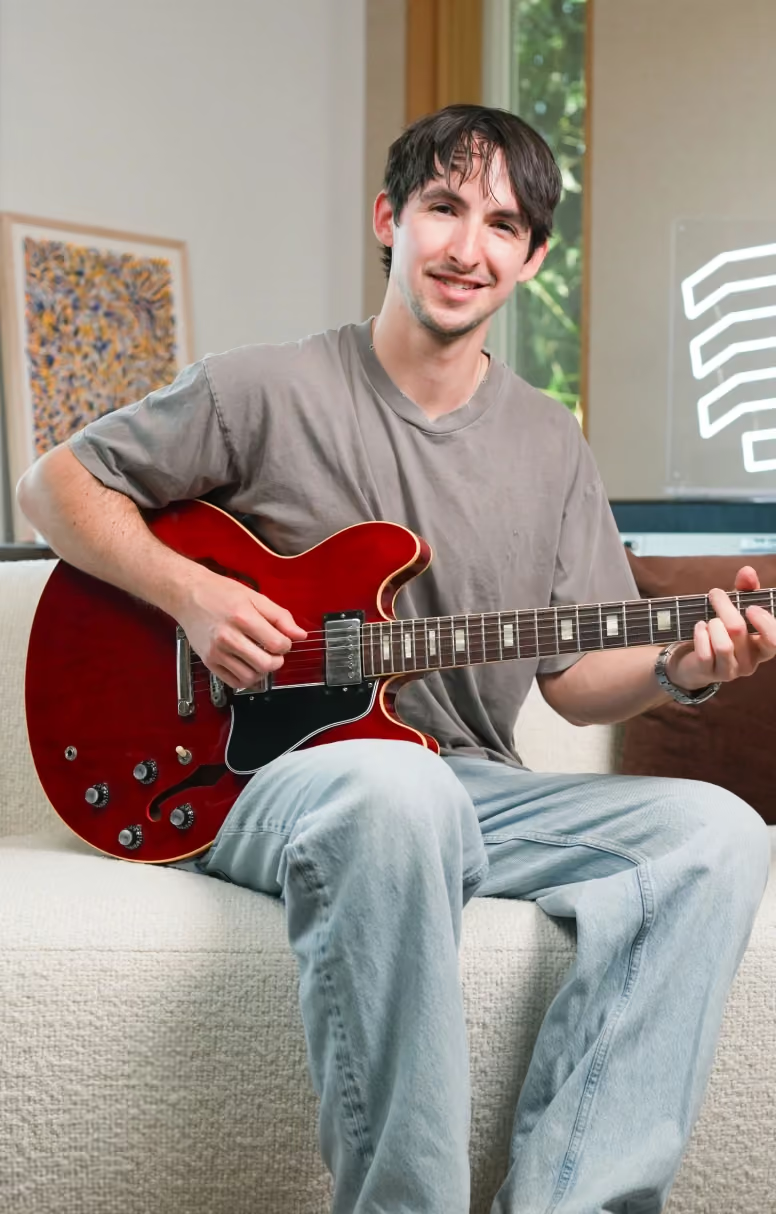
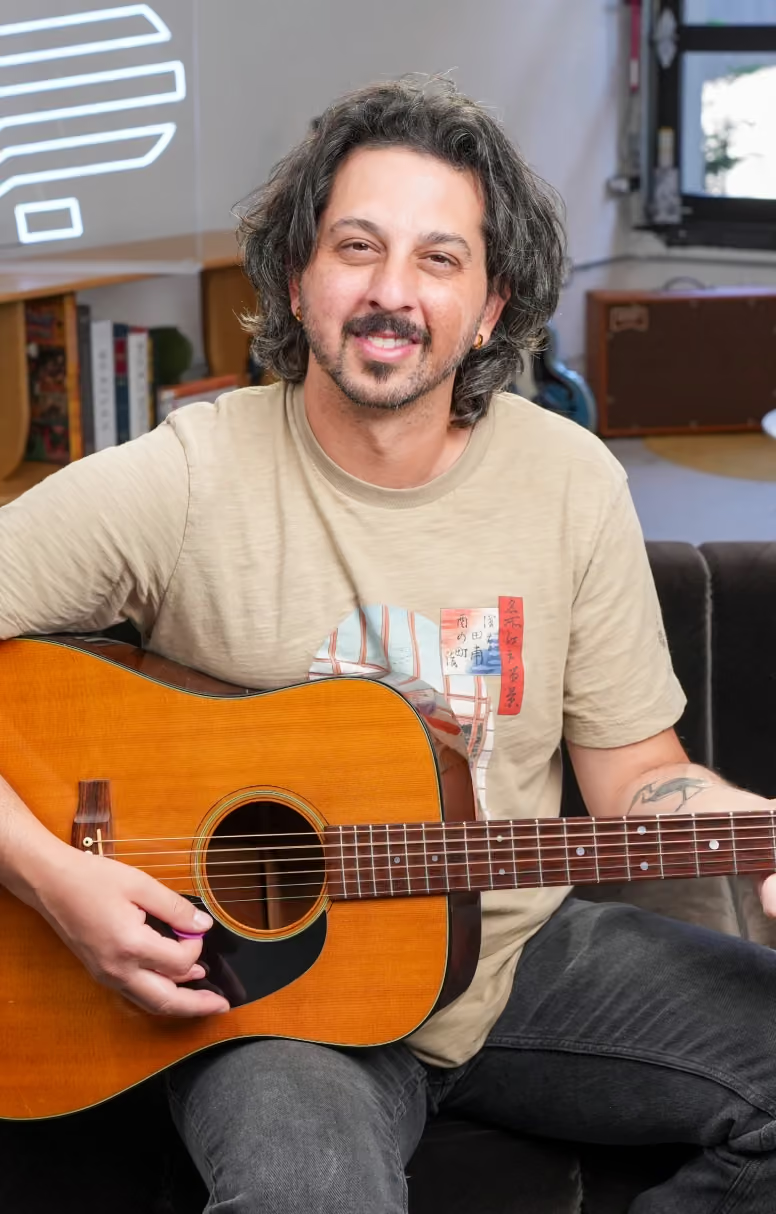
What guitarists love about this course

Your Instructor
Michael Mayo
Join internationally-acclaimed vocalist Michael Mayo as you sing through essential exercises to train your ear. This Master Class provides you with the skills you need to decode music theory by sound alone.
Explore LessonsLimitless learning.
All-inclusive access to every instrument and course.





.avif)

FULL REFUND, NO QUESTIONS ASKED
Improve your playing or get your money back
We’re so confident that we can improve your playing that we’re underwriting your membership with a 60-day satisfaction guarantee.
Frequently asked questions

The most structured approach to learning music