Decode Your Fretboard Learning Pathway
Elevate your creativity by mastering your fretboard.


Intermediate bassists
If you know some scales & grooves but aren’t sure how everything connects, this class will give you a clear system to tie it all together.
3 months
Alex will guide you through 6 grades of step-by-step instruction with daily practice plans and assessments.
Fretboard freedom
You'll leave this pathway with the skills to create grooves that flow effortlessly from your ears to your fingers.
Take the next step
Once you've mastered your fretboard, keep progressing with advanced lessons and guided pathways.
What you'll learn
Move beyond basic shapes and start grooving with intention. This class will help you unlock the fretboard one note at a time.
- Take a systematic approach to fretboard freedom
- Unlock every key by learning to think in intervals
- Master triads, arpeggios, and advanced patterns

Curriculum
Stay focused with this step-by-step learning program designed by our expert team of music educators.
Grade 1. Intro to the 1-8 Note System
Start decoding your fretboard by uncovering the patterns and shapes that run all across it. With the 1–8 note system, you’ll zoom in on individual notes and see how they connect, laying the foundation for true fretboard fluency. Along the way, you’ll lock in classic bass moves like root‑to‑5ths and triad arpeggios while sharpening your technique and tone.

Day 1. Root
Get comfortable playing the root note with solid rhythm and feel. We’ll take a page from Pino Palladino’s playbook as you focus on muting and controlling note length while locking in the sound of this essential note.
Day 2. Root and octave (Pino Palladino)
Add the octave to create momentum without complicating the harmony, all while sharpening your fretting hand to dial in your tone.
Day 3. 2 notes: Root & 5th (Country)
Learn to use root-5th patterns to drive the rhythm and support the harmony in any style. You’ll refine your articulation and play through a classic I-IV-V country progression.
Day 4. Root & 5th (Bossa nova and samba)
Apply root-5th bass techniques to classic Brazilian grooves. By exploring note length and phrasing, you’ll lock into the bossa feel and expand your rhythmic versatility.
Day 5. 3 notes: Major triads
Turn a simple root-5-octave shape into a masterful melodic tool by adding the major 3rd and exploring triad inversions.
Day 6. 3 notes: Minor
Flatten the 3rd to build minor triads and their inversions. You’ll explore different fingering options to make the shapes fit into any progression.
Day 7. Workout
Put everything together in a musical workout. This is your chance to reinforce what you’ve learned and make sure you're ready for the next grade.
Performance pieces
Choose a song to learn that takes what you worked on in Grade 1 and puts it in a musical context. Here, you'll get to jam with a live-recorded band of pro-LA musicians as your backing track.
Personalized feedback
Submit a video of yourself playing a performance piece from this grade for custom video feedback on your playing from our team of pro bassists.
Final quiz
Make sure you're ready to move on to Grade 2.
Grade 2. Arpeggios, Pentatonics, and Hexatonics
Learn how to keep the groove steady while adding harmonic depth with arpeggios and scales. In this grade, you’ll navigate the fretboard using 4‑note arpeggios and major/minor pentatonics, then push beyond the basics with hexatonic scales that open the door to richer, jazz‑inspired lines.
Day 1. 4 notes: Arpeggios
Build upon your triad shapes with major and minor arpeggios in multiple positions to smoothly navigate your fretboard. You’ll also work on following a 12-bar blues using dominant 7th arpeggios.
Day 2. Arpeggio applications
Spice up your arpeggios by surrounding your target notes with chromatic and diatonic approaches. We’ll use this technique to build more expressive lines over a 12-bar blues.
Day 3. 5 notes: Major pentatonic
Map out your entire fretboard with the major pentatonic shape. You’ll explore five connected positions that deepen your connection with the fretboard and set the foundation for everything from fills to composition.
Day 4. 5 notes: Minor pentatonic
Use the same shapes you learned for major pentatonic, but just shift the root to unlock the minor sound. Learn several patterns to apply the scale musically and train your ear to hear its darker tone.
Day 5. 6 notes: Hexatonic / triad pairs
Combine two triads to form a six-note hexatonic scale. The legato technique will help you make this three-notes-per-fret scale flow even more fluidly.
Day 6. The ii-V-I
Master the classic ii-V-I jazz progression by applying familiar hexatonic patterns to outline harmony and create tension. Alex will show you how to seamlessly connect chords and build melodic lines.
Day 7. Workout
Level up your fretboard fitness with a workout that combines arpeggios with pentatonics and key changes.
Performance pieces
Choose a song to learn that takes what you worked on in Grade 2 and puts it in a musical context. Here, you'll get to jam with a live-recorded band of pro-LA musicians as your backing track.
Personalized feedback
Submit a video of yourself playing a performance piece from this grade for custom video feedback on your playing from our team of pro bassists.
Grade 3. The Major Scale and Beyond
Cap off your 1–8 note system journey with advanced scales and sounds. You’ll dive into jazz essentials like the bebop scale, melodic minor, and the modes of the major scale, while leveling up your harmony skills. To top it off, you’ll keep refining your technique with the energy and precision of slap bass.
Day 1. 7 notes: Major scale
Kick off this grade with the most important scale of all: the major scale. Train your ear and unlock a range of harmonic tools like triads and 7th-chord arpeggios.
Day 2. 7 notes: Modes of the major scale
Modes might sound intimidating, but Alex breaks them down as simple variations of the major scale you already know. You’ll map out Dorian, Phrygian, and Aeolian across the fretboard while focusing on the unique flavor of each minor mode.
Day 3. 7 notes: Incorporating slap bass
Turn your bass into a drum kit with the funkiest of all techniques: slap. You’ll channel your inner Marcus Miller to shape your slap tone and hone your rhythm skills.
Day 4. 7 notes: Melodic minor scale
Add tension and color to your lines with the melodic minor scale. You’ll learn how jazz bassists use this unique scale to outline harmony and highlight chord tones.
Day 5. 8 notes: Bebop scale
Charles Mingus fans: We see you. Learn the sophisticated bebop scale to land your chord tones in the right places and swing with the best of ‘em.
Day 6. 8 notes: Symmetrical diminished scales
The half-whole diminished scale is a powerful improvisational tool that lets you outline chords in unexpected ways. Learn how to copy and paste this symmetrical sound to create colorful jazzy basslines.
Day 7. Workout
Finally, we'll cap off the grade with another musical workout that covers the major scale and modes, as well as slap bass octaves. These workouts are designed to be repeated and even used as daily warm-ups.
Performance pieces
Choose a song to learn that takes what you worked on in Grade 3 and puts it in a musical context. Here, you'll get to jam with a live-recorded band of pro-LA musicians as your backing track.
Personalized feedback
Submit a video of yourself playing a performance piece from this grade for custom video feedback on your playing from our team of pro bassists.
Final quiz
Make sure you're ready to move on to Grade 4.
Grades 4-6
Patterns and shapes are a great starting point for mapping the fretboard, but the real goal is to improvise and compose basslines using your ear and feel.
Grades 4 & 5 will get you thinking intervallically so you can play the sounds you hear in your head. Then, in Grade 6, you’ll tackle chords on bass with low-end‑friendly voicings that let you add depth to the harmony and harmonize melodies.
Grade 4. Intervallic Approaches (Part I.)
At their core, every scale and bassline is built from intervals: the building blocks of music. The best bassists train their ears to recognize these sounds so they can play freely, without relying on memorized shapes. In Grade 4, you’ll start thinking about your bass in a whole new way, using intervals to truly unlock the fretboard.
Day 1. Half steps
Start your intervallic journey with the smallest step: just one fret. Learn how invaluable half-steps are for chromatic shifts and enclosures with a pattern inspired by Hadrien Feraud and Herbie Hancock.
Day 2. Whole steps
Access sophisticated, Jaco Pastorius-like sounds with the whole tone scale. You’ll use melodic patterns and approach notes to turn the more abstract sounds of the whole tone scale into something musical.
Days 3 and 4. 3rds
Major and minor 3rd intervals are vital for outlining chords and creating expressive melodies. You’ll learn how to turn these simple intervals into complex musical ideas. Unlock the diminished arpeggio with minor 3rds and the augmented sound with major 3rds.
Day 5. Perfect 4ths
Your bass is tuned in 4ths, so this interval should sound very familiar. You’ll use this pleasant-sounding interval as an introduction to the Circle of 4ths and all of its practice and composition benefits.
Day 6. Tritones
Learn to harness the most important interval for creating tension and resolution. Chuck Rainey’s iconic double-stop lines will be our inspiration for tapping into the orchestral nature of the electric bass.
Day 7. Workout
Your bass coach Alex will help you tone up by reviewing the intervals you’ve learned so far.
Performance pieces
Choose a song to learn that takes what you worked on in Grade 4 and puts it in a musical context. Here, you'll get to jam with a live-recorded band of pro-LA musicians as your backing track.
Personalized feedback
Submit a video of yourself playing a performance piece from this grade for custom video feedback on your playing from our team of pro bassists.
Final quiz
Make sure you're ready to move on to Grade 5.
Grade 5. Intervallic Approaches (Part II.)
Complete your interval training by studying perfect 5ths through the dissonant yet dreamy major 7th interval. By the end of this grade, you’ll have trained your ear to recognize all the possible intervals within an octave, and you’ll have the skills to apply them to create your own basslines.
Day 1. Perfect 5ths
From power chords to root-5ths fills, the perfect 5th is the most important interval for supporting the rhythm without adding a ton of harmony. You’ll learn several ways to turn this go-to interval into a sophisticated sound with approach notes and whole-tone fills.
Days 3 and 4. 6ths
6ths are vital for defining the minor modes. The major 6th is what makes Dorian sound the way it does, and the minor 6th is helpful for highlighting the Aeolian and Phrygian modes. 6ths aren’t common intervals, but you’ll learn how important they are for voice leading and adding complexity to your basslines.
Days 4 and 5. 7ths
7ths are extremely important intervals in harmony for defining the much-loved 7th chord — whether it’s minor, major, or dominant. You’ll learn why the minor 7th plays a key role in blues and funk for creating soulful basslines. Though the major 7th has a tendency to sound rather dissonant, Alex will show you how to tame this expressive interval.
Day 6. Interval review
Now that you’ve filled your interval toolbox, it’s time to see how those shapes unlock musical freedom. Use symmetrical patterns and interval cells to explore outside-the-box grooves and creative phrasing. You now have the knowledge and interval awareness to be more intentional in the melodies and basslines you write.
Day 7. Workout
Get in some High Intensity Interval Training and review all the intervals you covered in this grade.
Performance pieces
Choose a song to learn that takes what you worked on in Grade 5 and puts it in a musical context. Here, you'll get to jam with a live-recorded band of pro-LA musicians as your backing track.
Personalized feedback
Submit a video of yourself playing a performance piece from this grade for custom video feedback on your playing from our team of pro bassists.
Final quiz
Make sure you're ready to move on to Grade 6.
Grade 6. Chords on Bass
As bassists, we see most chords as a forbidden fruit since playing too many notes at once can sound muddy and lead to frustrated band members. Fortunately, Alex is here with some bass-friendly chord voicings that will let us bring more to the harmony table and even harmonize melodies.
Days 1 and 2. Spread triads
Learn how to build clear-sounding chords on bass by spreading out triads across octaves using drop-2 voicings. Thanks to your intervallic knowledge, you’ll be ready to explore creating your own voicings and creating a bank of unique voicings.
Day 3. The integrity of the melody
Think chord melodies are only for guitarists and pianists? Think again! Alex will guide you through using top-down spread triads to harmonize melodies with chords.
Day 4. Roots of harmony
Guide tones are the secret to fluid chord transitions, especially in progressions like jazzy ii–V–I. You’ll explore how to subtly shift 7th chord shapes to voice lead and connect chords seamlessly.
Days 5 and 6. Chord voicings
You’ve reached a stage where you can play around with different melodies and chord voicings to find your unique sound. Alex will help you expand your chordal palette with some of his favorite major and minor chord voicings, as well as some dominant and more ambiguous chord voicings.
These lessons are meant to inspire you to use your new fretboard freedom to explore your creativity.
Day 7. Workout
For your final workout of the pathway, you’ll run through all the chords you learned and lock in their shapes.
Performance pieces
Choose a song to learn that takes what you worked on in Grade 6 and puts it in a musical context. Here, you'll get to jam with a live-recorded band of pro-LA musicians as your backing track.
Personalized feedback
Submit a video of yourself playing a performance piece from this grade for custom video feedback on your playing from our team of pro bassists.
Final quiz
Make sure you're ready to move on to new challenges.


Your Instructor
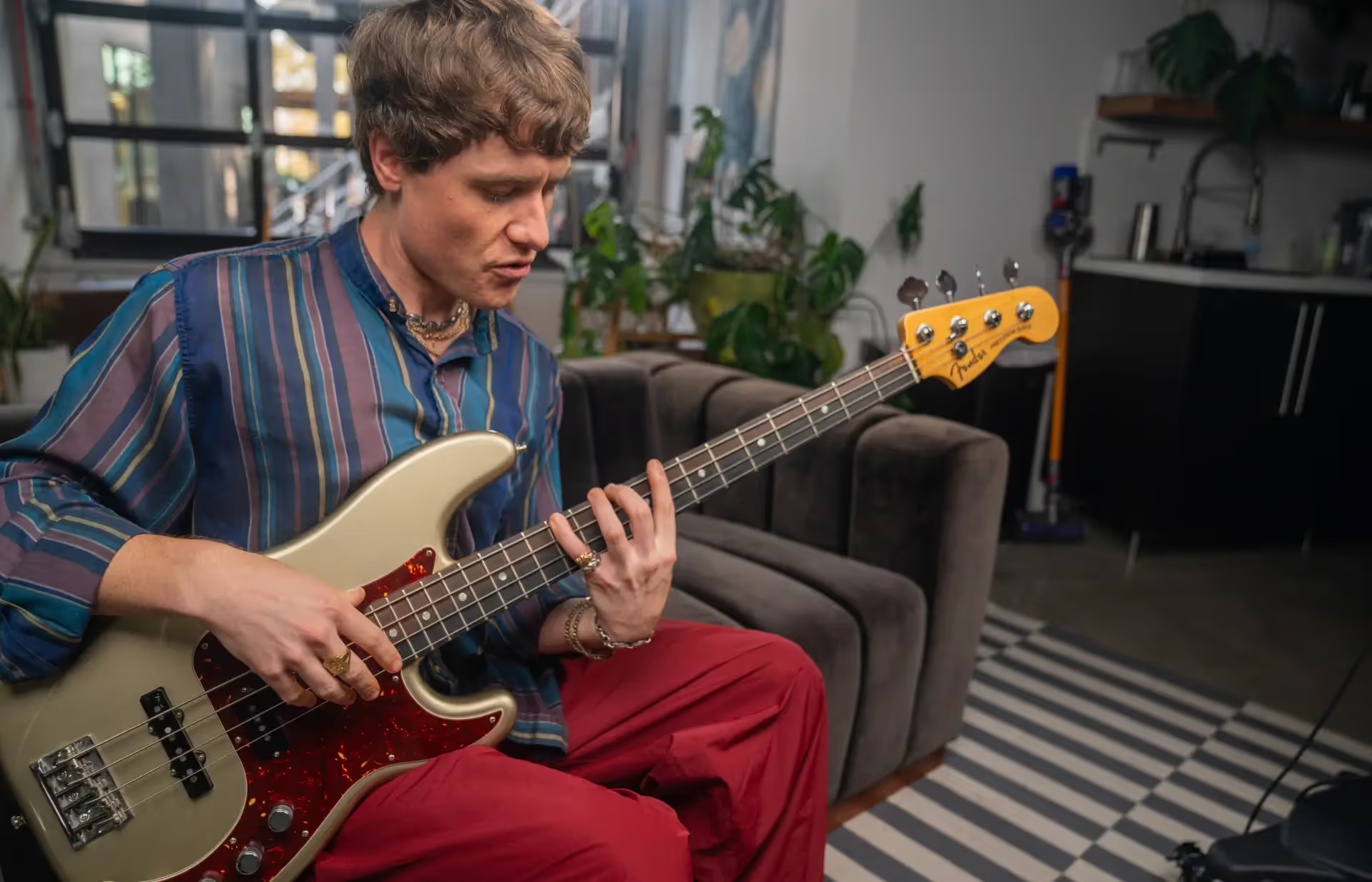
Touring pro. Conservatory grad. Groove specialist. Alex will show you how to finally master your fretboard... one note at a time.
Explore LessonsLimitless learning.
All-inclusive access to every course.






FULL REFUND, NO QUESTIONS ASKED
Improve your playing or get your money back
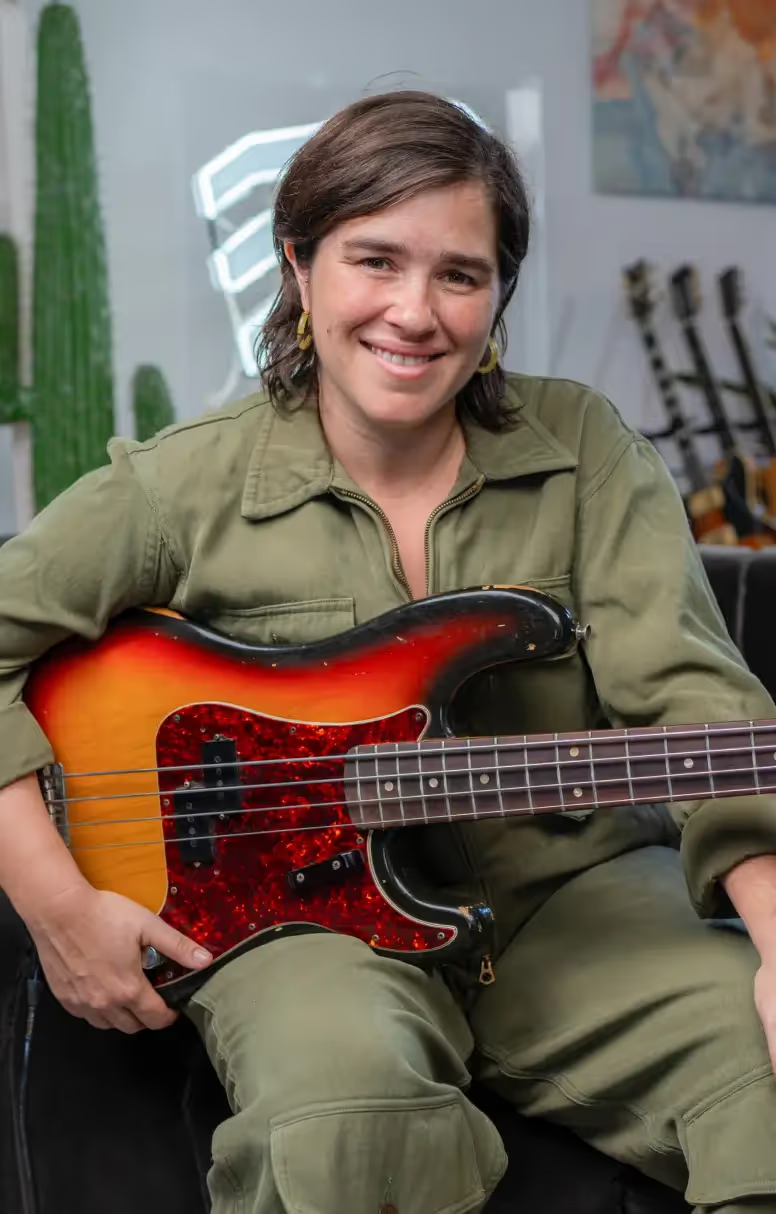
We’re so confident that we can improve your playing that we’re underwriting your membership with a 60-day satisfaction guarantee.
Frequently asked questions

The most structured approach to learning music