Late beginner bassists
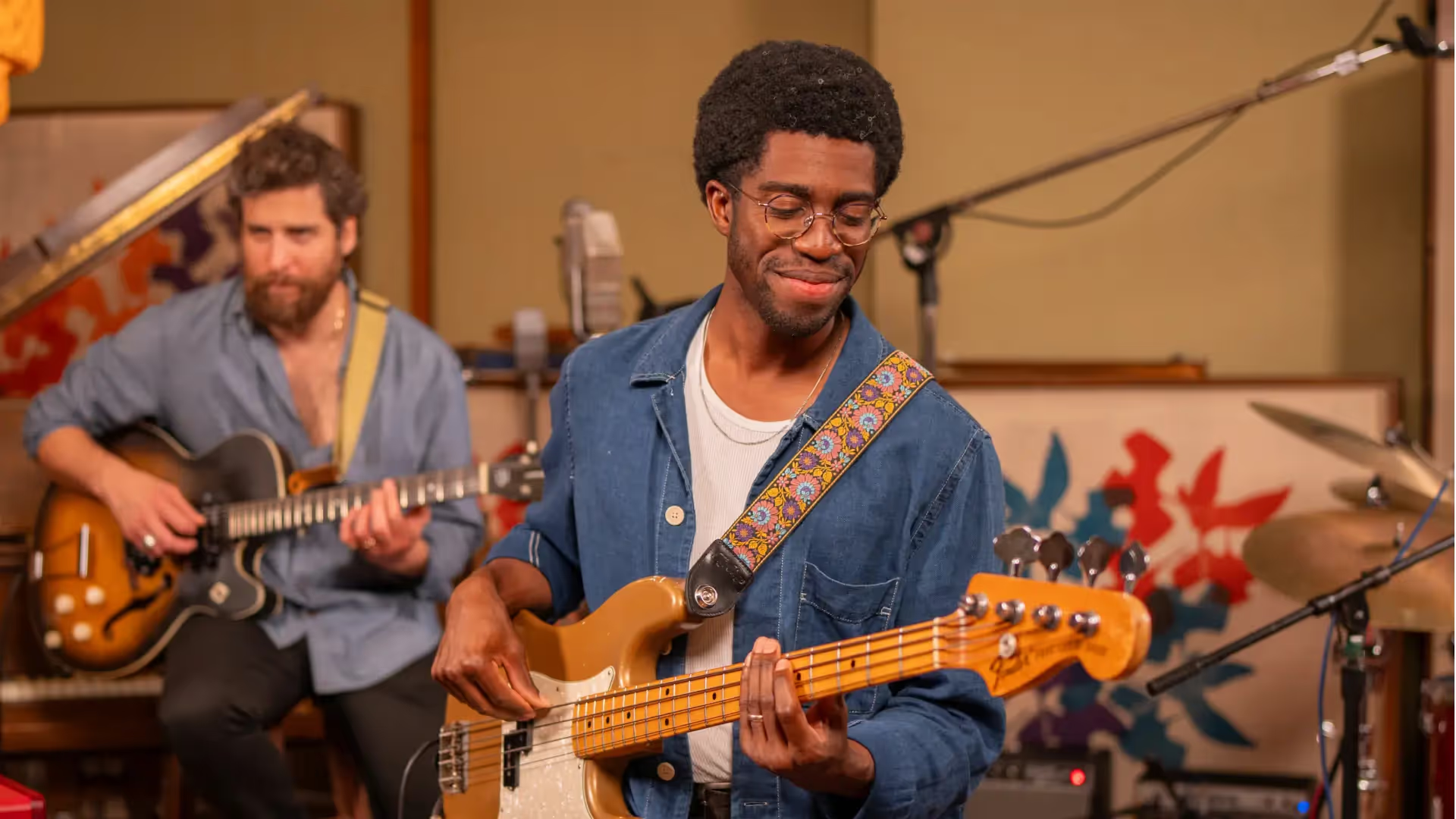
This class is for late beginner and intermediate players looking to get into jazz. You'll start with the basics and build up to complex basslines.
3 months
Corbin will guide you through 6 grades of step-by-step instruction with daily practice plans and assessments.
Swing with confidence
By the end of this pathway, you'll be able to build walking jazz basslines and improvise over classic jazz standards across styles and cultures.
Take the next step
Once you've mastered jazz bass, keep progressing with more challenges and guided pathways.
What you'll learn
Learn how to create basslines that swing and play the changes. This class will help you internalize the sound and feel of jazz.
- Craft walking lines that drive the groove
- Master the art of swing feel
- Take a tour through sub-genres of jazz
- Unlock your fretboard

Curriculum
Stay focused with this step-by-step learning program designed by our expert team of music educators.
Grade 1. Intro to Jazz Bass
Jazz is all about that swing feel. In this opening grade, you’ll learn about the role that a bassist plays in a jazz group, as well as how to lock in with the drummer to build solid time feel. You’ll also learn how to start creating walking basslines and playing over the changes of Autumn Leaves.

Day 1. The jazz bass feel
Meet your new best friend: the drummer. Learn how to stay locked in with the drums and swing feel using ghost notes and skipped notes.
Day 2. The jazz bass tone
Learn how to create your ideal jazz bass tone. From upright bass and bright electric bass to a muted thumb tone, you’ll explore a range of tonal options for almost any occasion.
Day 3. Walking on changes
Learn how to propel the song from chord to chord using simple walking basslines over the common turnaround progression.
Day 4. Bb blues (2-feel)
The blues is jazz’s older sibling, so it’s essential to be able to navigate jazz blues tunes. You’ll learn how to apply a 2-feel over a jazzy version of the 12-bar blues featuring a turnaround.
Day 5. Bb blues (walking)
Build on your 2-feel with a walking bassline over our Bb blues track. Corbin has a super hip line for you to grab over the turnaround.
Day 6. Autumn Leaves
Autumn Leaves is a great entry point into many other jazz standards, so it’s vital to start learning it early in your jazz bass journey. You’ll use a 2-feel to play the major and minor ii-V-I progressions that make up the entire song.
Day 7. Autumn Leaves (walking)
For your final challenge of the grade, you’ll learn a walking bassline over the whole form of Autumn Leaves.
Performance pieces
Choose a song to learn that takes what you worked on in Grade 1 and puts it in a musical context. Here, you'll get to jam with a live-recorded band of professional L.A. musicians as your backing track.
Personalized feedback
Submit a video of yourself playing a performance piece from this grade for custom video feedback on your playing from our team of pro bassists.
Final quiz
Make sure you're ready to move on to Grade 2.
Grade 2. Chord Tones
One thing that makes jazz bass so unique is that we outline each chord by targeting the individual notes within it. In this grade, you’ll learn how to speak the language of a professional bassist and use arpeggios to emphasize chord changes.
Day 1. Must-know chord tones
Chord tones are the notes that make up a full chord. You’ve already got the root and 5th down, so all we have to do is add the 3rd and the 7th to create a full arpeggio. You’ll learn major 7, dominant 7, and minor 7 arpeggios to cover most of the chords you’ll come across.
Day 2. Roman numerals and the turnaround
Learn the language that professional musicians use to communicate with each other quickly: the number system. You’ll apply this new language to the turnaround progression.
Day 3. The major ii-V-I
This is the bread-and-butter of jazz harmony. Corbin will guide you through a 3-step process for building basslines over a major ii-V-I.
Day 4. The minor ii-V-I
Use the same 3-step process as yesterday to create a totally different sound by making things minor.
Day 5. Autumn Leaves and song form
Finish learning Autumn Leaves and learn the form behind the tune.
Day 6. F blues with chord tones
Return to the jazz blues with a focus on chord tones and arpeggios.
Day 7. Chord tones workout
Break a sweat while you lock in these new progressions and chord tones.
Performance pieces
Choose a song to learn that takes what you worked on in Grade 2 and puts it in a musical context. Here, you'll get to jam with a live-recorded band of pro L.A. musicians as your backing track.
Personalized feedback
Submit a video of yourself playing a performance piece from this grade for custom video feedback on your playing from our team of pro bassists.
Final quiz
Make sure you're ready to move on to Grade 3.
Grade 3. Scales
Learn essential scales and moves to create sophisticated walking basslines over jazz chord progressions.
Day 1. Must-know scales
By adding just three more notes to your arpeggios, you’ll have four scales to cover any ii-V-I.
Day 2. The 1235 move
Learn how to effectively outline chords using the first three notes of each chord scale plus the 5th. This will serve you in tons of musical situations.
Day 3. Expanding on the 1235
Using Take the A Train as an example, you’ll learn how to expand on the 1235 move to cover chords that move quickly.
Day 4. Minor scale explained
Learn how to play over a minor ii-V-i using the three most common minor scales: Dorian, Aeolian, and harmonic minor.
Day 5. The 1235 for minor ii-V-i
Corbin will show you how to highlight altered chords using variations of our good old 1235 move.
Day 6. Static minor walking
Learn how you can use the minor bebop scale and Barry Harris’ 6th diminished scale to keep a one-chord vamp interesting.
Day 7. Scale workout
Push it to the limit with a workout covering six scales in three keys.
Performance pieces
Choose a song to learn that takes what you worked on in Grade 3 and puts it in a musical context. Here, you'll get to jam with a live-recorded band of pro L.A. musicians as your backing track.
Personalized feedback
Submit a video of yourself playing a performance piece from this grade for custom video feedback on your playing from our team of pro bassists.
Final quiz
Make sure you're ready to move on to Grade 4.
Grades 4-6
These last grades are where true jazz cats are made. With the essentials mastered, you’ll start working on the skills that will set you apart from other bassists. You’ll memorize the most-called jazz standards and discover different rhythmic styles of jazz bass from around the globe.
Grade 4. Essential Jazz Bass Skills
In this grade, you’ll start building the skills that will help you craft your own voice. You’ll unlock the fretboard, learn new bass moves, and even start improvising.
Day 1. Positional playing
Explore more of the fretboard by learning how to play the same bassline in three different positions around the neck.
Day 2. Changing from Latin to swing feel
Focus on subdividing the beat to switch between Latin and swing feels within the same song.
Day 3. Guide tones
Seamlessly connect chords to one another like a pro through voice leading and guide tones.
Day 4. Chromatic approach variations
Turn the jazz vibes up to 11 by connecting chords through chromatic movement. You’ll work through exercises to learn all about 1-, 2-, and 3-note walkups.
Day 5. Stepwise ii-V patterns
Corbin will show you how to create peaks and valleys in your basslines by moving up and down the notes in a scale and targeting specific chord tones.
Day 6. Bassists can play the melody too!
Hone your tone and technique as you learn to play the melody of Sunny Side of the Street.
Day 7. Intro to improvisation
Corbin’s got a 4-step process that expands on a song’s melody and helps your solos command the audience’s attention.
Performance pieces
Choose a song to learn that takes what you worked on in Grade 4 and puts it in a musical context. Here, you'll get to jam with a live-recorded band of pro L.A. musicians as your backing track.
Personalized feedback
Submit a video of yourself playing a performance piece from this grade for custom video feedback on your playing from our team of pro bassists.
Final quiz
Make sure you're ready to move on to Grade 5.
Grade 5. Styles and Grooves
In this grade, you’ll expand on everything you’ve learned by applying it to different styles and grooves from around the globe. By the end of this grade, you’ll have more ways to bring excitement and infectious grooves to the bandstand.
Day 1. Soul jazz
Explore how soul jazz players simplified chord progressions and blended jazz with gospel-inspired grooves.
Day 2. Bossa and Samba
Learn how to combine traditional jazz and danceable Brazilian rhythms with Samba and Bossa nova.
Day 3. Gypsy jazz
Gypsy jazz rhythm sections usually don’t include a drummer, so you’ll learn how to join the guitarists in holding down the groove over this French-born genre.
Day 4. Ballad (Body and Soul)
Tap into the softer side of jazz with ballads like Body and Soul You’ll work on keeping steady quarter notes, using expressive dynamics, and creating support for the melody.
Day 5. New Orleans (When the Saints)
Learn how to play the street beat, which is the heart and soul of New Orleans jazz styles like Dixieland jazz.
Day 6. Shuffle
Leave the swing behind and dig into the jazz shuffle feel by emphasizing triplets and ghost notes.
Day 7. 6/8
Dip your toes into compound meters with the ever-smooth 6/8 time signature. Miles Davis’ All Blues will be our inspiration today.
Performance pieces
Choose a song to learn that takes what you worked on in Grade 5 and puts it in a musical context. Here, you'll get to jam with a live-recorded band of pro L.A. musicians as your backing track.
Personalized feedback
Submit a video of yourself playing a performance piece from this grade for custom video feedback on your playing from our team of pro bassists.
Final quiz
Make sure you're ready to move on to Grade 6.
Grade 6. Learning Jazz Standards
In this final grade, Corbin will guide you through building your jazz repertoire by learning tunes the way real musicians do: through listening, reading charts, and playing. These are some of the must-know standards that will be called in most sessions.
Day 1. Saint-Tropez
Meet Corbin’s 4-step process for learning and memorizing standards, starting with Corbin’s contrafact of Saint-Tropez.
Day 2. Groanin’
Bring back the shuffle feel and learn how to play Moanin’ by Art Blakey and the Jazz Messengers in its entirety.
Day 3. Pickup, No Chaser
Learn how to play over diminished chords, as well as how to improvise with the blues scale.
Day 4. Rhythm Changes in Bb
Corbin will introduce you to the standard that was so popular, it spawned its own song form. With rhythm changes in your back pocket, you’ll unlock dozens and dozens of songs.
Day 5. Big Deal! (So What)
Immerse yourself in the Dorian mode as you learn how to play our version of Miles Davis’ So What.
Day 6. Blue Skies
Work up to a walking bassline over Irving Berlin’s Standard, Blue Skies.
Day 7. Someday My Prince Will Come
For your final challenge, you’ll learn to waltz with this Disney-inspired standard from Miles Davis.
Performance pieces
Choose a song to learn that takes what you worked on in Grade 6 and puts it in a musical context. Here, you'll get to jam with a live-recorded band of pro L.A. musicians as your backing track.
Personalized feedback
Submit a video of yourself playing a performance piece from this grade for custom video feedback on your playing from our team of pro bassists.
Final quiz
Make sure you're ready to move on to new challenges.


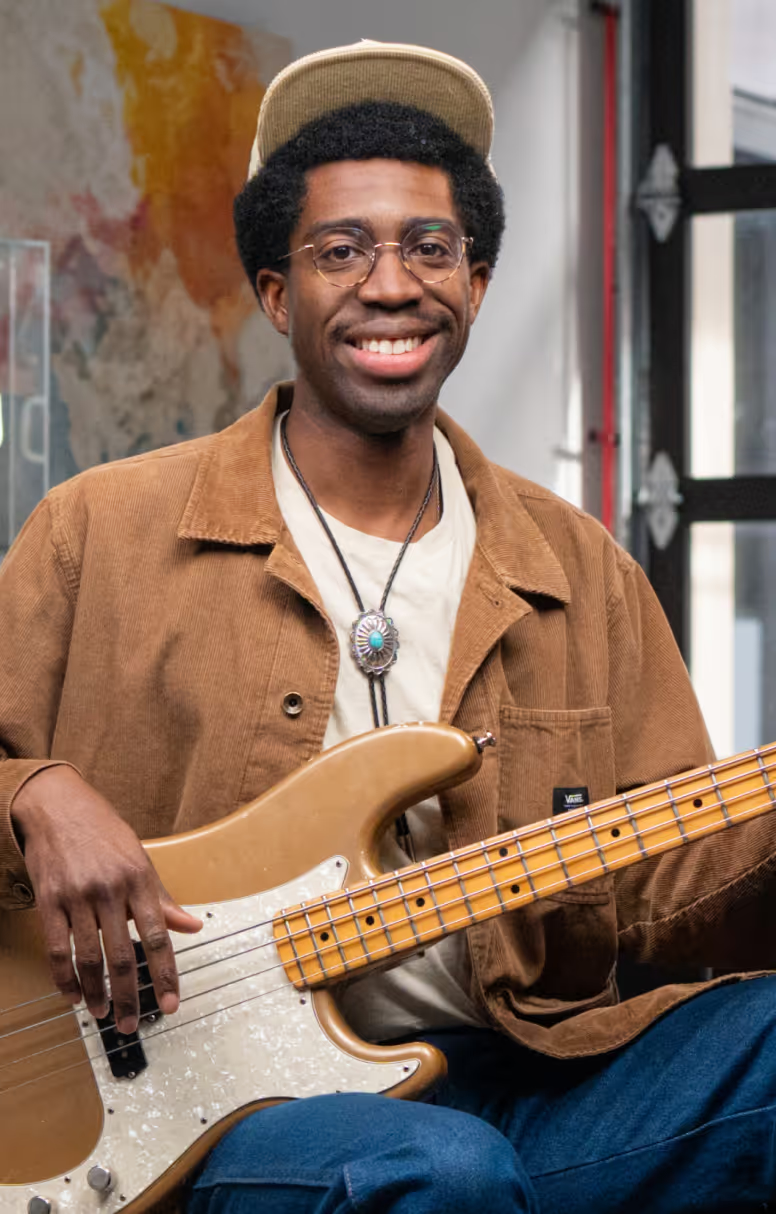
Your Instructor
Embark on a journey to low-end mastery by learning fundamental skills from one of the hardest working bassists in the biz.
Explore LessonsLimitless learning.
All-inclusive access to every course.





FULL REFUND, NO QUESTIONS ASKED
Improve your playing or get your money back
We’re so confident that we can improve your playing that we’re underwriting your membership with a 60-day satisfaction guarantee.
Frequently asked questions

The most structured approach to learning music