Late Intermediate Learning Pathway
Level up your technique and musicianship.


Intermediate bassists
If you’ve got the fundamentals down but feel like your playing has plateaued, this class will help you break through.
3 months
Corbin will guide you through 6 grades of step-by-step instruction with daily practice plans and assessments.
Learn pro-level skills
This class will help you move beyond the fundamentals and develop a more advanced approach to the bass.
Take the next step
Leave the intermediate level behind and keep progressing with advanced pathways and challenges.
What you'll learn
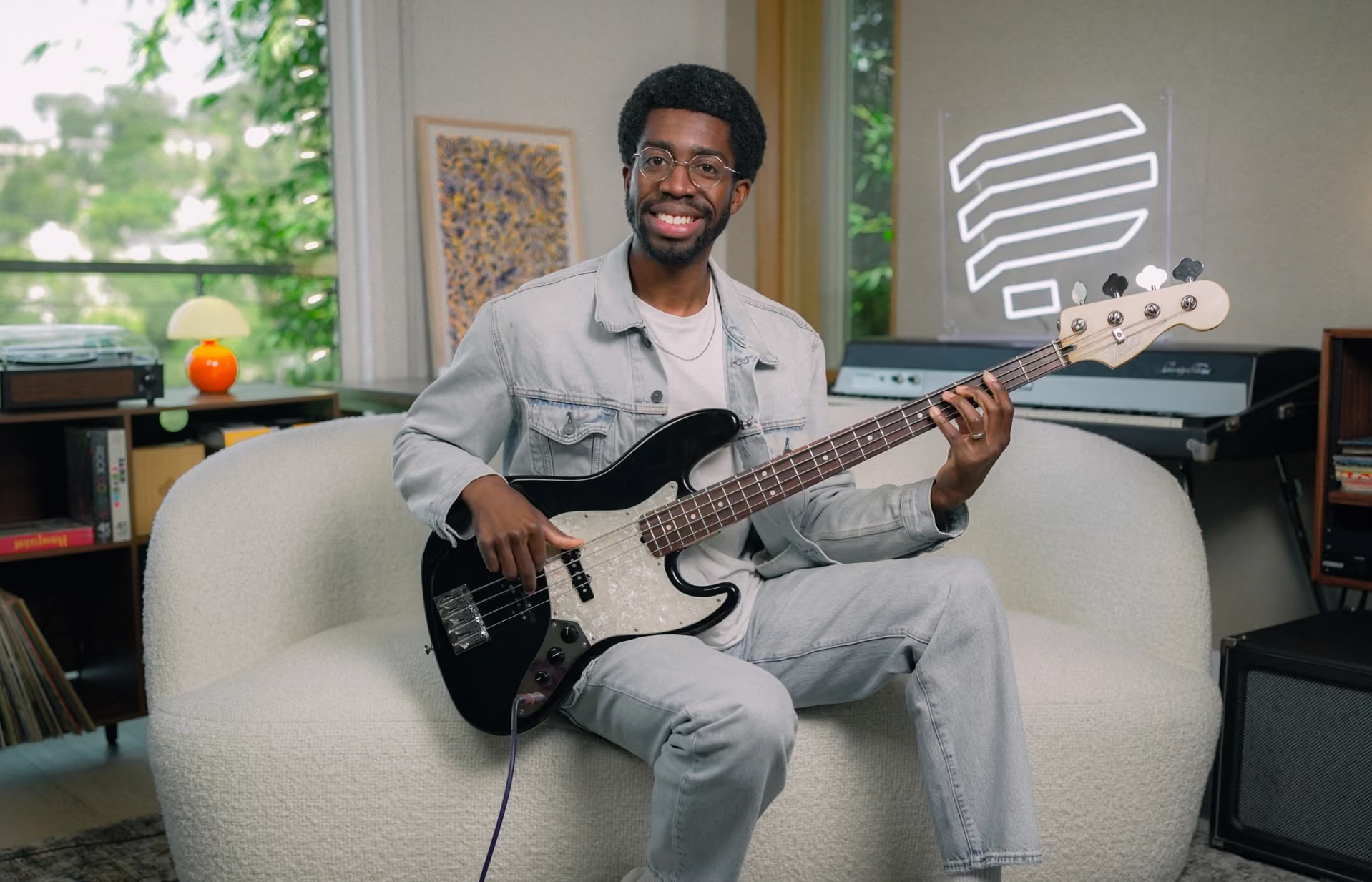
JoinCorbin Jones to build the advanced skills and musical instincts that are keeping you trapped in the intermediate plateau. This class will help you stop falling back on the same patterns and start playing with more freedom.
- Refine your bass technique
- Strengthen your ear and musicianship
- Improvise with confidence
- Unlock your fretboard

Curriculum
Stay focused with this step-by-step learning program designed by our expert team of music educators.
Grade 1. Reinforcing Your Foundation
Advanced playing starts with strong fundamentals. You’ll kick off the class by sharpening your fretting- and plucking-hand skills before expanding your pentatonic vocabulary. You’ll also strengthen your ear, deepen your understanding of rhythm, and hone your slap bass technique.

Day 1. Fretting-hand checklist
First, you'll refine your fretting-hand skills so you can better control how your notes begin and end.
Day 2. Plucking-hand checklist
Then, you'll work on strengthening your alternate-plucking skills to play faster and more precisely for longer stretches of time.
Day 3. Grouping pentatonics in fours
Here, you’ll connect relative pentatonic shapes and reorganize the notes into groups of four to create more creative fills that step outside the box.
Day 4. Develop your ear: major
Corbin’s three-step ear-training process will help you recognize the major scale and connect its intervals to the fretboard. This connection will help you create melodies and improvise more confidently.
Day 5. On the upbeat: funk
In this lesson, you’ll learn to feel the upbeats through syncopation and anticipation, then apply those sounds to a funk groove.
Day 6. The number system: country
The number system will help you recognize common progressions and move them to new keys without relearning every note. You’ll start learning this practical language by applying it to a country track.
Day 7. Getting back to slap
You don't always need slap bass, but when the moment calls for it, you better be ready to shine. In this lesson, you’ll revisit thumping and popping to strengthen your slap technique for a cleaner funk sound.
Performance pieces
Choose a song to learn that takes what you worked on in Grade 1 and puts it in a musical context. Here, you'll get to jam with a live-recorded band of professional L.A. musicians as your backing track.
Personalized feedback
Submit a video of yourself playing a performance piece from this grade for custom video feedback on your playing from our team of pro bassists.
Final quiz
Make sure you're ready to move on to Grade 2.
Grade 2. Expanding Your Toolkit
Next, you’ll learn how to craft basslines on the spot by listening closely to your fellow bandmates. You’ll also develop your ear and strengthen your feel for upbeats. Along the way, you’ll explore new ways to apply palm muting and slap technique before returning to the number system.
Day 1. Crafting on the spot
To start off Grade 2, you’ll learn how to listen actively while playing with others so you can build better basslines that respond to the drummer and support the rest of the band.
Day 2. It’s all in the palm
You’ll learn how to use palm muting to soften your attack and create the warm tone heard throughout neo-soul, gospel, and reggae.
Day 3. Develop your ear: minor
In this lesson, you’ll train your ears to recognize the natural minor scale and hear the intervals that make up its distinctive sound.
Day 4. Rhythmic studies: Latin upbeats
Corbin will introduce you to a Latin-inspired tumbao groove that will help you internalize the downbeat while placing syncopated notes around it.
Day 5. Slap combos
In Day 5, you’ll expand your slap vocabulary with a thump-thump-pluck-thump pattern that you can easily insert as a fill in your own playing.
Day 6. Number system: gospel and R&B
You’ll return to the number system and apply it to a faster-moving soul progression in multiple keys.
Day 7. Upbeat workout
Test how clearly you can feel and navigate the subdivisions between downbeats with a final rhythmic workout.
Performance pieces
Choose a song to learn that takes what you worked on in Grade 2 and puts it in a musical context. Here, you'll get to jam with a live-recorded band of pro L.A. musicians as your backing track.
Personalized feedback
Submit a video of yourself playing a performance piece from this grade for custom video feedback on your playing from our team of pro bassists.
Final quiz
Make sure you're ready to move on to Grade 3.
Grade 3. Study the Greats
After that, you’ll travel through bass history and explore the techniques that helped seven iconic players redefine the instrument. You’ll then adapt their approaches to bring more personality to your own playing.
Day 1. Flea
Punk up your funk with the Red Hot Chili Peppers’ Flea. You’ll combine slap technique with a more aggressive attack to explore the funk-rock sound Flea brought to the mainstream.
Day 2. James Jamerson
Learn from the Motown master by targeting the 3rd of each chord and shaping a warm, muted tone like Jamerson’s.
Day 3. Nathan East
In Day 3, you’ll study one of the most recorded bass players in musical history. You’ll develop the steady attack and fretboard efficiency required to become a versatile session bassist.
Day 4. Paul McCartney
In the lesson, you’ll study this low-end Beatle and learn how to create basslines that are as melodic and memorable as any song’s vocal lines.
Day 5. Geddy Lee
Now, you’ll bring the bass into the spotlight with triplet-based rhythms and pentatonic groupings inspired by Rush’s lead-bass approach.
Day 6. Marcus Miller
You’ll refine your double-thump slap technique and explore the nuanced funk sound Marcus Miller brought to jazz fusion.
Day 7. Jaco Pastorius
To finish off the grade, you’ll explore Jaco’s sophisticated phrasing and harmonic approach while navigating a modified blues form.
Performance pieces
Choose a song to learn that takes what you worked on in Grade 3 and puts it in a musical context. Here, you'll get to jam with a live-recorded band of pro L.A. musicians as your backing track.
Personalized feedback
Submit a video of yourself playing a performance piece from this grade for custom video feedback on your playing from our team of pro bassists.
Final quiz
Make sure you're ready to move on to Grade 4.
Grades 4-6
To cap off the class, you'll move beyond familiar intermediate patterns. You’ll turn advanced harmony into musical ideas, develop a practical improvisational approach, and finish by learning how to adapt to modern gigs and recording sessions.
Grade 4. From Scales to Music
In Grade 4, you’ll learn how to apply the must-know modes in your own playing to better outline chords. By the end, you’ll be able to add more sophisticated harmony to your playing.
Day 1. Major
To kick off Grade 4, you’ll deepen your understanding of the mother of all scales: the Ionian mode. You’ll play the scale across two octaves before applying it musically with a melodic fill.
Day 2. Lydian
Now, you’ll raise the 4th of the major scale to create the colorful Lydian sound and learn how to use it to outline major chords with a sharp 11th.
Day 3. Mixolydian
In this lesson, you’ll use the flattened 7th to create the bluesier major sound known as Mixolydian. This scale works naturally over dominant chords – perfect for blues, funk, and rock.
Day 4. Dorian
You’ll now explore how Dorian’s natural 6th adds a little brightness to the minor sound. Corbin will then show you how it can add a new flavor to minor 7th chords.
Day 5. Aeolian
Ready to go over to the dark side? By flattening the 6th, you’ll go full minor with the Aeolian mode, and you’ll learn why it was a beloved scale for hip-hop and R&B artists in the ‘90s and ‘00s.
Day 6. Diminished
For your last modal challenge, you’ll explore the tension of the half-whole diminished scale and learn how it can add color to a dominant chord in a minor key.
Day 7. Scales workout
In this final workout, Corbin will help you compare each scale from the same tonal center while navigating two-octave patterns across the fretboard.
Performance pieces
Choose a song to learn that takes what you worked on in Grade 4 and puts it in a musical context. Here, you'll get to jam with a live-recorded band of pro L.A. musicians as your backing track.
Personalized feedback
Submit a video of yourself playing a performance piece from this grade for custom video feedback on your playing from our team of pro bassists.
Final quiz
Make sure you're ready to move on to Grade 5.
Grade 5. Improve Your Improv
In this grade, you’ll set aside your role as a supporting player and take the lead as you learn pro-level techniques for soloing without losing the groove. From creating your own melodies and soloing with a swing feel to following chord changes, you’ll seriously level up your improvisational skills throughout this grade.
Day 1. Approaching improvisation
Start your improv journey off with Corbin’s patented soloing strategy. It’ll help you build a solo from a strong rhythmic idea before connecting the sounds in your head to the fretboard.
Day 2. Broken 3rds
You’ll reorganize major and minor scales into broken-3rd patterns that create more movement than a straight scale run.
Day 3. Creating melodies
In Day 3, you’ll shape an eight-bar melody with a clear beginning, middle, and ending that listeners can remember and hum long after the song ends.
Day 4. Makin’ it swing
Now, you’ll use offbeat swing rhythms to keep your improvised lines connected to the feel of the band when it’s swingin’.
Day 5. Pentatonic groupings (part 2)
Corbin will show you how to reorganize relative pentatonic shapes into groups of three and use triplets to create new soloing phrases.
Day 6. Chord-specific or one scale?
In this lesson, you’ll learn about and compare the two most common ways of soloing: using one scale across an entire blues progression vs. playing a different scale over each chord.
Day 7. Groove soloing
To close out the grade, you’ll build a solo by adding rhythmic variation to the core bassline. This approach will help you stay locked into the pocket while you step into the spotlight.
Performance pieces
Choose a song to learn that takes what you worked on in Grade 5 and puts it in a musical context. Here, you'll get to jam with a live-recorded band of pro L.A. musicians as your backing track.
Personalized feedback
Submit a video of yourself playing a performance piece from this grade for custom video feedback on your playing from our team of pro bassists.
Final quiz
Make sure you're ready to move on to Grade 6.
Grade 6. Modern Bass Player’s Toolkit
In the final grade, you’ll round out your bass skills with the techniques and knowledge required for modern gigs. You’ll learn how to move smoothly between different approaches, stay grounded when the meter changes, and support more sophisticated harmony.
Day 1. Hybrid slap
Kick off Grade 6 by learning how to switch seamlessly between fingerstyle and slap. This will help you choose the right technique for each part of a bassline.
Day 2. Funky pickin’
In this lesson, you’ll learn how to stay consistent even when the feel of a song changes. You’ll lock in with the drummer’s subdivisions to guide the rest of the band through metric modulations.
Day 3. Groovin’ in odd meter
In Day 3, you’ll learn how to make unfamiliar time signatures feel as good as common time by grouping the beats.
Day 4. Greasin’
You’ll learn the Chicago-born form of playing called “greasin’.” This technique turns your thumb into a pick to give you a totally unique tone.
Day 5. Number system
Round out your number-system training by applying it to minor keys. You’ll move a i–iv–v progression around different keys just by shifting your root notes.
Day 6. Slap combos
In Day 6, you’ll build a faster slap phrase in stages before moving it to different subdivisions within the groove.
Day 7. Bass chord must-knows
Close out the class by learning how to use three-note voicings to navigate a ii–V–I progression and support the band with clean upper-register chords.
Performance pieces
Choose a song to learn that takes what you worked on in Grade 6 and puts it in a musical context. Here, you'll get to jam with a live-recorded band of pro L.A. musicians as your backing track.
Personalized feedback
Submit a video of yourself playing a performance piece from this grade for custom video feedback on your playing from our team of pro bassists.
Final quiz
Make sure you're ready to move on to new challenges.

Your Instructor
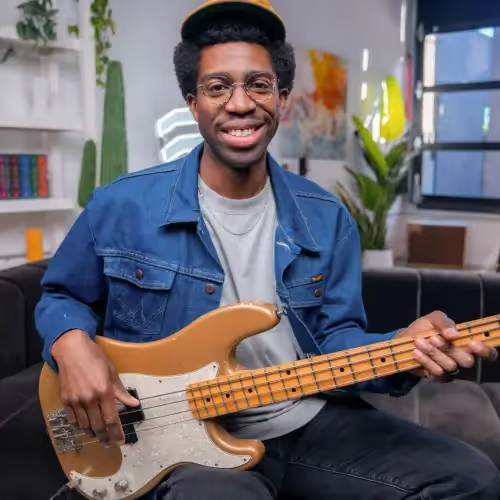
Embark on a journey to low-end mastery by learning fundamental skills from one of the hardest working bassists in the biz.
Explore LessonsLimitless learning.
All-inclusive access to every course.



FULL REFUND, NO QUESTIONS ASKED
Improve your playing or get your money back
We’re so confident that we can improve your playing that we’re underwriting your membership with a 60-day satisfaction guarantee.
Frequently asked questions

The most structured approach to learning music