Bring your basslines to life.
Late beginner bassists
If you’re comfortable with basic grooves and want to step up your rhythm skills, this class is for you.
7 days
Patrick Phinney Taylor will guide you through 7 days of instruction with daily practice plans and assessments.
Groove with confidence
By the end of this challenge, you’ll have a pro-level toolkit of dynamic rhythm techniques to support the groove and keep the band locked in.
Take the next step
Once you've mastered this Challenge, keep learning with more challenges and guided Learning Pathways.
This challenge will help you tighten up your timing, strengthen your fretting hand, and make your bass lines groove harder. Each day, Patrick will break down a key ghost note concept and show you how to apply it through guided exercises and playalong jams.

Stay focused with this step-by-step learning program designed by our expert team of music educators.
In this 7-day challenge, Patrick will teach you how to drive the groove using percussive ghost notes. You’ll leave this class with a sharper sense of timing and a deeper relationship to the drums.

What is a ghost note?
We’ll kick off the challenge by breaking down the technique behind ghost notes.
Patrick will introduce the concept of subdividing the beat and show you how to get ghost notes under your fingers. To get you making music right away, you’ll start applying fundamental technique over a modern pop groove.

The grid and the drums
Over the next two days, you’ll explore how to place your ghost notes with intention to accentuate the groove.
You’ll also work on thinking like a drummer by locking your notes in with different parts of the drum kit: hi-hats, snare, bass drum. This will help you keep the rest of the band feeling the rhythm of the song without losing the harmony.

Funk and Motown
In these lessons, you’ll learn how old-school and modern funk bassists use ghost notes to create syncopated basslines. You’ll apply ghost notes over two tracks inspired by Tower of Power and Vulfpeck.
Patrick will then show you how Motown bassists like James Jamerson weaved together ghost notes and melodies to craft some of the most iconic and memorable basslines of all time.
Ghost-note workout
We’ll close out the class with a workout that will challenge your stamina and timing. You’ll keep a steady, 16th-note beat going with ghost notes as you land each full note on the downbeat.
Performances
After your last lesson, you'll have a choice of three performance pieces where you can groove with a live-recorded band to apply what you learned in a purely musical context.
Day 1. What is a ghost note?
Get started with the fundamentals of ghost note technique to bring out the percussive side of your bass.
To kick off the class, Patrick will walk you through the mechanics of forming ghost notes to get a tight, punchy sound that exists between your fretted notes. You’ll also start adding syncopation to your basslines by subdividing the beat, either in your head or body.
Days 2-3. The grid and the drums
Now that you know how to create ghost notes, you’ll learn how to place them on and around the beat to fill out harmony with syncopated rhythms. These lessons will help you strengthen the sacred relationship between bass and drums.
Day 2. Lining up with the grid
The first step to learning where to place your ghost notes is visualizing time. That’s where the grid comes in handy.
We’ll take inspiration from the DAWs that producers use to create drumbeats, where time is broken up into small sections that align with the different parts of a drum kit. You’ll learn to think about time in the same way to land on the offbeats with your ghost notes.
Day 3. Playing with placement
With your newfound grid knowledge, you can start thinking like a drummer. Patrick will guide you through lining your ghost notes up with hi-hats, the kick, and the snare drum.
This technique will emphasize the groove and leave space for other instruments to take center stage while you and the drummer hold down the rhythm.
Days 4-6.
In these lessons, we’ll study how great bassists use ghost notes to create memorable basslines that bridge harmony, melody, and rhythm. You’ll leave with fresh inspiration for how to weave percussion into your lines in various genres.
Day 4. Old-school funk grooves
The original funk bassists used ghost notes to prove that funk lives between the notes. Bassists like Larry Graham, Bootsy Collins, and Rocco Prestia will be our guiding light as we craft tight, syncopated basslines that drive the groove and keep the band locked in time together.
Day 5. Modern funk feel
From Thundercat and MonoNeon to Pino Palladino, modern funk bassists continue to push the envelope for what the bass is capable of. There’s no better example of modern funk than Vulfpeck’s Joe Dart, who prioritizes the groove over flashy lines.
Using a track inspired by Vulfpeck’s “It Gets Funkier II,” you’ll apply all of the skills we’ve worked on in this class so far to bring funk into the modern age.
Day 6. Motown melodies
Travel back to the early days of electric bass when Motown Records was shaping the sound of R&B and soul. Part of the magic of Motown was the melodic basslines crafted by legends like Bob Babbitt and Carol Kaye.
Our inspiration for today comes from perhaps the most influential bassist of all time: James Jamerson, who masterfully balanced melody and rhythm using ghost notes to support groups like the Jackson 5.
Day 7. Ghost-note workout
You’ve already put in the hard work learning how and where to place ghost notes in a number of groovy genres. You’ll put it all together in a fun and engaging workout that will test your rhythm skills.
Day 7.
You’ve made it to the final day of the class. It’s time to hit the Tone Gym and put your skills to the test. You’ll maintain a steady 16th-note beat and land a full note on each downbeat. This workout will turn you into a rhythm master.
Performances
With your ghost-note toolkit filled, you’ll apply all your new skills over three soulful and funkalicious original tracks. We’ll return to our tracks inspired by the Jackson 5 and Tower of Power, as well as a Patrick Phinney Taylor original inspired by Jeff Buckley’s “Everybody Here Wants You.”
You’ll work on lining up with the drums and adding articulations like hammer-ons and slides to your lines.
FULL REFUND, NO QUESTIONS ASKED
We’re so confident that we can improve your playing that we’re underwriting your membership with a 60-day satisfaction guarantee.

Your Instructor
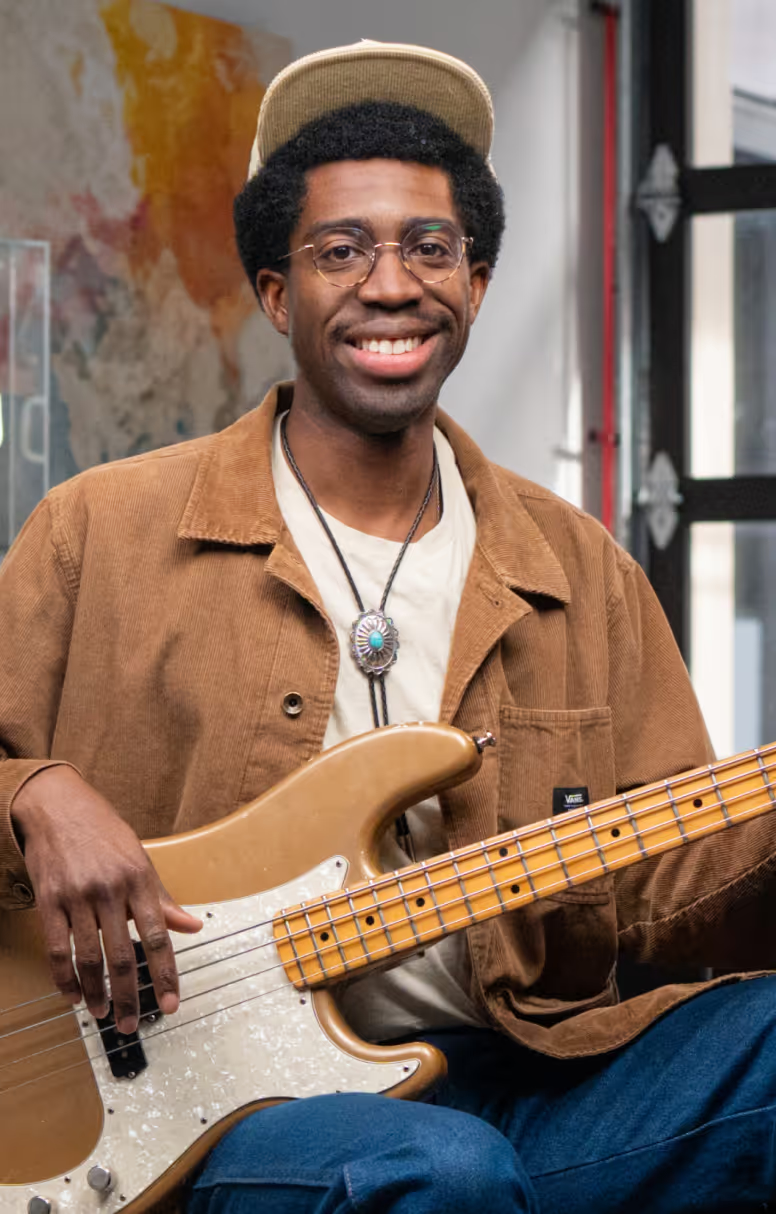
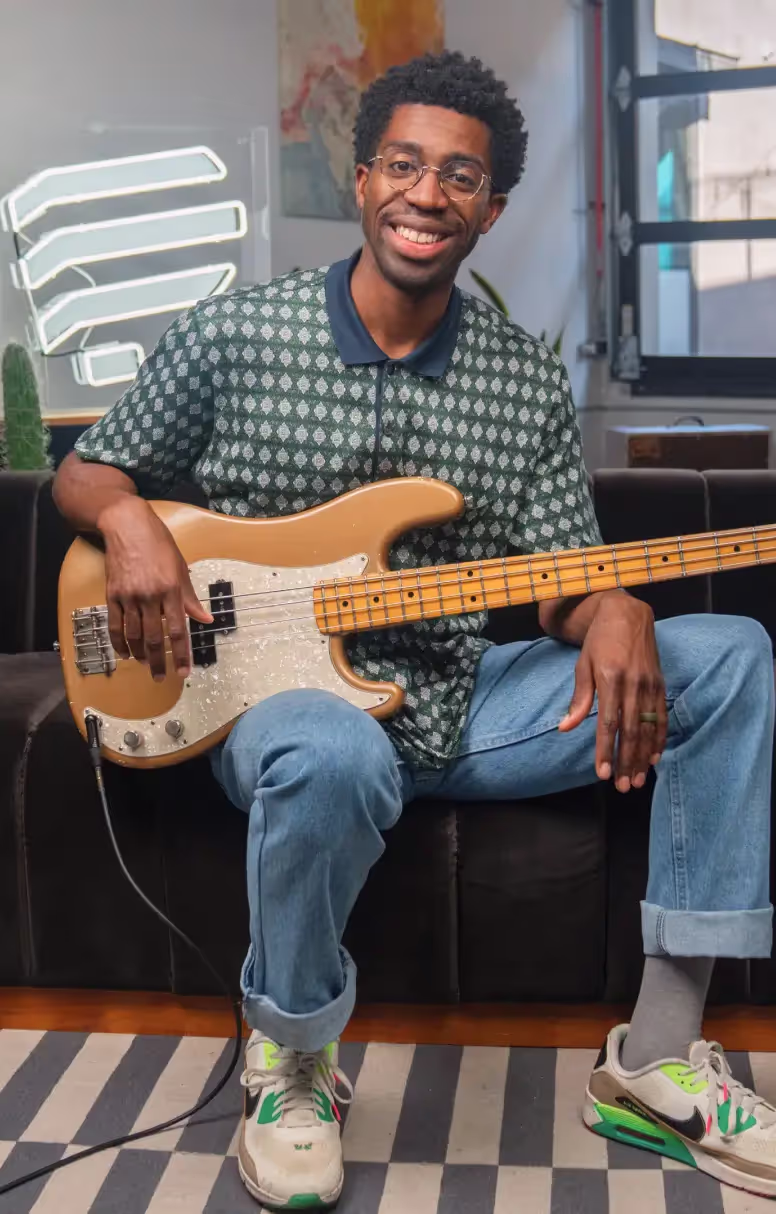
Patrick is a versatile session and touring bassist who’s here to help you improve your groove and lock into the pocket.
Explore LessonsAll-inclusive access to every course.

Are you a guitar, bass or piano player who feels like you haven’t made progress in a few months… years… or even decades?
You’re probably stuck in what’s called the ‘intermediate plateau’. This is very common and can be very frustrating.
What’s the cause? Well, it’s pretty easy to learn the basics on any instrument. Learn a few chords and you can play hundreds of other songs. Learn a couple of scales and you can play some lead.
But what then? Triads? Modes? Arpeggios? The phrygian scale?!
Without a clear plan and learning system you fall back to playing the same things over and over again. Or you bounce around free lessons online but nothing seems to stick. It’s a recipe for a lot of practice without much progress.
That’s where Pickup Music can help. We specialize in taking players stuck in a rut and turning them into advanced musicians.
We do this through Learning Pathways that take you on a step-by-step journey towards mastery. We give you a highly structured system that shows you exactly what to work on each week to make serious progress.
These Learning Pathways take the guesswork out of your practice routine. You are guided through a proven grade-by-grade system with daily lessons, play-along practice exercises and interactive workouts.
But it’s not all about theory. We apply everything you learn to real music. That’s why every grade of our Learning Pathways build up to performing a song with a live backing band. This simulates what it’s like to play a real gig, with real musicians. It’s the absolute best way to learn.
You can also get 1-on-1 video feedback on your playing from our expert coaches and can attend weekly live lessons. This personal feedback makes Pickup Music the closest thing to taking in-person lessons, but at a fraction of the cost.
So does this method actually work? Will you see results in your playing?
The most common thing we hear from new members is that they’ve made more progress with Pickup Music in a few months than in years of teaching themselves. As one member recently told us, “I'm finally seeing progress for the first time in many years”.
Want to hear about other members’ experiences with us? Read our independent Trustpilot reviews.
Private music lessons cost about $50 per lesson or $2,600 a year.
Enrolling in a music academy costs about $40,000 a year.
A Pickup Music membership costs just $180 for the whole year. That works out to 50 cents a day!
But it’s not just about the money. It’s about not wasting your precious time. It’s about making actual progress as a musician.
By following our proven Learning Pathway system, you will eliminate the guesswork so you know exactly what you need to focus on each day and week to make lasting progress as a musician.
Most online music lesson sites are good at teaching one-off songs. Or they get super famous artist to record one-hour video lessons talking at length about their particular style and career.
The problem is that these 'infotainment' approaches don't stick. They don’t help you to actually get better as a musician. You can waste a lot of time bouncing around these types of unconnected, one-off lessons.
Pickup Music takes a different approach. We give you a highly structured system that shows you exactly what to work on each week to make serious progress. We take you beyond the basics through a step-by-step journey towards mastery.
By following a Pickup Music Learning Pathway, you are getting the most guided way to learn music. Over 6 grades, you are taken through daily lessons and practice exercises that carefully explain what’s going on behind the music.
Each grade then builds up to song performances that apply everything you’ve learned with a live backing band. These challenges - where we simulate what it’s like to play a real gig, with real musicians - is the absolute best way to learn.
You can also get 1-on-1 video feedback on your playing and weekly live lessons. This personal feedback makes Pickup Music the closest thing to taking in-person lessons, but at a fraction of the cost.
Want to hear about other members’ experiences with us? Read our independent Trustpilot reviews.
Everything on Pickup Music is designed to be taken on-demand and at your own pace. There are no deadlines, so you can work at your own speed. You can stay on a topic until you really understand it before you move on.
While we divide our Learning Pathways into ‘days’ - this is a suggestion only. Some learners might take a few days in one sitting, while others will spend a few sessions on a single day. You can go at the pace that feels most comfortable to you.
Canceling is easy. It’s just a click of a button on your account page.
You won't be charged anything if you cancel during your free trial. We also send you a reminder before your trial ends so you don’t accidentally forget about it.
If you cancel after your trial, you won't be billed again at your next billing cycle. Your membership will remain active until it expires on the day it was originally set to renew.
In addition to the free trial, we also offer a 60-day money back guarantee for first time customers who sign up via our website. If you’re not satisfied with your progress in the first 60 days of your membership, we will give you your money back - no questions asked.