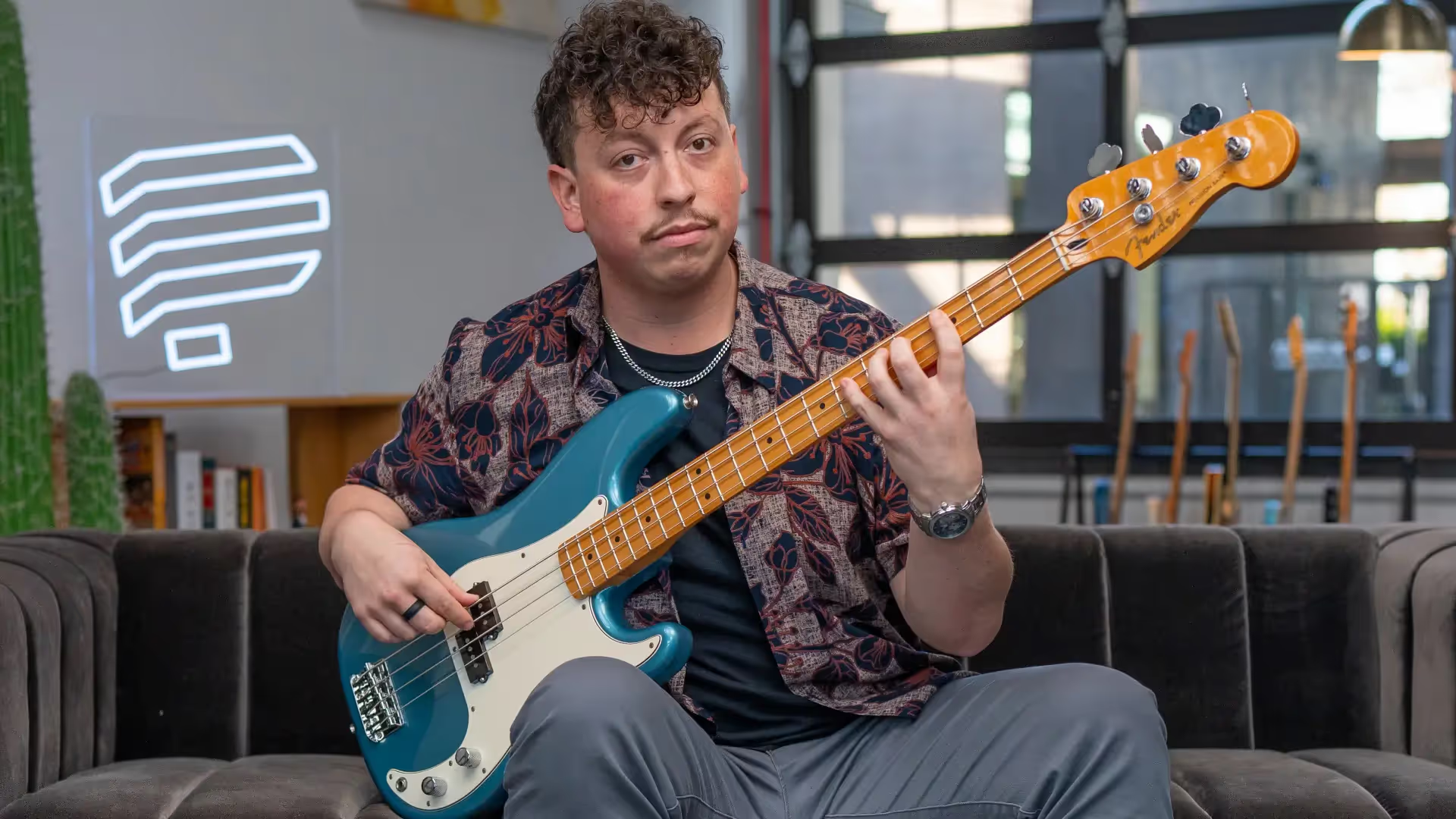
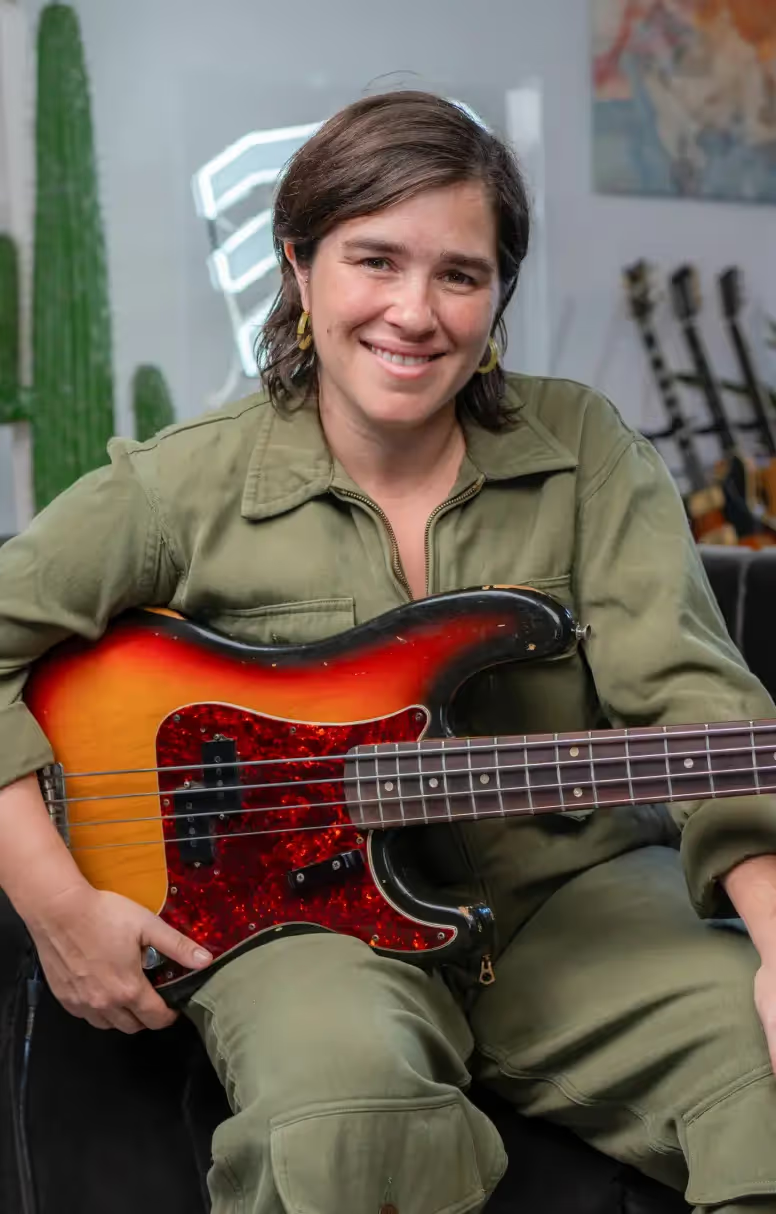
One scale to rule them all.
Late beginner bassists
If you’re feeling stuck in your fretboard and want to learn how to move freely across the neck, this is the class for you.
7 days
Nick will guide you through 7 days of step-by-step instruction with daily practice plans and assessments.
Fretboard freedom
By the end of this challenge, you’ll be able to visualize your entire fretboard and play pentatonic basslines in any key.
Take the next step
Once you've mastered this challenge, keep learning with more challenges and guided Learning Pathways.
Each day, Nick Cisneros shows you how to internalize a new position of the pentatonic scale, note by note. You'll leave this challenge with a strong mental map of your fretboard that'll set you up to improvise and write your own basslines.
Stay focused with this step-by-step learning program designed by our expert team of music educators.
In this 7-day Challenge, Nick will help you improve your fretboard knowledge through mapping out the five positions of the pentatonic scale across the entire neck. Each day includes engaging exercises and a jam so you can apply each concept in real time right away.

Pentatonic review
Kick off the class by learning the theory behind this valuable scale and how it relates to the major scale.
This overview of the pentatonic scale will help you start off the on right foot as you build out your pentatonic foundation in the rest of the class.

Position 1: G major pentatonic
Start with the root-note position and learn some helpful techniques for playing smoothly and with more speed.
After drilling through the scale, you’ll apply it musically by learning a bassline.

Positions 2 and 3
Keep that fretboard exploration going and learn how starting a bassline on a note other than the root can unlock some tasty sounds.
You’ll also work on strengthening your note-recognition skills as you get higher up on the neck.
Positions 4 and 5
As you ascend the fretboard, you’ll work on improving your muscle memory for these new shapes. You’ll also learn how to apply these higher notes in different musical situations, including solos and the bridge of a song.
We'll finish off the lessons with some different pentatonic exercises to add to your daily practice routine.
Performances
To tie a bow on the class, you'll learn songs that directly incorporate the techniques and scale positions you worked on. You'll get interactive TAB and a backing track for each song so you can dial it in with Nick and on your own.
Day 1. Pentatonic review
Start mapping out the pentatonic scale on the E string. These are your starting points for each position of the scale, so it’s essential to visualize where they are along the string.
Whether you’re brand new to bass or a seasoned bassist, it’s never a bad idea to review the pentatonic scale and understand how it relates to the major scale.
To set you up for success, Nick walks you through mapping out the scale along the E string so you know exactly where each position starts. Plus, you’ll start training your ears to internalize the sound of the pentatonic scale.
Day 2. Position 1: G major pentatonic
Take your first steps toward fretboard mastery with the root-position pentatonic scale and tips for smoother playing.
Gaining easy access to all of the notes within the pentatonic scale is essential for creating confident basslines. That’s where the positions of the pentatonic scale come in handy.
You’re learning how to play every note without shifting your hand up and down the fretboard. Nick will also share some technique tips for playing faster lines in position.
Days 3-4. Positions 2 and 3
In these lessons, we’ll continue unwrapping the gifts of the pentatonic scale. You may not be as familiar with the notes this high up the fretboard, so you’ll also work on note recognition. Never a bad thing!
Day 3. Position 2 from the 2nd
Sometimes, you want to start your bassline on a note other than the root note. Well, this position gives you access to different paths to reach the root note on the D string by starting on other notes of the scale.
Day 4. Position 3 from the 3rd
Time to dust off those upper frets. Since this part of the neck might be new to you, you’ll focus on saying the note names out loud as you memorize the shape itself. End the day by learning a fast-paced groove in position and jamming with Nick.
Days 5-7. Positions 4 and 5
In these final lessons, you’ll complete your pentatonic journey and continue applying your new knowledge with musical grooves. Playing this high up the fretboard means that your basslines will really cut through the mix.
Day 5. Position 4 from the 5th
This shape includes a nice number of notes below and above the root note. It’s always good to have that flexibility when you’re writing your own basslines.
Because the frets are closer together, you have the option to play each fret with each finger. Combined with hammer-ons, you can really pick up the speed here.
Day 6. Position 5 from the 6th
Final position! This position just happens to also be position 1 of the minor scale. It’s also very finger-friendly, making improvising a bit easier. You’ll learn a lazy funk-rock groove to end the lesson.
Day 7. All positions
You’ve officially covered the entire fretboard. Now, it’s time to go the extra mile and drill these positions daily until you know them like the back of your hand. Fortunately, Nick’s got some fun and musical suggestions for exercises to add to your daily practice routine.
Performances
Now that you’ve unlocked the fretboard, you’ll apply your new skills and knowledge to two original performance pieces. One is a country-rock song that will have you travelin’ that long and winding road of the pentatonic scale. Then, you’ll lay things back with a chill reggae tune in positions 3, 4, and 5.
FULL REFUND, NO QUESTIONS ASKED
We’re so confident that we can improve your playing that we’re underwriting your membership with a 60-day satisfaction guarantee.

All-inclusive access to every course.

Are you a guitar, bass or piano player who feels like you haven’t made progress in a few months… years… or even decades?
You’re probably stuck in what’s called the ‘intermediate plateau’. This is very common and can be very frustrating.
What’s the cause? Well, it’s pretty easy to learn the basics on any instrument. Learn a few chords and you can play hundreds of other songs. Learn a couple of scales and you can play some lead.
But what then? Triads? Modes? Arpeggios? The phrygian scale?!
Without a clear plan and learning system you fall back to playing the same things over and over again. Or you bounce around free lessons online but nothing seems to stick. It’s a recipe for a lot of practice without much progress.
That’s where Pickup Music can help. We specialize in taking players stuck in a rut and turning them into advanced musicians.
We do this through Learning Pathways that take you on a step-by-step journey towards mastery. We give you a highly structured system that shows you exactly what to work on each week to make serious progress.
These Learning Pathways take the guesswork out of your practice routine. You are guided through a proven grade-by-grade system with daily lessons, play-along practice exercises and interactive workouts.
But it’s not all about theory. We apply everything you learn to real music. That’s why every grade of our Learning Pathways build up to performing a song with a live backing band. This simulates what it’s like to play a real gig, with real musicians. It’s the absolute best way to learn.
You can also get 1-on-1 video feedback on your playing from our expert coaches and can attend weekly live lessons. This personal feedback makes Pickup Music the closest thing to taking in-person lessons, but at a fraction of the cost.
So does this method actually work? Will you see results in your playing?
The most common thing we hear from new members is that they’ve made more progress with Pickup Music in a few months than in years of teaching themselves. As one member recently told us, “I'm finally seeing progress for the first time in many years”.
Want to hear about other members’ experiences with us? Read our independent Trustpilot reviews.
Private music lessons cost about $50 per lesson or $2,600 a year.
Enrolling in a music academy costs about $40,000 a year.
A Pickup Music membership costs just $180 for the whole year. That works out to 50 cents a day!
But it’s not just about the money. It’s about not wasting your precious time. It’s about making actual progress as a musician.
By following our proven Learning Pathway system, you will eliminate the guesswork so you know exactly what you need to focus on each day and week to make lasting progress as a musician.
Most online music lesson sites are good at teaching one-off songs. Or they get super famous artist to record one-hour video lessons talking at length about their particular style and career.
The problem is that these 'infotainment' approaches don't stick. They don’t help you to actually get better as a musician. You can waste a lot of time bouncing around these types of unconnected, one-off lessons.
Pickup Music takes a different approach. We give you a highly structured system that shows you exactly what to work on each week to make serious progress. We take you beyond the basics through a step-by-step journey towards mastery.
By following a Pickup Music Learning Pathway, you are getting the most guided way to learn music. Over 6 grades, you are taken through daily lessons and practice exercises that carefully explain what’s going on behind the music.
Each grade then builds up to song performances that apply everything you’ve learned with a live backing band. These challenges - where we simulate what it’s like to play a real gig, with real musicians - is the absolute best way to learn.
You can also get 1-on-1 video feedback on your playing and weekly live lessons. This personal feedback makes Pickup Music the closest thing to taking in-person lessons, but at a fraction of the cost.
Want to hear about other members’ experiences with us? Read our independent Trustpilot reviews.
Everything on Pickup Music is designed to be taken on-demand and at your own pace. There are no deadlines, so you can work at your own speed. You can stay on a topic until you really understand it before you move on.
While we divide our Learning Pathways into ‘days’ - this is a suggestion only. Some learners might take a few days in one sitting, while others will spend a few sessions on a single day. You can go at the pace that feels most comfortable to you.
Canceling is easy. It’s just a click of a button on your account page.
You won't be charged anything if you cancel during your free trial. We also send you a reminder before your trial ends so you don’t accidentally forget about it.
If you cancel after your trial, you won't be billed again at your next billing cycle. Your membership will remain active until it expires on the day it was originally set to renew.
In addition to the free trial, we also offer a 60-day money back guarantee for first time customers who sign up via our website. If you’re not satisfied with your progress in the first 60 days of your membership, we will give you your money back - no questions asked.