Rock Learning Pathway
Dive deep into the rhythms of rock.


Late beginner bassists
If you’re comfortable with simple grooves and the major scale, you’re ready to take this class.
3 months
Pete will guide you through 6 grades of step-by-step instruction with daily practice plans and assessments.
Rock-solid groove
This class will help you build driving basslines, lock down your timing, and play like rock icons across classic and modern styles.
Take the next step
Once you've mastered rock bass, keep progressing with advanced challenges and guided pathways.
What you'll learn
In this class, Pete breaks down the sound and feel behind iconic rock bass playing. You’ll learn how to drive any rock song with tasteful basslines and melodic playing across a range of styles.
- Learn essential rock vocabulary
- Strengthen your timing and feel
- Dial in your tone
- Decode the style of rock legends


Curriculum
Stay focused with this step-by-step learning program designed by our expert team of music educators.
Grade 1. Build Your Rock Foundation
In this opening grade, you’ll start your rock journey by learning how to nail the sound and feel of the genre. You’ll build the foundation every rock bassist needs: a strong tone, a reliable pulse, and the ability to support the band without overplaying.

Day 1. Let’s rock
Learn how to dial in a bright bass tone and shape your sound using just your plucking-hand attack.
Day 2. Learn the pulse of rock
Pete will show you how to drive the song with a steady 8th-note feel and hear how small rhythmic choices can change the energy of a groove.
Day 3. The 5th: a bassist’s best friend
Learn how to add more power to your basslines by using the 5th to support the chord without making things too harmonically muddy.
Day 4. Blues: the original rock form
Join Pete to trace rock back to its blues roots and learn how to play through a 12-bar form using a blues shuffle feel.
Day 5. The rock box and hammer-ons
In this lesson, you’ll learn the most useful movable shape to build rock basslines anywhere on the fretboard, then add hammer-ons to make your lines flow more naturally.
Day 6. Rad triads
You’ll learn how to outline the harmony by adding the 3rd to your root and 5th. You’ll learn two versatile ways to play triads over a track inspired by Queen’s Crazy Little Thing Called Love.
Day 7. Pick basics
Now, you’ll give those plucking fingers a break and reshape your tone using a pick. You’ll learn how to use alternate picking to play faster and more consistent lines.
Performance pieces
Choose a song to learn that takes what you worked on in Grade 1 and puts it in a musical context. Here, you'll get to jam with a live-recorded band of professional L.A. musicians as your backing track.
Personalized feedback
Submit a video of yourself playing a performance piece from this grade for custom video feedback on your playing from our team of pro bassists.
Final quiz
Make sure you're ready to move on to Grade 2.
Grade 2. Different Ways to Rock
With your foundation built, it’s time to make your basslines feel and sound more like the rock records you love. You’ll learn how to slide into notes with purpose, propel chord changes with walking motion, and lock in with the guitar on riffs that make the band sound bigger.
Day 1. Rock grouping
To start off Grade 2, you’ll learn how to break out of plain quarter notes by using subdivision patterns that add more rhythmic complexity to your rock basslines.
Day 2. Expressive slides
You’ll learn how to make your basslines feel more vocal by sliding into notes with control.
Day 3. Minor pentatonic and blues scale
In this lesson, you’ll learn rock’s most familiar scale sound to start building lines that feel natural over guitar-driven songs.
Day 4. Rock walking
Pete will show you how to keep the groove and add more momentum to basslines with walking motion.
Day 5. 3/4
Now, you’ll get comfortable in a new time signature: 3/4. You’ll learn how this common time signature sounds different in a rock context.
Day 6. Unison riffs
You’ll learn how to lock in with the guitarist on key riffs to make the whole band sound tighter and heavier.
Day 7. Palm-muted picking
Pete will guide you through taming the tone of your pick by using palm muting. Learn the technique behind this awesome tone-shaping technique.
Performance pieces
Choose a song to learn that takes what you worked on in Grade 2 and puts it in a musical context. Here, you'll get to jam with a live-recorded band of pro L.A. musicians as your backing track.
Personalized feedback
Submit a video of yourself playing a performance piece from this grade for custom video feedback on your playing from our team of pro bassists.
Final quiz
Make sure you're ready to move on to Grade 3.
Grade 3. Study the Greats
With your essential rock skills dialed in, you’re ready to take a tour through the halls of the Rock Museum to learn from the most iconic rock bassists of all time. From Paul McCartney’s memorable melodies to Cliff Burton’s searing metal tone, you’ll learn the techniques and concepts behind the rock bass greats.
Day 1. Paul McCartney
You’ll learn how this Beatle held down the groove and outlined the harmony – all while laying down memorable, melodic basslines.
Day 2. John Paul Jones
In this lesson, you’ll learn how Jones created more sophisticated basslines that acted like lead parts. You’ll leave this lesson with a better understanding of how to subvert expectations and add more depth to a band’s sound.
Day 3. Geddy Lee
You’ll learn how to make bass the lead instrument by studying Geddy Lee’s fast lines and harmonically rich chordal arrangements.
Day 4. Sting
Now, you’ll add some reggae rhythm to your rock basslines with Sting. You’ll also learn how to switch between halftime and double time within a song to add movement and contrast.
Day 5. Flea
Pete will introduce you to the funkiest of all rock bassists: Flea. You’ll learn how to add more aggression to your plucking to match the grooving rhythm of the Red Hot Chili Peppers.
Day 6. Mike Dirnt
In this lesson, you’ll learn how to hold down the groove without simply doubling the guitar. You’ll create melodic basslines that add another layer to the song.
Day 7. Cliff Burton
Get into some iconic metal bass playing with Metallica's Cliff Burton. Pete will show you a sinister-sounding open E-string riff in the style of For Whom the Bell Tolls.
Performance pieces
Choose a song to learn that takes what you worked on in Grade 3 and puts it in a musical context. Here, you'll get to jam with a live-recorded band of pro L.A. musicians as your backing track.
Personalized feedback
Submit a video of yourself playing a performance piece from this grade for custom video feedback on your playing from our team of pro bassists.
Final quiz
Make sure you're ready to move on to Grade 4.
Grades 4-6
These final grades are where your rock playing starts to open up. You’ll add techniques that give your basslines more attitude, learn how to fit different kinds of rock bands, and finish with modern concepts that prepare you for more complex songs.
Grade 4. Next-level Rock Techniques
Now that you’ve learned from the greats, it’s time to make your own parts sound more like you. In this grade, you’ll add the kind of detail that makes a bassline feel more alive: percussive attack, vocal-like expression, bigger harmony, and stronger dynamic shape.
Day 1. Slap
To kick off Grade 4, you’ll learn how to add even more percussion to your basslines by using slap technique.
Day 2. Bends/vibrato
Take a page from the guitarist playbook by incorporating bends and vibrato into your lines to make notes feel more vocal and alive.
Day 3. Power chords on bass
In this lesson, you’ll learn how to tastefully use power chords in your playing to reinforce the harmony and support a rhythm guitarist.
Day 4. Riffing with the open string
Pete will show you how open strings can act as a rhythmic home base under your melodic lines. By combining this concept with hammer-ons and pull-offs, you can create faster, more melodic lines.
Day 5. Dynamics
Now, you’ll learn how to make your basslines more like great conversations by altering your volume and intensity to match the vibes of a song or section.
Day 6. 10th chords (double stop)
You’ll learn how to outline chords like a pro using this simple two-note shape. Pete will show you how to form chords on bass that leave sonic space for the rest of the band.
Day 7. Picking gallop
Finally, you’ll learn about a rhythmic technique using your pick that mimics the sound of a horse galloping. It’s common throughout rock and metal as a way to add momentum to a song and support guitar riffs.
Performance pieces
Choose a song to learn that takes what you worked on in Grade 4 and puts it in a musical context. Here, you'll get to jam with a live-recorded band of pro L.A. musicians as your backing track.
Personalized feedback
Submit a video of yourself playing a performance piece from this grade for custom video feedback on your playing from our team of pro bassists.
Final quiz
Make sure you're ready to move on to Grade 5.
Grade 5. Rock Subgenres
In this grade, you’ll expand your rock vocab by exploring the many awesome subgenres of rock. From southern rock and funk to punk and metal, you’ll become a well-rounded bassist who can sit in with any rock band.
Day 1. Southern rock
In the first lesson of the grade, you’ll learn how to support the twangy guitar sound of southern rock by keeping the relaxed yet powerful groove grounded.
Day 2. Funk rock
Pete will guide you through locking in with the drums to combine the deep rhythmic focus of funk with the energy of rock.
Day 3. Hard rock
In this lesson, you’ll use driving 8th notes to support the huge guitar riffs common throughout hard rock.
Day 4. Grunge/alternative
Now, you’ll learn how ‘90s rock bassists used gritty tones and an aggressive playing style to create a moody musical atmosphere.
Day 5. Punk rock (pick)
Pete will help you build the stamina to power through simple yet energetic punk basslines. You’ll make the band sound even bigger using a unison line with the guitar.
Day 6. Rock ballad
In this lesson, you’ll tap into your more emotional rock side and learn how to use simplicity to guide the progression and story arc of the song.
Day 7. Classical metal
You’ll learn how to shape your tone to cut through the sound of a full metal band. Pete will show you how metal bassists follow the guitar closely to make the band sound bigger.
Performance pieces
Choose a song to learn that takes what you worked on in Grade 5 and puts it in a musical context. Here, you'll get to jam with a live-recorded band of pro L.A. musicians as your backing track.
Personalized feedback
Submit a video of yourself playing a performance piece from this grade for custom video feedback on your playing from our team of pro bassists.
Final quiz
Make sure you're ready to move on to Grade 6.
Grade 6. Modern Rock Toolkit
In this final grade, you’ll inject some modern techniques and concepts into your rock playing. Whether you’re playing the classics or learning modern rock tunes, these techniques will help you become a rock master.
Day 1. Modes (Dorian, Mixolydian)
To start off Grade 6, you’ll outline common rock chords with more sophistication by learning the Mixolydian and Dorian modes.
Day 2. Metric modulation
In this lesson, you’ll learn how to stay consistent even when the feel of a song changes. You’ll lock in with the drummer’s subdivisions to guide the rest of the band through metric modulations.
Day 3. Syncopation
Now it’s your turn to alter the feel of the song by using different subdivision groupings in your basslines.
Day 4. 5/4
Pete will introduce you to your second odd meter of the class: 5/4. You'll immediately apply it musically with a track inspired by Led Zeppelin’s Four Sticks.
Day 5. Melodic basslines
In this lesson, you’ll step out into the spotlight and learn how to alternate seamlessly between rhythmic and melodic lines.
Day 6. 7/4
Time for your final odd meter: 7/4. After this lesson, you’ll be familiar with the most common odd time signatures. This will help you become a more adaptable bassist who can play even more classic rock and prog rock songs.
Day 7. Alternate tunings (drop D)
You thought rock bass couldn't get more metal? Think again. By dropping your E string down to D, you unleash a new world of heavy melodic lines.
Performance pieces
Choose a song to learn that takes what you worked on in Grade 6 and puts it in a musical context. Here, you'll get to jam with a live-recorded band of pro L.A. musicians as your backing track.
Personalized feedback
Submit a video of yourself playing a performance piece from this grade for custom video feedback on your playing from our team of pro bassists.
Final quiz
Make sure you're ready to move on to new challenges.


Your Instructor
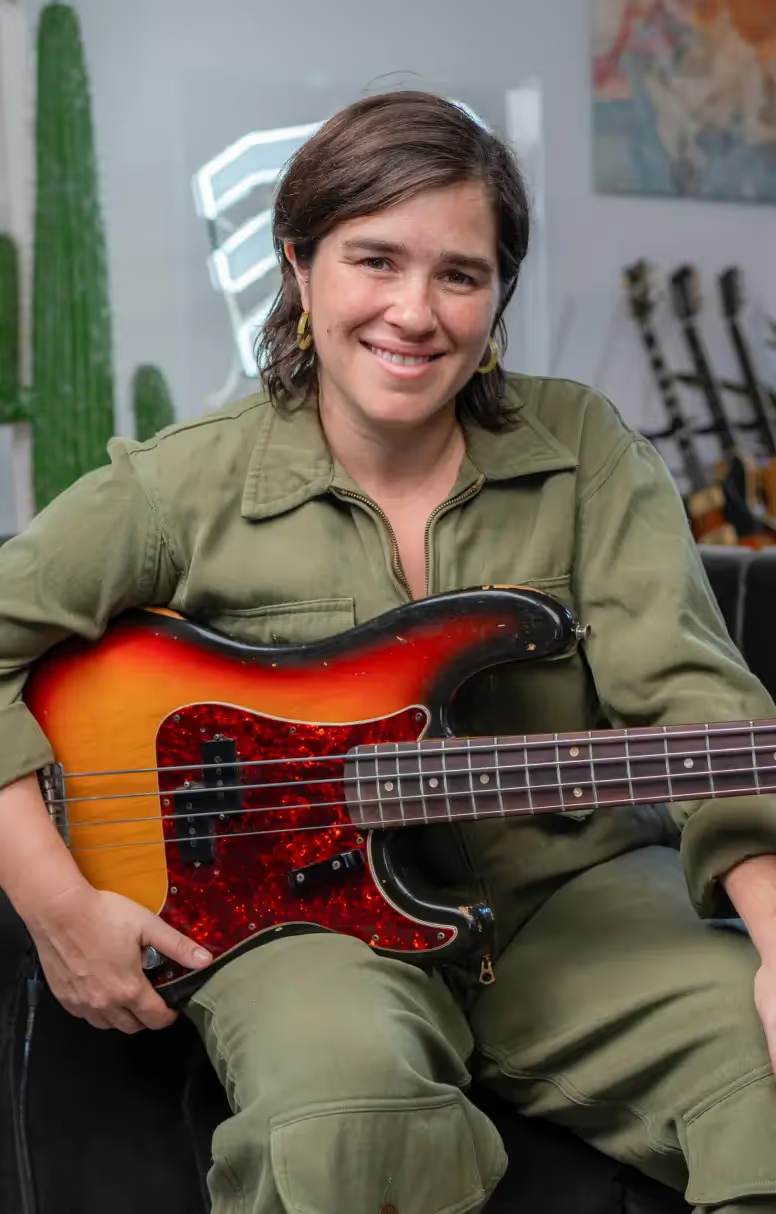
Pete is a GRAMMY-winning bassist who'll help you develop the tone, touch, and techniques behind great rock playing.
Explore LessonsLimitless learning.
All-inclusive access to every course.






FULL REFUND, NO QUESTIONS ASKED
Improve your playing or get your money back
We’re so confident that we can improve your playing that we’re underwriting your membership with a 60-day satisfaction guarantee.
Frequently asked questions

The most structured approach to learning music