7 Major Scale Modes in 7 Days
Take the headache out of learning modes.


Intermediate guitarists
Looking to break out of pentatonic boxes and spice up your soloing? You've come to the right place.
7 days
Sam will guide you through 7 days of step-by-step instruction with interactive TAB and daily assignments.
Unlock modes
By the end of this class, you'll be able to hear, visualize, play, and solo with the 7 modes of the major scale.
Take the next step
Dive into melodic minor modes or keep progressing with advanced courses and guided practice plans.
What you'll learn
Each day, Sam will break down one major scale mode and walk you through how to use it in a soloing context.
- New language to level up your improvisational skills
- Practical theory that won't put you to sleep
- Explore each mode with a collection of jam tracks

.avif)
Curriculum
Stay focused with this step-by-step learning program designed by our expert team of music educators.
Overview
Our team of graduate-level educators and pro guitarists developed this Master Class based on industry-standard, college-level pedagogy. The lessons teach modes in a simplified music-first way, prioritizing information so that you walk away with a deep understanding of modes in the shortest-possible time.

Each day, Sam will introduce a different mode. First, he'll walk you through the theory of the mode in an easy-to-understand way. Then, he'll walk you through when and how that mode is most commonly used. Finally, you'll get a scale diagram and jam track to explore the mode for yourself, which will help you put the theory behind the mode into a working musical context.
Days 1 - 3
Ease into the class with the major scale. After building your major scale foundation, dive into two other "major-type" modes that live within it.
Day 1. Ionian
First up is the major scale, also known as the Ionian mode. It's the most common scale in Western music. It's vital to have a deep understanding of this mode if you're a serious guitar player, no matter what style of music you play. Sam covers when you should and shouldn't use Ionian and mindfully points out the "avoid note" to wrap up the lesson. Day 1 serves as the foundation for subsequent lessons.
Day 2. Lydian
The Lydian mode is the fourth mode of the major scale. It’s used over major 7 chords and has a more colorful and “jazzy” sound than Ionian. This is a must-know scale for guitarists of all styles. You'll explore examples and learn the Lydian chord-scale relationship. Plus, Sam helps you understand when to use Lydian vs. Ionian.
Day 3. Mixolydian
Mixolydian, the fifth mode of the major scale, is a great choice for playing over a dominant 7th chord and is widely used in funk, blues, jazz, and rock. In short, this is another must-know scale. Sam goes on to explain the Mixolydian chord-scale relationship and elaborates on how Mixolydian is often played over 12-bar blues and funk jams.
Days 4-6
Next, you’ll learn three “minor-type” modes.
Day 4. Dorian
Dorian is the second mode of the major scale and is one of the most popular minor scales. We typically use it with minor 7 chords, which makes it a great option for soloing over minor grooves in jazz, funk, or rock. It’s essential that you develop a deep understanding of this mode.
Day 5. Aeolian
Aeolian is widely used across all genres of music. It’s a defining sound for “minor songs” (which is a lot of songs) so it's worth spending a significant amount of time exploring.
Day 5. Phrygian
Phrygian is the third mode of a major scale and is used over minor 7 chords. It's used less often than other minor scales, but it's a fun and exotic scale to explore. While Phrygian is a fun scale to achieve a "Spanish" vibe, it's not used often in pop, R&B, or jazz.
Day 7
On the last day, we cover the mode that jazz players cherish and most others dismiss.
Day 7. Locrian
Locrian is the seventh mode of the major scale and is used over m7b5 (half-diminished) chords. Whenever you see a m7b5 chord, your go-to scale is Locrian. M7b5 chords are common in jazz and in jazz-influenced music like R&B. If you’re a jazz guitar player, this mode is an important one to know, but if you’re a rock/pop player it’s less important.

REAL students
Don’t take our word for it, take theirs
What guitarists love about this course

Your Instructor
Sam Blakelock
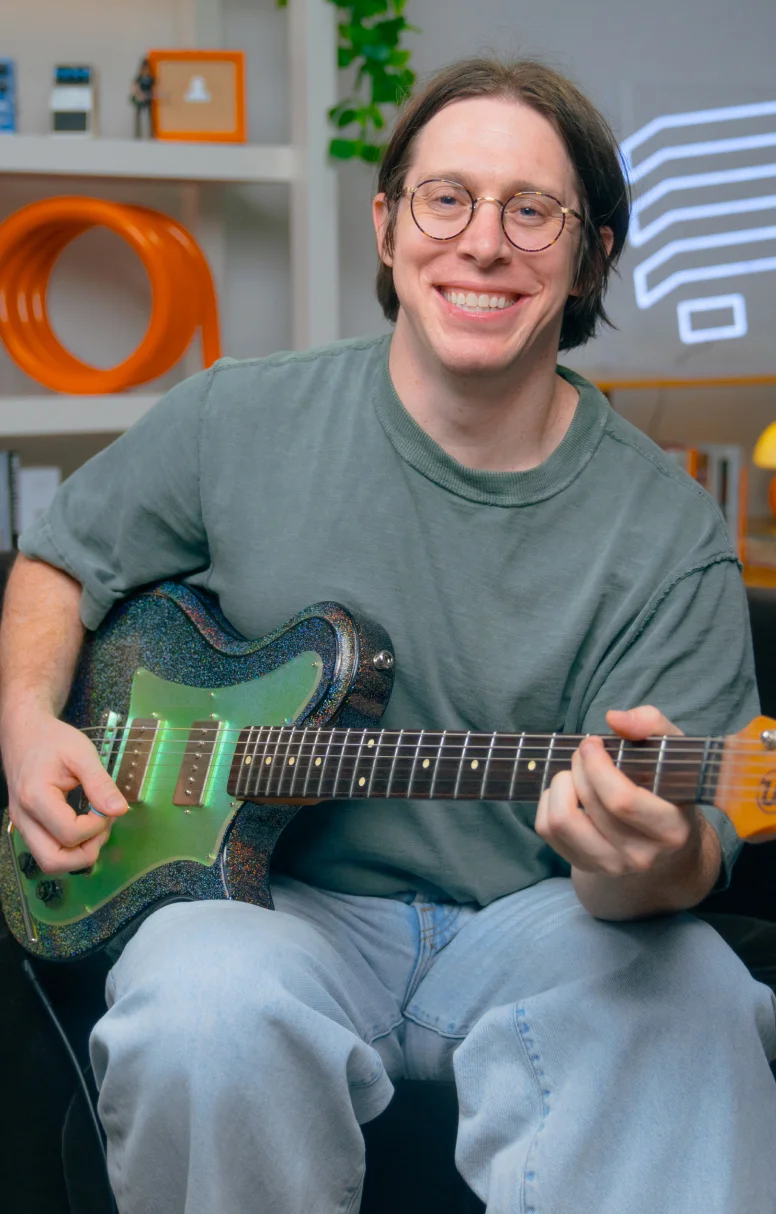
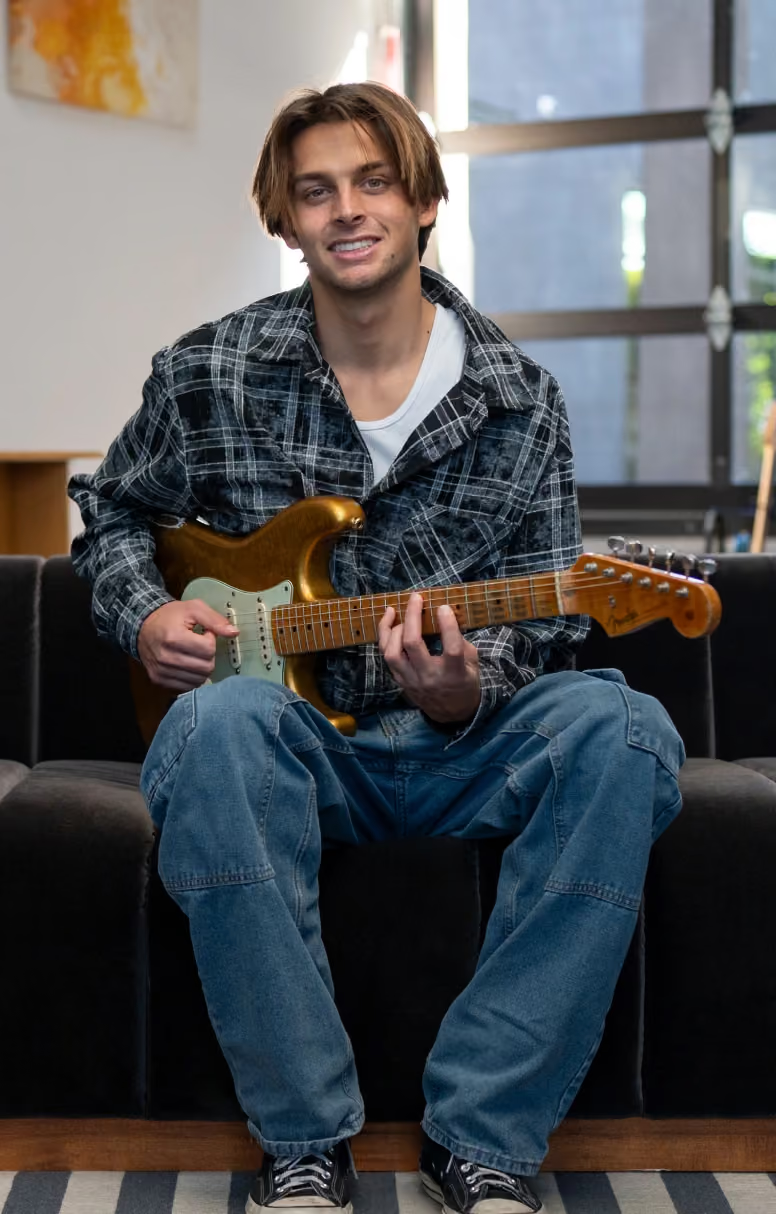
Sam Blakelock is a guitarist, educator, and the founder of Pickup Music. He's an expert at helping guitarists of all levels tackle fundamental techniques and complex topics in a straightforward & practical way.
Explore LessonsLimitless learning.
All-inclusive access to every instrument and course.




FULL REFUND, NO QUESTIONS ASKED
Improve your playing or get your money back
We’re so confident that we can improve your playing that we’re underwriting your membership with a 60-day satisfaction guarantee.
Frequently asked questions

The most structured approach to learning music