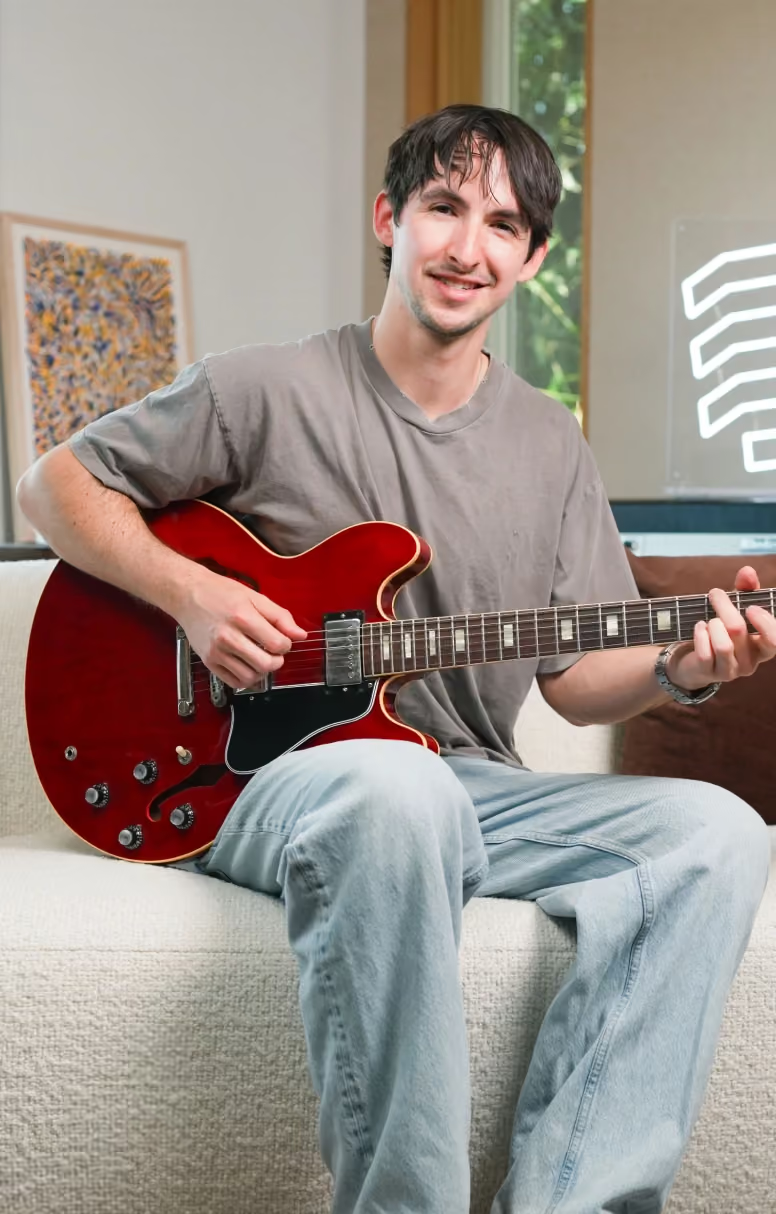
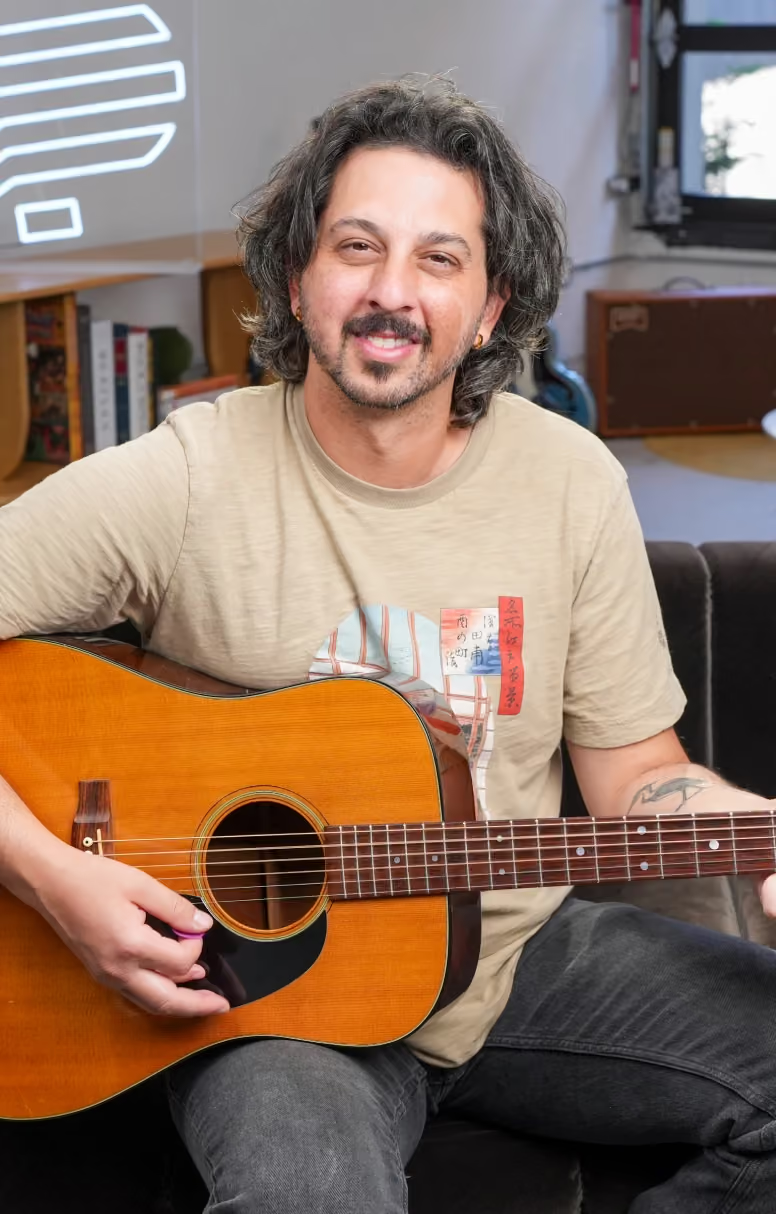
Andrew Brozek
PRESENTS

Bluegrass Learning Pathway

Learn the language of bluegrass guitar.

Trailer
Sample
share
Try free for 14 days
Cancel anytime
WHo it's for

Late beginners

If you’re comfortable with open chords, basic rhythms, and the major scale, you’re in the right place.

Time

3 months

Andrew Brozek will guide you through six grades of instruction with daily practice plans and assessments.

Outcome

Bluegrass fluency

This class will help you build pro-level bluegrass skills from the ground up and prepare you to jam with other musicians.

Keep going

Take the next step

Keep your momentum going with advanced classes and guided pathways to push your playing further.

What you'll learn

In this guided Learning Pathway, you’ll develop essential rhythm, lead, and ensemble skills to play popular bluegrass songs on your own and with other musicians.

  • Level up your picking skills
  • Improve your rhythm and feel
  • Train your ears and start soloing

Curriculum

Stay focused with this step-by-step learning program designed by our expert team of music educators.

How it works

Your guided Learning Pathway

In this 3-month program, Andrew Brozek guides you step by step through the essential building blocks of bluegrass guitar. Each grade builds on the last with focused exercises and interactive jams, helping you develop fundamental rhythm and leads skills while learning classic bluegrass repertoire along the way.

Get Pickin’

Every bluegrass legend started from the beginning.

To kick off the class, you’ll lay a foundation with core bluegrass rhythms and lead techniques. 

This is where you'll learn skills  like the boom-chuck rhythm, alternate picking, and  the Nashville number system.

How to Jam

Jamming with others is the heart and soul of bluegrass.

In this grade, you’ll start preparing for your first jam with other musicians.

You’ll learn how each instrument functions in the band, as well as how to lead and follow songs so you always stay locked into the groove.

Bluegrass Techniques

Bluegrass is a highly technical but incredibly rewarding genre.

In Grade 3, you’ll level up your picking and fretting mechanics.

You’ll hone skills like crosspicking, legato, and shifting between positions to play faster and more precisely.

Grade 4. Study the Greats

Take inspiration from some of the most important names in bluegrass guitar, including Tony Rice, Doc Watson, Molly Tuttle, and Billy Strings. You’ll study the ideas behind their playing and apply them to real tunes.

Grade 5. Rhythm

Next, you’ll become the beating heart of the band. Build on your boom-chuck skills with concepts like walking basslines, rhythmic density, and advanced chord voicings.

Grade 6. Lead

To wrap up the class, you’ll step out by learning how to solo and improvise like a pro. You'll map out your fretboard and work on finding melodies in multiple positions around the neck so you can solo more creatively and melodically.

3-month plan

Grade 1. Get Pickin’

In this grade, Andrew introduces you to the foundational rhythm in bluegrass: the boom-chuck. You’ll also develop skills like proper picking technique, using the number system to communicate with fellow musicians, and shaping your tone with your pick.

‍Day 1. The boom-chuck

Learn the train-like rhythmic feel at the heart of bluegrass guitar by pairing bass notes with crisp strums.

Day 2. Intro to lead playing

Learn your first bluegrass melody with Will the Circle Be Unbroken and connect lead playing to the major scale. You’ll also learn a fun G run line inspired by Lester Flatt.

‍Day 3. The most important lead bluegrass technique

Develop the essential skill for playing faster: alternate picking. Zero in on your picking technique by learning how to hold and angle your pick for maximum efficiency.

Day 4. Open-position scales

Just three scales = all of bluegrass. Andrew will introduce you to the three foundational bluegrass scales in open position so you can start playing real songs right away.

Day 5. Know your tools (picks)

Like a good craftsman, musicians need to know their tools inside and out. In your case, that’s the guitar and pick. You’ll learn about what guitars, strings, and picks bluegrass musicians prefer and how these tools impact your sound.

Day 6. The Nashville number system and capos

Learn the language professional musicians use to communicate with each other and producers: the Nashville number system. You’ll also learn how to use a capo to play in any key using the chord shapes you already know.

Day 7. Arkansas Traveler

Put the week’s skills into action with a classic fiddle tune you’re likely to hear in a jam.

Performance pieces

Choose a song to learn that takes what you worked on in Grade 1 and puts it in a musical context. Here, you'll get to jam with a live-recorded band of professional L.A. musicians as your backing track.

Personalized feedback

Submit a video of yourself playing a performance piece from this grade for custom video feedback on your playing from our team of pro guitarists.

Final quiz

Make sure you're ready to move on to Grade 2.

Grade 2. How to Jam

In this grade, you’ll prepare for your first jam session. Learn about the roles of each instrument, how to lead and follow a song, and how to find melodies by ear.

Day 1. Roles

See how guitar, bass, mandolin, banjo, and fiddle each contribute to the rhythm and arrangement of a bluegrass band. You’ll step into the musical shoes of other musicians to get a better understanding of how guitar fits in.

Day 2. Leading a song

One of the most exciting parts of jamming with others is leading a song. In this lesson, you’ll practice the physical and musical cues that help a band follow you – from body language to harmonic signals.

Day 3. Following a song

Get comfortable jumping into unfamiliar tunes by sitting back and watching fellow musicians, listening to the quality of chords, and finding the key to a song. 

Day 4. Dynamics

Learn how to be sonically considerate at jams and serve each song using careful dynamic control.

Day 5. Finding melodies

Dip your toes into the world of soloing by training your ears to find a melody. Andrew offers a 4-step method for finding the melody to any song, which you’ll apply to Bury Me Beneath the Willow.

Day 6. Metronome bootcamp

Know the rhythm. Love the rhythm. Become the rhythm. Use a metronome and different subdivisions to develop a stronger internal sense of time.

Day 7. Big Sciota

Finish the grade with a bluegrass standard that puts your listening, timing, and dynamic skills to the test.

Performance pieces

Choose a song to learn that takes what you worked on in Grade 2 and puts it in a musical context. Here, you'll get to jam with a live-recorded band of pro L.A. musicians as your backing track.

Personalized feedback

Submit a video of yourself playing a performance piece from this grade for custom video feedback on your playing from our team of pro guitarists.

Final quiz

Make sure you're ready to move on to Grade 3.

Grade 3. Bluegrass Techniques

In this grade, you’ll fine-tune your technique to become a more expressive and intentional bluegrass guitarist. You'll learn how to integrate hammer-ons and pull-offs, slides, and crosspicking into your playing.

Day 1. Crosspicking

Learn three banjo-inspired roll patterns to create flowing melodies and more interesting rhythmic texture.

Day 2. Hammer-ons

Learn how to play faster with fewer pick strokes using hammer-ons. This will also help you create smoother and more expressive phrasing.

Day 3. 16th-note triplet hammer-ons

Learn how to combine hammer-ons and triplets, bluegrass style. This is a great technique for adding momentum to the intro of a song.

Day 4. Pull-offs

Meet the hammer-on’s evil cousin: the pull-off. Like hammer-ons, pull-offs help you add more expression to your lines and play faster.

Day 5. Shifting

It can be difficult moving between scale positions across the fretboard smoothly. That’s why Andrew’s got some techniques that can help you shift seamlessly.

Day 6. Escape notes

Learn how to use open notes as a quick escape when you need to make a super quick shift between positions. 

Day 7. 3rds

Learn how to play 3rd double stops – a fantastic tool for harmonizing your melody notes and outlining chords.

Performance pieces

Choose a song to learn that takes what you worked on in Grade 3 and puts it in a musical context. Here, you'll get to jam with a live-recorded band of pro L.A. musicians as your backing track.

Personalized feedback

Submit a video of yourself playing a performance piece from this grade for custom video feedback on your playing from our team of pro guitarists.

Final quiz

Make sure you're ready to move on to Grade 4.

Grades 4-6

In these last grades, you’ll study bluegrass masters, upgrade your rhythm playing, and develop a fuller understanding of the fretboard.

Grade 4. Study the Greats

In this grade, you’ll learn the techniques used by some of the most influential players in bluegrass history. You’ll then apply these techniques to real bluegrass songs to expand your own voice.

Day 1. Tony Rice

Study the phrasing and technique of Tony Rice. You’ll leave this lesson with a few Tony Rice-inspired licks you can use in your own playing.

Day 2. Doc Watson

Work on flatpicking, rhythm-infused lead playing, and melodic ideas rooted in Doc’s classic approach.

Day 3. Norman Blake

Learn from Norman Blake’s freight train-like playing that combines rhythm and single-note lines to propel every song forward.

Day 4. Chris Eldridge

Inject some modern ideas into bluegrass by studying Chris Eldridge’s innovative playing.

Day 5. Bryan Sutton

Hone your shredding skills with one of bluegrass’s most sought-after guitarists.

Day 6. Molly Tuttle

Step into the shoes of Molly Tuttle and work on skills like bending, incorporating blue notes, and crosspicking.

Day 7. Billy Strings

Step way outside the box with bluegrass’s most innovative guitarist. You’ll leave this lesson with a few Billy Strings-inspired licks you can use to create dissonance within your own lines.

Performance pieces

Choose a song to learn that takes what you worked on in Grade 4 and puts it in a musical context. Here, you'll get to jam with a live-recorded band of pro L.A. musicians as your backing track.

Personalized feedback

Submit a video of yourself playing a performance piece from this grade for custom video feedback on your playing from our team of pro guitarists.

Final quiz

Make sure you're ready to move on to Grade 5.

Grade 5. Rhythm

In this grade, you’ll step up your rhythm game with concepts like alternating and walking basslines, advanced voicings, and approach chords.

Day 1. Alternating basslines

Go beyond root notes and start using 3rds and 5ths to add movement and depth to your boom-chuck.

Day 2. Walking basslines

Connect chords with diatonic and chromatic movement that propels the song and signals chord changes to your bandmates.

Day 3. Varying rhythmic density

Fill out the rhythm with upstrokes and different boom-chuck variations. Change the feel of a song without losing the pulse.

Day 4. Crosspicking rhythm

Combine the boom-chuck and crosspicking to create a more layered sound when holding down the rhythm. This technique works great solo and in a band setting.

Day 5. Approach chords

Add dominant chords and passing harmony to make simple progressions more colorful and flowing.

Day 6. Advanced voicings

Add some sophistication to your progressions with richer chord shapes and Tony Rice-inspired harmonic color.

Day 7. Blackberry Blossom

Close the grade with a classic tune that blends G major and E minor sensibilities. 

Performance pieces

Choose a song to learn that takes what you worked on in Grade 5 and puts it in a musical context. Here, you'll get to jam with a live-recorded band of pro L.A. musicians as your backing track.

Personalized feedback

Submit a video of yourself playing a performance piece from this grade for custom video feedback on your playing from our team of pro guitarists.

Final quiz

Make sure you're ready to move on to Grade 6.

Grade 6. Lead

In this final grade, you’ll dial in your lead playing by mapping your fretboard, targeting chord tones, and even including notes from outside the scale.

Day 1. Mapping the fretboard

Use triads and inversions to navigate the fretboard and play chords anywhere on the neck.

Day 2. Chord tones

Outline chord changes more clearly by targeting the root, 3rd, and 5th on strong beats in your solos.

Day 3. 6ths

Expand your harmonic lead skills with double-stop 6ths. You'll leave the lesson with a musical lick that works in tons of musical situations.

Day 4. Patterns and sequences

Turn scale shapes into musical patterns with three versatile sequences. 

Day 5. Blue notes

Blend major and minor colors for a bluesier sound that still fits naturally in bluegrass.

Day 6. Finding melodies in other places

Learn to play the same melody in different positions across the fretboard so you can solo and shape your tone more freely.

Day 7. Restrictions as superpowers

Use creative limitations to sharpen your phrasing, ears, and improvisational choices.

Performance pieces

Choose a song to learn that takes what you worked on in Grade 6 and puts it in a musical context. Here, you'll get to jam with a live-recorded band of pro L.A. musicians as your backing track.

Personalized feedback

Submit a video of yourself playing a performance piece from this grade for custom video feedback on your playing from our team of pro guitarists.

Final quiz

Make sure you're ready to move on to new challenges.

Student stories

Learn how Bluegrass Learning Pathway has helped real guitarists break through their playing plateau and realize their potential.

"My favorite part about Pickup Music is probably nerding out in the forum with everyone. Just knowing you have a creative community to reach out to if you have any questions or you're stuck in a rut."

Vicki Huang

United States

"I would highly recommend Pickup Music to pretty much anyone who has been playing for a few years and doesn't feel like they are getting better any more."

James Harrod

United Kingdom

"One of the things that's been the most fun for me has been the SongSquad challenges... connecting with other people in the Pickup Music community on Instagram and just encouraging each other as we're learning songs and practicing."

Vin Thomas

United States

REAL students

Don’t take our word for it, take theirs

What guitarists love about this course

Read more reviews

FULL REFUND, NO QUESTIONS ASKED

If you don’t get better, we’ll give you your money back

We’re so confident that Pickup Music can help you make progress that we’re underwriting your membership with a 60-day satisfaction guarantee.

What’s in every Pickup Music membership?

Try free for 14 days

1,000+ Lessons

All skill levels

Interactive tabs

Track your progress

Daily practice plans

Live lessons every week

Frequently Asked Questions

Got a different question? Message us in the chat pop-up.

Is Pickup Music right for me?

Are you a guitar player who feels like you haven’t made progress in a few months… years… or even decades? 

You’re probably stuck in what’s called the ‘intermediate plateau’. This is very common and can be very frustrating.

What’s the cause? Well, it’s pretty easy to learn the basics on guitar. Learn a few open chords and you can play Wonderwall and hundreds of other songs. Learn a couple of scales and a few licks and you can play some lead. 

But what then? Triads? Modes? Arpeggios? The phrygian scale?!

Without a clear plan and learning system you fall back to playing the same old chords and licks over and over again. Or you bounce around free lessons online but nothing seems to stick. It’s a recipe for a lot of practice without much progress. 

That’s where Pickup Music can help. We specialize in taking players stuck in a guitar rut and turning them into advanced guitarists.

We do this through Learning Pathways that take you on a step-by-step journey towards fretboard mastery. We give you a highly structured system that shows you exactly what to work on each week to make serious progress. 

These Learning Pathways take the guesswork out of your practice routine. You are guided through a proven grade-by-grade system with daily lessons, play-along practice exercises and interactive workouts. 

But it’s not all about theory. We apply everything you learn to real music. That’s why every grade of our Learning Pathways build up to performing a song with a live backing band. This simulates what it’s like to play a real gig, with real musicians. It’s the absolute best way to learn. 

You also get 1:1 video feedback on your playing from our expert instructors and can attend weekly live lessons. This personal feedback makes Pickup Music the closest thing to taking in-person lessons, but at a fraction of the cost.

So does this method actually work? Will you see results in your playing?

The most common thing we hear from new members is that they’ve made more progress with Pickup Music in a few months than in years of teaching themselves. As one member recently told us, “I'm finally seeing progress for the first time in many years”.

Want to hear about other members’ experiences with us? Read our independent Trustpilot reviews.

Is Pickup Music worth the money?

Private guitar lessons will cost you about $50 per lesson or $2,600 a year. 

Going to a music academy will cost you about $40,000 a year.

A Pickup Music membership will cost you  just $180 for the whole year. 

That works out to 50 cents a day! 

But it’s not just about the money. It’s about not wasting your precious time. It’s about making actual progress on this beautiful instrument. 

By following our proven Learning Pathway system, you can stop wasting your time and effort trying to guess what you should practice next. Our guided programs eliminate the guesswork so you know exactly what you need to focus on each day and week to make lasting progress with guitar.

What makes Pickup Music better than other guitar lesson sites?

Most online guitar lesson sites are very good at teaching one-off songs and licks. Or they get super famous guitarists to record one-hour video lessons talking at length about their particular style and career.

The problem is that these approaches don't stick. They don’t help you to actually get better as a guitarist. You can waste a lot of time bouncing around these types of unconnected, one-off lessons. It’s a recipe for a lot of practice without much progress. 

Pickup Music takes a different approach. We give you a highly structured system that shows you exactly what to work on each week to make serious progress. We take you beyond the basics through a step-by-step journey towards fretboard mastery. 

By following a Pickup Music Learning Pathway, you are getting the most guided way to learn guitar. Over 6 grades, you are taken through daily lessons and practice exercises that carefully explain what’s going on behind the music. 

Each grade then builds up to song performances that apply everything you’ve learned with a live backing band. These challenges - where we simulate what it’s like to play a real gig, with real musicians - is the absolute best way to learn. 

The Learning Pathway method takes the guesswork out of your practice routine. Most guitarists start to see a rapid acceleration in their progress in a matter of weeks.

You can also get 1:1 video feedback on your playing and weekly live lessons. This personal feedback makes Pickup Music the closest thing to taking in-person lessons, but at a fraction of the cost.

Want to hear about other members’ experiences with us? Read our independent Trustpilot reviews.

What exactly do I get from a Pickup Music membership?

When you become a Pickup Music member you get unlimited access to our huge library of lessons:

  • 13 Learning Pathways giving you step-by-step instruction over 3 months
  • 47 Master Classes going deep into different styles over 2 weeks
  • 500+ original songs from some of the world’s best modern guitarists 
  • 100+ essential lick packages to add new flavors to your playing
  • 200+ 5 minute lessons for bite-sized learning. 


You get to enjoy amazing features that create a premium learning experience:

  • day-by-day lessons
  • 1:1 video feedback on your playing
  • weekly live lessons
  • progress tracking
  • interactive TAB
  • multiple HD camera angles 
  • play-along practice exercises
  • downloadable course notes and diagrams
  • quizzes to test your understanding
  • jam tracks with the Pickup Music Live Band
  • exclusive members-only forum, contests and giveaways.

How do the Learning Pathways work?

Learning Pathways are kind of our special sauce here at Pickup Music. They take all the guesswork out of what to practice. 

You get day-by-day lessons, play along practice exercises with your instructor, interactive jams with the Pickup Music live band and you can submit videos of your playing for feedback from the Pickup Music team. 

We designed this system so that you will know exactly what to practice every time you pick up the guitar. This means that even if you only have time to practice with us once a week, you will still make great progress by following a Learning Pathways. 

How often do I need to practice to see results?

Ideally you would practice about three times a week for 30 minutes at a time. But we know that life gets in the way sometimes! So here’s the good news: deliberate practice matters so much more than how often you practice.

After working with thousands of guitarists, we’ve found that the most important thing is to know exactly what you’re going to practice before you pick up the guitar. Even if you can only use Pickup Music a few times a month, you will still make really good progress if you stick to the step-by-step structure of our Learning Pathways.

How long are the lessons? 

Pickup Music's lesson plans are designed to suit the amount of time you have available to practice.

  • Only got a few minutes? Try our 5-Minute Lessons to quickly add a new skill to your toolbox.
  • Got half an hour? Try one of our Essential Lick Packages or original Songs  to expand your vocabulary in different genres.
  • Got a couple of days? Try a Master Class with one of our world-renowned artists. Each class is broken up into short, digestible modules focused on one topic. 
  • Ready to really commit to a multi-week program? Try one of our Learning Pathways. Over 3 months and 6 grades of learning, these detailed courses will take you on a day-by-day journey to master each level in the genre. Learning Pathways include daily practice exercises so you know exactly what to focus on. These courses are the best way to make lasting progress.

Whichever approach you choose, we recommend building the exercises you learn into your daily practice schedule. The best way to improve as a guitarist is through a consistent practice routine rather than sporadic, longer sessions. Learning guitar is a day-by-day, life-long journey.

Can I take the lessons at my own pace?

Everything on Pickup Music is designed to be taken at your own pace. There are no deadlines, so you can work at your own speed. You can stay on a topic until you really understand it before you move on.

While we divide our Learning Pathways into ‘days’ - this is a suggestion only. Some learners might take a few days in one sitting, while others will spend a few sessions on a single day. You can go at the pace that feels most comfortable to you.

How does the 1:1 video feedback work?

We want our members to get the closest thing possible to in-person lessons but at a fraction of the cost. That's why you can now get individual video feedback on your guitar playing from our team of expert instructors.

Here's how it works:

  • Choose a performance piece to learn at the end of each grade of a Learning Pathway.
  • Upload a video of yourself playing the performance piece.
  • An expert instructor from our team will review your playing and send you back a detailed video on what you're doing well and what you need to work on.
  • Repeat for each grade of the Learning Pathway.

Want to see a sample? Check out this recent video feedback from Pickup Music instructor Jack Handyside.

Is Pickup Music good for beginners?

Absolutely! We make learning the guitar fun and simple – the way it should be.

Too many people get frustrated with guitar because they develop bad habits and poor technique. Avoid these costly and time-consuming mistakes by taking Pickup Music's structured and step-by-step approach to learning guitar.

You'll start with Pickup Music's introductory program Beginner Learning Pathway. Over three weeks, we break down everything from simple chords and melodies to rhythm and lead playing. By the end of the program, you'll be able to play any simple pop or rock song (and even write your own).

Most importantly, we make sure you don't get stuck in the beginner's plateau - a common pitfall for guitarists who are just starting out. You'll keep making progress through Pickup Music's guided Learning Pathways. These programs are designed to quickly take you from a beginner player to an intermediate one who feels comfortable across the whole fretboard.

Is Pickup Music good for intermediate and advanced guitarists?

Pickup Music is the best platform available for intermediate and advanced guitarists. Our courses take you beyond the basics to advanced concepts like the CAGED system, triads, arpeggios, modes and improvisation.

The biggest trap for intermediate players is bouncing around from lesson to lesson without a plan or structure to get to that next level. We are known for taking intermediate and advanced players who have hit a ceiling and busting through until they reach the next level.

Am I too old for guitar lessons?

Many of Pickup Music’s members are in their 60s and 70s and have seen amazing success with our programs. Our platform is designed to be user-friendly for all ages and skill levels. And our supportive community is made up of guitar learners of all ages, cheering each other on.

How does the 14-day free trial work? 

When you first sign up to a Pickup Music membership, you enter your credit card but it will not be charged for 14 days. That means that if you decide to cancel within 14 days of signing up, you won't pay anything. 

And we send you a reminder before your trial is about to end so you don’t forget about it. 

If you decide to cancel after that, you won't be charged at your next billing cycle. That means: if you’re a monthly member, you won’t be charged for the next month. If you’re an annual member, you won’t be charged for the next year.

How does the 60-day money back guarantee work?

In addition to the 14-day free trial, we offer a 60-day money back guarantee. If you’re not satisfied with your progress in the first 60 days of your membership, we will give you your money back - no questions asked.

Is it easy to cancel?

Absolutely! You can cancel at any time (although we'd be sad to see you go). Cancelling is easy, no tricks. Just go to your account page and click a button.

You won't be charged anything if you cancel during your 14-day free trial.

If you cancel after your 14-day trial, you won't be billed again at your next billing cycle. Your membership will remain active until it expires on the day it was originally set to renew.

Note: Once your membership expires, we'll save your progress on your Dashboard if you decide to rejoin at a later date.

What’s the difference between the annual and monthly plan?

The only difference is the price. The monthly membership is $29.99 charged monthly and the annual membership is $179.99 charged once a year. 

That means that if you select the annual plan you will pay 50% less and save $180 over a year compared to the monthly plan. 

We'll also send you reminders before we bill you each year so that you don't accidentally forget about it.

We give such a big discount for annual members because it aligns with our long-term vision to inspire and support lifelong guitar learning.

Can I buy lessons individually?

We don’t sell lessons individually. But the good news is you get access to every single lesson on Pickup Music through the one membership. If you’re only interested in one lesson, you could purchase a monthly membership and cancel when you’ve finished it – we have a hunch you’ll want to stick around though :)

How do I restart my membership?

It’s easy to rejoin Pickup Music and we’d be thrilled to have you back! We even saved all of your lessons for you while you were gone on your Dashboard.

To restart your membership, simply head to this page, select the plan of your choice, and sign up with the email address you used to sign up the first time around.

Get started